Freight between Vietnam and Switzerland | Rates – Transit Times – Duties & Taxes
If you treat freight vietnam switzerland like a standard Asia to Europe route, you will miscalculate costs and timelines, because your cargo lands in a landlocked market that depends on gateways like Hamburg or Rotterdam before final delivery into Switzerland. You need to think beyond ocean or air rates and factor in pre-carriage in Vietnam, main leg transport, customs clearance with the right Incoterm, and inland distribution to cities such as Zurich or Geneva, otherwise you risk delays, unexpected storage, or documentation issues that slow everything down. The first thing we always tell you is this, once you understand the full logistics chain between Vietnam and Switzerland, your decisions become much clearer. In this Destination guide, we will cover transport options, transit logic, customs duties and taxes, and the operational checkpoints you need to secure your shipment from origin to final delivery.
What is the best method to ship your products between Vietnam and Switzerland ?
If you ship large volumes with flexible timing, sea freight via Cat Lai Port to gateways like Hamburg or Rotterdam, then trucking into Switzerland, usually gives you the best cost per CBM. If you move urgent, high-value, or lightweight goods, air freight to Zurich Airport or Geneva Airport reduces transit time and limits handling risks.
You should base your choice on cargo value, deadline, and your tolerance for storage or demurrage charges at European hubs, especially during peak seasons. If you are unsure, talk to us and we will compare real-time capacity and pricing on the Vietnam–Switzerland corridor, then in the rest of this guide you will see the detailed cost drivers, customs steps, and practical constraints behind each option.
Docshipper Note:
Need assistance with your shipment? Dont hesitate to contact us even for a simple question. Choose the option that suits you
Live chat with an expert Chat us on WhatsApp Fill the form
Sea freight from Vietnam to Switzerland
Sea freight from Vietnam to Switzerland
If you are planning sea freight Vietnam to Switzerland, the first thing you should check is volume. Once you ship more than a few cubic meters on a regular basis, ocean freight Vietnam Switzerland quickly becomes the most cost-efficient option compared to air. You trade speed for savings, but on this lane the cost gap is usually significant, especially for container shipping Vietnam to Switzerland in 20ft or 40ft units.
You should also remember that Switzerland is landlocked. Your maritime transport Vietnam to Switzerland will discharge in a nearby European port, most often Fos-Marseille or Genoa, before moving by truck or rail to Basel, Zurich, or Geneva. This inland leg is not a detail, it is part of your total budget and timeline. Many importers underestimate this and face unexpected inland costs after arrival.
From experience, you will benefit most from sea freight when you ship FCL shipping Vietnam to Switzerland or stable LCL shipping Vietnam to Switzerland flows with predictable planning. If you need urgent replenishment in under 10 days, sea is not for you. But if you can work with a sea transit duration Asia to Europe of roughly 4 weeks port-to-port, you gain control over cost and capacity. This is the logic behind serious international sea logistics Vietnam Switzerland.
Which Incoterms should you use?
Your Incoterm will define who controls the shipment and who absorbs risk. On this route, we often handle FOB Vietnam shipment contracts, because you keep control of the main leg and choose your own freight forwarder Vietnam to Switzerland. That gives you transparency on origin charges and destination charges and avoids surprises.
If your supplier insists on CIF Switzerland delivery, you should be cautious. Under CIF, your supplier chooses the carrier and includes freight in their invoice, but you still pay local destination costs in Europe. This is where many importers face high destination handling fees they did not anticipate. You think freight is prepaid, then you discover local THC and documentation fees on arrival.
With EXW Vietnam export terms, you take full responsibility from the factory door. That can work if you want total control, but you must manage export clearance, trucking to port, and booking. For door delivery in Switzerland, DAP Switzerland incoterm can be efficient, provided roles are clearly defined. The key is not theory, it is risk ownership and control. You should always know who books the vessel, who issues the Bill of Lading (B/L), and who pays what.
Main ports to know in Vietnam and Switzerland
When you organize port-to-port shipping Vietnam Switzerland, port choice will affect schedule reliability and inland cost. These are the operational hubs you should know.
- Ho Chi Minh City, Cat Lai, The main export gateway in the south, best for factories in the Ho Chi Minh region and for frequent container vessel schedule options.
- Hai Phong, The key northern hub, ideal if your supplier is near Hanoi or Bac Ninh, reducing domestic trucking time.
- Qui Nhon, A regional alternative for central Vietnam, sometimes useful for specific industrial clusters.
Since Switzerland has no seaport, your cargo usually arrives via:
- Fos-Marseille, Often considered the nearest seaport to Switzerland for imports in southern France, with strong rail links toward Basel and Geneva.
- Genoa, A major Italian gateway, competitive for shipments destined to southern Switzerland.
Your choice influences inland haulage distance, rail availability, and even exposure to port congestion delays. That is why we treat port selection as a strategic decision, not a detail in main seaports in Vietnam for exports.
Transit times: How long does it take to ship from Vietnam to Switzerland?
| Port of Loading | Port of Discharge | Estimated Transit Time |
|---|---|---|
| Hai Phong | Fos-Marseille | Approx. 30 days |
| Qui Nhon | Fos-Marseille | Approx. 29 days |
| Ho Chi Minh City | Fos-Marseille | Approx. 28 days |
| Hai Phong | Genoa | Approx. 29 days |
| Qui Nhon | Genoa | Approx. 28 days |
| Ho Chi Minh City | Genoa | Approx. 27 days |
If you ask about transit time Vietnam to Switzerland by sea, you should think in two parts. First, the ocean leg, typically around 27 to 30 days port-to-port. Second, the inland move from France or Italy to Switzerland, which can add several days depending on customs and rail or truck capacity. Your real ocean shipping lead time includes booking, cut-off, and documentation.
You should also check whether your service is direct or via transshipment. A direct service is faster but not always available from every port. With transshipment in Singapore or another hub, your sea transit duration Asia to Europe may increase and you face missed connection risks. During peak season, space constraints can extend departure by one week or more. This is why we always confirm the container vessel schedule before you finalize production.
Shipping rates: how much does a sea freight shipment cost from Vietnam to Switzerland?
When you look at sea freight rates Vietnam to Switzerland, you need to separate ocean freight from local charges. Rates fluctuate monthly depending on demand, capacity, and fuel.
| Mode | Indicative Rate Structure |
|---|---|
| LCL | Based on container freight rate per CBM, charged per cubic meter or per ton, whichever is higher |
| 20ft FCL | Flat cost per container Vietnam to Switzerland, regardless of volume up to capacity |
| 40ft FCL | Higher flat rate than 20ft, but lower cost per CBM if well filled |
In practice, your total cost depends on volume, weight, season, and the balance between origin charges and destination charges. Ocean freight is only one line in your budget. You must also consider port handling fees, inland transport to Switzerland, customs brokerage, and potential surcharges like bunker adjustment factor or peak season surcharge. When you request a freight quote Vietnam Switzerland, you should always ask for a door-to-door breakdown, not just port-to-port.
How to estimate your sea freight cost before requesting a quote
If you want to understand how to estimate ocean freight cost Vietnam Switzerland, start with four elements, total CBM, total weight in kg, chosen Incoterm, and ports of loading and discharge. For LCL, carriers apply the rule 1 CBM equals 1 ton. The higher value between volume and weight becomes your chargeable unit.
For example, if you ship 8 tons and 10 CBM, you will be charged on 10 revenue tons. If you ship 9 tons and 4 CBM, you will be charged on 9 revenue tons. This simple ratio drives your LCL pricing. With FCL, you compare your total CBM with container capacity, roughly 33 CBM for 20ft and 67 CBM for 40ft. A cheap-looking ocean rate can still hide high local fees, so you should always calculate your total landed cost. We can provide a detailed breakdown and a free quote in under 24 hours.
Surcharges and hidden cost drivers to watch for
The first surprise usually comes from destination. Even if freight is prepaid, you will still face local THC, documentation, and delivery order fees in Europe. These destination charges are payable before cargo release, and misunderstanding them can block your Bill of Lading (B/L) collection.
Then you have time-related costs. If you do not pick up your container within the free time, demurrage and detention start to apply daily. After a few days, these amounts escalate quickly and become very expensive storage costs. Customs delays or missing paperwork can trigger this.
Finally, operational surcharges such as bunker adjustment factor, currency adjustment, or peak season surcharge can increase your invoice between booking and departure. Congested terminals may also apply specific fees. These are part of the real ocean freight structure, and you should factor them into your planning.
Step-by-step: how a sea freight shipment usually works on this route
When you follow the step by step sea shipping process Vietnam Switzerland, you will notice that most delays happen before the vessel even sails. Booking space, aligning production, and preparing export documents require coordination. This route is reliable, but it rewards planning and penalizes last-minute decisions.
- You confirm volume, Incoterm, and cargo details with us, including whether you need cargo consolidation service Vietnam or full container load service.
- We proceed with export booking with shipping line and secure space on a suitable vessel.
- Your supplier delivers cargo to the port or CFS warehouse before cut-off.
- Vietnam export customs clearance is completed and the container is loaded on board.
- The carrier issues the Bill of Lading (B/L), either as original, Telex release, or sea waybill.
- The vessel sails to Fos-Marseille or Genoa according to the confirmed container vessel schedule.
- Upon arrival, customs clearance in Switzerland is arranged and inland transport is organized to your final address.



Should I choose FCL or LCL when shipping between Vietnam and Switzerland?
The following are three typical container sizes:
- The 20-foot container has a 33-m3 capacity.
- The 40-foot container has a 67-m3 capacity.
- The 40-foot HQ container has a 76-m3 capacity.
You may choose between two modes of transportation, which are described below:
FCL shipping Vietnam to Switzerland means you book a full container for your goods only. This option becomes cost-efficient once you approach 15 to 18 CBM and above, or when you want better control over sealing, handling, and transit time. With FCL, you reduce the risk of cargo mixing and minimize handling in consolidation warehouses.
LCL shipping Vietnam to Switzerland, also called less than container load consolidation, is ideal if you ship smaller volumes. You pay per CBM based on the container freight rate per CBM, and your cargo shares space with other shippers. It is flexible but can add a few days due to consolidation and deconsolidation steps.
Special sea freight solutions
Standard containers are not always enough. Depending on your cargo, you may need specialized equipment or handling.
Reefer container shipping Vietnam Switzerland is used for temperature-controlled goods such as food or pharmaceuticals. You can set specific temperature and humidity levels, but you must provide precise product data to avoid temperature deviation claims.
Out of gauge cargo by sea uses open-top or flat rack containers for oversized machinery. Loading plans and lashing must be approved in advance, otherwise you risk port refusal at loading. This applies especially to industrial equipment and vehicles.
For heavy industrial moves, project cargo Vietnam to Switzerland may require breakbulk vessels instead of standard container services. These shipments need early planning, technical drawings, and feasibility checks at both origin and destination terminals.
If you are unsure which solution fits your cargo, we can review your packing list, dimensions, and Incoterm and advise you on the most suitable structure. Whether you need door-to-port service Vietnam to Switzerland or full door delivery, our team will build the right setup.
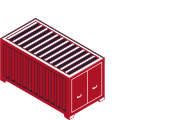
LCL: Less than Container Load
Consolidation is a method of grouping contracts from various customers with the same port of arrival but with insufficient contents to completely fill a cargo box. This method allows you to pay only for the space you need for your business, rather than for the entire vessel. Therefore, this method is suitable for your smaller shipments. If and only if the following criteria are met, this technique will pay off:
- You need your products consolidated into one shipment.
- Your shipments have a smaller cubic capacity than purchases from large suppliers.
Air freight is more attractive than ocean freight for shipments under 2m3. In addition, air freight has shorter delivery times than ocean freight. Air freight takes less than a week to arrive door-to-door, but ocean freight takes about 40 days (LCL).
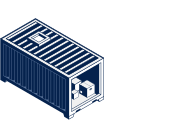
FCL: Full Container Load
Full container load (FCL) is a delivery system in which a single customer leases the cargo from loading to delivery. Because handling is minimal, costs are lower with this design. In addition, the cargo is protected during its journey from origin to destination. This strategy is particularly advantageous when purchasing large quantities of goods. Not only is the full container approach safe and secure, it is also significantly less expensive than importing a larger volume. It is also advantageous for a half-full shipment. The same strategy is particularly advantageous for shipments of 15 m3 or more, and is less expensive than the LCL method.
This method is best suited for cargoes weighing more than 13/14 m3. Even if the cargo is only half full, the cost will be lower because the port will handle it less. This method is also safer.
Advantages of a full container load (FCL)
- For large quantities, this is the most cost-effective option.
- The vessel is fully enclosed from the time it leaves the production site until it arrives at the final destination of the products in question.
- There is not much room for maneuver.
Disadvantages of full container load (FCL)
- For this form of transport, a comparable quantity of 15m3 is required.
- The journey takes a long time.
Advantages of Less than Container Load (LCL)
- The cost is determined by the amount of work performed.
- For small quantities, this is the most cost-effective mode of transportation.
- This transportation system has a great capacity to handle all kinds of imported goods.
Disadvantages of Less Than Container Load (LCL)
- Products are processed, which increases the risk of spoilage.
- Information must be delivered at the right time.
- Pallet transport is essential.
Air freight from Vietnam to Switzerland
If you are considering air freight Vietnam to Switzerland, you usually need speed, predictability, or you are moving goods that simply cannot wait. Between Vietnam and Switzerland, air makes sense for high-value electronics, fashion, urgent spare parts, or time-sensitive cargo solutions. But you should not assume it is always 3 days, always expensive, or always priced on real weight. What really drives your cost is the chargeable weight, airport handling, and how early you lock space.
You will also notice fast that air is operationally demanding. You must respect airline cut-off times, pass security screening, and submit clean export documents before cargo acceptance. On this route, the most common mistakes are underestimating volumetric weight vs gross weight, booking airport-to-airport while expecting door delivery included, or confirming production too late and missing uplift. That is where your timeline can slip by days.
Air cargo vs express: how should you ship on this route?
When you compare air cargo vs express courier Vietnam Switzerland, you are really choosing between control and simplicity. With a standard air cargo service Vietnam to Switzerland, you book space with an airline, issue an IATA air waybill (AWB), and manage customs either side. With express air freight Vietnam to Switzerland, a courier integrates pickup, flight, customs clearance, and final delivery under one tracking number.
Should you choose air cargo from Vietnam to Switzerland?
You should choose classic air cargo Vietnam Switzerland when your shipment is above 1 CBM or around 100 to 150 kg and you want better control over rates and routing. This option fits regular B2B flows, palletized cargo, temperature controlled air freight, dangerous goods by air Vietnam Switzerland, or oversized cargo air shipment. You must have ready the exact dimensions, gross weight, Incoterm, airport of departure and arrival, cargo nature, and realistic ready date.
From experience, you should double-check if you are booking airport-to-airport shipping Vietnam Switzerland or a door-to-airport vs door-to-door air service. Many importers discover too late that destination handling charges and customs were not included. You should also anticipate airline cut-off, screening delays, and minimum charges that apply even if your shipment is light.
Should you choose express air freight from Vietnam to Switzerland?
You should consider express when you have small parcels, urgent samples, or an urgent shipment Vietnam to Switzerland and no internal logistics team. A courier gives you one invoice, integrated tracking, and built-in customs clearance. For low volumes under 1 CBM, it can be operationally easier than managing a full air cargo booking process.
The trade-off is less control. You might face reweighing based on chargeable weight calculation, automatic fuel and security surcharge air cargo, and unexpected destination fees if the declared value triggers extra checks. A common mistake is underestimating parcel dimensions or assuming everything is included, which can lead to last-minute surcharge adjustments. Express is ideal if speed and simplicity matter more than rate optimization. It becomes risky if your margins are tight or your cargo is bulky.
Main airports to know in Vietnam and Switzerland
On this lane, airport choice directly affects trucking cost, space availability, and real air shipping lead time Asia to Europe. You should focus on the main international airports in Vietnam for cargo and the major cargo airports in Switzerland that handle regular long-haul capacity.
- SGN – Tân Sơn Nhất (Ho Chi Minh City): Main southern export hub, strong airline capacity, ideal for industrial zones around HCMC.
- HAN – Nội Bài (Hanoi): Key northern gateway, close to electronics and manufacturing clusters.
- DAD – Đà Nẵng: Useful for central Vietnam, but with more limited long-haul frequency.
- ZRH – Zurich Airport: Primary Swiss cargo hub, strong customs infrastructure and onward trucking across Switzerland.
- GVA – Geneva Airport: Strategic for western Switzerland and high-value sectors.
- BSL – Basel: Convenient for the tri-border region and pharma-related cargo.
If you choose a secondary airport to save on pre-carriage in Vietnam, you might face longer transshipment routing and reduced frequency. Always compare total landed cost, not just airport proximity.
Transit times: how long does air freight take from Vietnam to Switzerland?
| Service type | Typical transit time |
|---|---|
| Standard air cargo | Approximately 3 to 7 days door-to-door, depending on routing and space |
| Express courier | Approximately 2 to 5 days door-to-door under normal conditions |
Your real air freight transit time Vietnam Switzerland depends on whether you book a direct flight vs transshipment air cargo, how early cargo is delivered before cut-off, and how fast customs pre-clearance is prepared. Pre-flight handling, export clearance in Vietnam, and airline capacity allocation can easily add one or two days. During peak seasons, limited airline capacity and space allocation may extend transit beyond standard ranges.
The first thing we always tell you is to align production ready date with flight schedule. If your supplier misses cargo acceptance by a few hours, you risk rolling to the next flight. That is often where the timeline shifts, not in the air segment itself.
Shipping rates: how much does air freight cost from Vietnam to Switzerland?
There is no fixed air freight rates per kg Vietnam Switzerland because pricing is built around the chargeable weight, routing, and season. Airlines publish base rates, then apply fuel surcharge air freight, security surcharge, and local airport handling charges. Express services bundle these elements differently, which makes comparisons tricky.
On this route, your final quotation depends first on your dimensions and density, then on urgency and available capacity. Bulky but light cargo can double your expected budget because of volumetric re-rating. You should always request a detailed breakdown when asking for an air freight quotation Vietnam to Switzerland, especially if you need door-to-door air freight service or cargo insurance for air shipments.
Step-by-step: how an air shipment usually works on this route
When you book international air logistics Vietnam Switzerland, you move through a structured process that looks simple on paper but requires tight coordination. You deal with export formalities in Vietnam, airline booking, and import clearance in Switzerland. Each phase has timing constraints that directly impact cost and uplift.
- You confirm shipment details, including dimensions, gross weight, HS code, Incoterm, and preferred airport, so we can calculate the correct chargeable weight.
- We secure space with the airline and issue a booking confirmation, aligning with the supplier ready date and flight schedule.
- Your cargo is picked up or delivered to the warehouse, checked against packaging requirements for air freight, and prepared for security screening.
- Export customs clearance is completed in Vietnam, and the master AWB and house AWB are issued.
- Cargo is handed over to the airline before cut-off and loaded according to space allocation.
- Upon arrival in Switzerland, import clearance is processed, duties and VAT are assessed if applicable, and final delivery is arranged.
The moments where delays usually occur are cargo acceptance before cut-off, missing export documents, or incorrect values on the AWB. If data does not match invoices, you risk customs hold at destination, which can generate storage and additional handling fees within days.
What is the difference between volumetric and gross weight?
In air freight, airlines charge you based on the higher of gross weight or volumetric weight. This rule protects aircraft capacity because space is limited. On the Vietnam to Switzerland lane, understanding this logic is essential before requesting a rate.
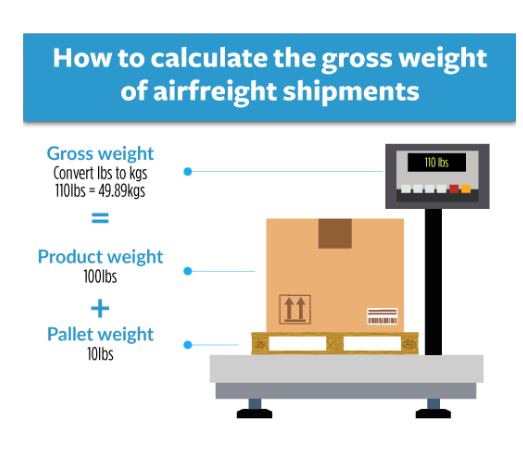
- Gross weight: the real weight of your shipment measured on a scale.
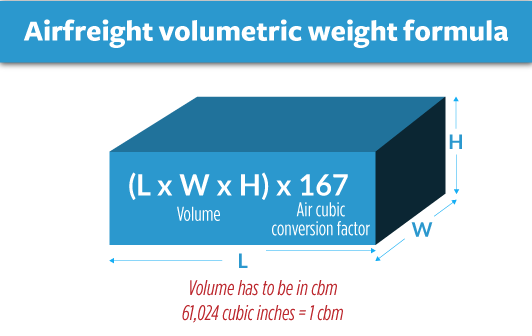
- Volumetric weight: a calculated weight based on the space your cargo occupies.
- Chargeable weight: the higher of gross or volumetric weight, used for billing.
How to calculate it? For air cargo, you use the formula: length x width x height in cm divided by 6000. For express, you divide by 5000. For example, if your shipment measures 100 x 80 x 60 cm, the volumetric weight for air cargo is 100 x 80 x 60 / 6000 = 80 kg. If the gross weight is 65 kg, you will be charged on 80 kg.
As a reference, in standard air cargo, 1 m3 = 167 kg. In express, 1 m3 = 200 kg. Many shippers focus only on gross weight and forget this conversion, which leads to unexpected cost increases once the airline remeasures the cargo.
FNM tip :
If you are planning air cargo Vietnam Switzerland, the first thing we recommend is preparing accurate dimensions and confirming your Incoterm before requesting a quote. With clear data, you avoid last-minute rate revisions and you get a realistic timeline from the start. You can contact our team here to review your shipment details and receive a structured proposal.
Door to door between Vietnam and Switzerland
When you’re shipping goods internationally, Door to Door service literally brings your cargo from one doorstep to another, handling every logistic hurdle in between. Ideal for convenience and control, this method in the Vietnam-Switzerland route is particularly advantageous. Spoiler: you’re in for fewer headaches and more streamlined operations. So grab your shipping caps, because we’re about to dive deep into the hows and whys of Door to Door shipping.
Overview – Door to Door
With Door to Door shipping between Vietnam and Switzerland, your logistics challenges melt away. This well-loved choice amongst FNM Vietnam’s clients provides seamless, end-to-end service, managing everything from pickup to final delivery. While it might be costlier than other options, your peace of mind is worth it, negating the stress, time, and complex paperwork typically involved. So, whether it’s critical machinery or fragile ceramics, trust in Door to Door shipping to deliver your goods smoothly and stress-free. Opt for convenience, embrace simplicity; let your business flourish.
Why should I use a Door to Door service between Vietnam and Switzerland?
Ever felt like pulling your hair out trying to navigate the tricky world of international shipping? Here’s the cure – consider a Door to Door service between Vietnam and Switzerland. There are five key reasons why this might just be the right move.
First, it simplifies logistics like a hot knife through butter. You don’t need to worry about the pick-up, storage, or delivery. The service provider handles this entire process, so you can stay ordeal-free and focused on your business.
Second, urgent shipment? With Door to Door service, the clock’s got nothing on you. The logistics company will work against the odds to ensure that your shipment is received timely. No more nail-biting while waiting for your precious cargo.
Third, if you’ve got complex cargo, Door to Door service is a match made in Heaven. Specialized treatment for your unique loads is a given, reducing the risk of damage and thereby saving you from hypertension.
Fourth, imagine sitting back in your comfiest chair while your shipment is trucked to your desired location. Convenience to this extent feels unreal, right? Wrong. It’s as real as it gets with Door to Door service.
Finally, stress is the last thing you need on your plate. By opting for Door to Door, you’re leaving the hassle at the door while your cargo takes a breezy trip from Vietnam to Switzerland. So, breathe easy, boss.
In a nutshell, Door to Door service between Vietnam and Switzerland is your one-way ticket to stress-free, convenient, and timely international shipping.
FNM Vietnam – Door to Door specialist between Vietnam and Switzerland
Navigate the complexities of international shipping with ease! At FNM Vietnam, we manage your door-to-door shipments from Vietnam to Switzerland effortlessly. Wave goodbye to the hassles of packing, transport, customs, and choosing the right shipping method. We are seasoned experts in this domain and provide a dedicated Account Executive for comprehensive assistance. Get a free quote within 24 hours, or speak with our consultants free of charge. Trust us for a stress-free shipping solution!
Customs clearance in Switzerland for goods imported from Vietnam
How to calculate duties & taxes when importing from Vietnam to Switzerland?
When you plan customs clearance in Switzerland for goods from Vietnam, you need four core inputs, your HS code classification Switzerland, the customs value, the origin status, and the applicable Swiss rates. If one of these is wrong, your landed cost calculation Vietnam to Switzerland will be off from day one. That is why two quotes for the same shipment often show different duty estimates.
You also need to understand that the final import tax assessment Switzerland is done by Swiss Customs, not by your supplier. If your forwarder gives you a very low estimate without checking origin documents or Incoterm, you may face a customs value adjustment or reclassification later. Let us walk you through the logic step by step so you can control your numbers.
Step 0 – Quick checks before you calculate
Before you start any calculation, confirm three operational points:
- Importer of Record, who legally files the import declaration filing Switzerland and holds the EORI number Switzerland.
- Incoterm, FOB, CIF, DAP or DDP will decide who controls clearance and who advances duties.
- Low-value or simplified clearance, check whether your shipment qualifies or must go through the standard import customs process Switzerland.
Step 1 – Identify the Country of Origin
Your duty rate depends on the real country of origin declaration Vietnam, not on where the goods are shipped from. Switzerland may grant preferential origin treatment if your product qualifies under a trade agreement Vietnam Switzerland or the GSP scheme.
You must support this with a valid certificate of origin Vietnam or invoice declaration. If origin is unclear or inconsistent with your invoice, you risk a preferential duty denial and retroactive duties. This is one of the most common mistakes we see.
Step 2 – Find the HS Code of your product
Your HS code classification Switzerland determines the duty rate, possible quotas, and whether your product falls under restricted and prohibited goods Switzerland. A wrong code can trigger a post-clearance audit risk or additional duties.
You can start with a tariff code lookup Switzerland on the official Swiss platform. Compare product composition, function and technical specs with the explanatory notes. When in doubt, request product classification assistance before you ship. Here’s an infographic showing you how to read an HS code.
Step 3 – Calculate the Customs Value
Swiss customs valuation rules Switzerland generally rely on the transaction value, meaning the price actually paid or payable. In practice, you must determine the CIF value for customs purposes, which includes goods value plus certain transport and insurance costs up to the Swiss border.
If you buy under FOB Ho Chi Minh, you will add international freight and insurance to reach the customs value calculation method base. For example, if goods cost 20,000 CHF and freight plus insurance is 2,000 CHF, your customs value is 22,000 CHF. Forgetting assists, commissions or royalties can lead to a customs reassessment later.
Step 4 – Figure out the applicable Import Tariff in Switzerland
The import tariff Switzerland is the customs duty rate applied to your product based on its HS code and origin.
To find it, follow three steps. Open the official Swiss tariff tool. Enter your HS code. Then check the duty column corresponding to Vietnamese origin and any preferential regime.
- Duty rate type, ad valorem or specific per kg.
- Preferential column, whether Vietnam qualifies.
- Additional measures, quotas or anti-dumping duties.
If your customs value is 22,000 CHF and the duty rate is 5 percent, your estimated customs duty is 1,100 CHF. On this route, agricultural and food products often have specific duties per weight, so your net weight must be accurate. If you want, we can double check the classification and rate before shipment.
Step 5 – Consider other Import Duties and Taxes in Switzerland
After customs duty, you must calculate VAT on imports Switzerland. VAT is usually applied on the customs value plus customs duties and certain additional costs. If your taxable base is 23,100 CHF and the applicable VAT rate is applied, you calculate VAT on that full amount, not only on the goods value.
Beyond VAT, some products face other measures. Alcohol, tobacco, or specific packaging may trigger additional federal taxes. If you ignore these, you may face a release hold at customs until payment is secured.
- Check VAT rate applicable to your product category.
- Verify special taxes for alcohol, tobacco or environmental fees.
- Confirm supporting documents for customs clearance match the declared value.
Step 6 – Calculate the Customs Duties
The basic formulas are simple. Customs duty equals customs value multiplied by duty rate. VAT equals taxable base multiplied by VAT rate.
If your customs value is 22,000 CHF and duty is 5 percent, duty equals 1,100 CHF. If VAT is calculated on 23,100 CHF, you apply the relevant rate to that base. Once Swiss Customs validates your import declaration filing Switzerland, you or your customs broker Switzerland must settle the amount before or at release, depending on your customs account. Delays in payment can immediately affect the customs release process Switzerland and extend your clearance timeline Vietnam to Switzerland.
Step-by-step: how customs clearance usually works on this route
When you handle exporting from Vietnam to Switzerland customs requirements, you need to see the full operational chain. The theory is one thing, but in practice documents, timing and data accuracy decide whether your cargo clears in hours or sits in storage. Here is the step by step customs clearance process Switzerland as we coordinate it.
- You confirm commercial terms, Incoterm, and who acts as Importer of Record in Switzerland.
- Your supplier prepares the commercial invoice requirements, packing list for customs, and if applicable the certificate of origin Vietnam.
- The carrier issues the Bill of Lading for customs clearance or Air Waybill for customs purposes.
- We or your customs broker Switzerland review HS code, value and origin before arrival to reduce customs compliance Vietnam Switzerland trade risks.
- An electronic import declaration filing Switzerland is submitted to Swiss Customs.
- Customs may validate automatically or trigger a customs inspection procedure, this is a key moment where incorrect data creates delay and storage costs.
- Once duties and VAT are assessed, payment is made via customs account or direct settlement.
- After confirmation, Swiss Customs issues the release and the goods enter the domestic market or proceed to temporary import procedure or re-export from Switzerland if declared accordingly.
You should know that timing differs depending on airport or port of entry, shipment type, and documentation quality. From experience, most delays come from origin proof issues or value inconsistencies, not from the transport itself. If you prepare these points correctly, your clearance timeline Vietnam to Switzerland becomes predictable.
Does Docshipper charge customs duties?
We do not collect government duties or VAT for ourselves. Customs duties and VAT are assessed by Swiss authorities during the import tax assessment Switzerland, and they are payable by you as the Importer of Record or through your customs account.
What we do is coordinate the full customs clearance in Switzerland for goods from Vietnam. We prepare and verify supporting documents for customs clearance, liaise with your customs broker Switzerland when required, and make sure the import declaration filing Switzerland is accurate so you avoid penalties or post-clearance audit risk.
Forbidden items
Before you ship from Vietnam, you should check whether your goods fall under restricted and prohibited goods Switzerland rules. Certain categories will be blocked at the border regardless of value or documentation, and attempting to import them can lead to a seizure and fines.
- Narcotics and controlled drugs
- Pornographic materials prohibited under Swiss law
- Counterfeit products infringing intellectual property rights
- Hazardous waste materials without special authorization
- Protected animal products and certain live animals without permits
- Weapons, ammunition and explosives without federal authorization
- Radioactive materials
- Toxic and highly hazardous substances
If you are unsure, you should verify classification and licensing requirements before booking freight. This is much easier than resolving a blocked shipment during the customs inspection procedure.
Limited items
Some goods are not fully prohibited but subject to permits, quantitative limits or technical compliance checks. If you ignore these conditions, you risk a customs release delay even if your duties and taxes Switzerland imports are correctly calculated.
- Alcohol and tobacco products, subject to specific federal taxes and quantity controls.
- Plants and plant products, often requiring phytosanitary certificates.
- Electronic products, which may need conformity documentation.
- Medical devices and pharmaceuticals, subject to health authority approvals.
- Food products, potentially requiring sanitary documentation.
- Cosmetics and personal care products, sometimes subject to product registration.
Before exporting from Vietnam to Switzerland customs requirements, you should confirm whether your HS code triggers additional authorizations. This avoids last minute storage fees and compliance issues.
Vietnamese Customs
Official Name: General Department of Vietnam Customs
Official Website: https://www.customs.gov.vn/
Switzerland Customs

Official name: Swiss Federal Customs Administration
Official Website: https://www.bazg.admin.ch/
Documents required
Prohibited and restricted items when importing into Switzerland
When you import from Vietnam into Switzerland, you need to clearly separate what is restricted from what is prohibited. Restricted means you can ship it, but only if you meet specific licensing, health, or safety conditions. Prohibited means customs can seize, return, or destroy the goods, often with fines.
The first thing we always tell importers is this, most problems do not come from freight, they come from compliance gaps and missing pre-approvals. If you are unsure, you should confirm the exact HS code and supporting certificates before your cargo leaves Vietnam. A shipment blocked at Swiss customs quickly turns into storage and return costs.
Restricted products
- Animals and animal products – veterinary certificates and health controls required at entry.
- Agricultural products – phytosanitary documents and possible quota limitations.
- Alcohol and tobacco – subject to excise duties and specific import authorisations.
- Chemical products – controlled substances require safety data sheets and regulatory compliance.
- Livestock feed – sanitary approvals and ingredient traceability checks.
- Food supplements – ingredient validation and labelling compliance under Swiss rules.
- Pharmaceutical products – marketing authorisation and strict temperature control documentation.
With these categories, you can import, but only if your documents match the cargo exactly. If your commercial invoice, packing list, and certificates describe the goods differently, Swiss customs can suspend the release until you clarify the discrepancy.
Prohibited products
- Explosives – strictly banned without special federal authorisation.
- Narcotics and illegal drugs – criminal offence, immediate seizure.
- Weapons and certain weapon parts – heavily regulated or banned depending on type.
- Pornographic material – illegal content results in confiscation.
- Counterfeit products – intellectual property violations lead to destruction and penalties.
- Ivory and protected species products – banned under international wildlife protection rules.
If you have any doubt about your product category, you should verify classification before booking freight. A simple HS code check and compliance review can save you from a customs seizure and reputational damage. From experience, it is always cheaper to double-check before shipment than to argue after arrival in Switzerland.
DocShipper Advice :
More than 10 years of expertise on the Asian continent, allows us to offer tailor-made freight solutions at more than competitive prices. Do not hesitate to contact our dedicated specialists for more information on your transfer, we are always happy to serve and disseminate our knowledge, we respond within 24 hours!
Other logistics services
Warehousing and storage
We offer comprehensive warehousing services in China, with multiple distribution centers located in key urban areas to ensure efficient and timely delivery of your merchandise to Thailand. Our experienced team is equipped to handle complex logistics needs, including consolidation of orders from multiple suppliers or splitting of containers for later shipment. You can trust us to ensure the safe and secure storage of your goods with our advanced inventory management systems and strict security protocols. For more information on our warehousing services, please refer to our dedicated article : Warehousing services
Packaging and repackaging
Calculating the assurance for transportation involves multiplying the premium rate by the pronounced sum. The cost of insurance can vary based on several factors, including the mode of transportation, the nature of the cargo, and the insurance company. To accurately determine the cost, it is essential to declare both the shipping charges and the value of the goods. For further information on transportation insurance, we invite you to consult our dedicated article : Packing services
Transport insurance
The measure of assurance for transport is determined with premium rate x pronounced sum. The protection rate changes as indicated by the strategy for transportation utilized, the sort of merchandise and the insurance agency... In order to be aware of the exact amount, the supporter has to proclaim the measure of costs that is related to the transportation just as the worth of the merchandise. Check our dedicate article : Transport insurance
Supplier management in China
We take a proactive approach to ensure seamless operations and customer satisfaction. As such, we initiate contact with your supplier well in advance to provide a comprehensive service that guarantees the quality of the products you receive. Our team is proficient in evaluating product attributes such as CE standards, product condition, and packaging, and will ensure that the products are packaged appropriately before being dispatched under our close supervision. With our commitment to exceptional service, we guarantee a hassle-free experience from start to finish. Our team, which is fluent in Mandarin, English, and French, has the necessary expertise to verify crucial details such as accurate measurement and proper HS code classification of your goods. More information can be found on our dedicated page: Sourcing service
Shipment of personal effects
Are you in the midst of planning a relocation, or have you recently returned from a trip that has left you with a surplus of luggage to manage? Do you find yourself grappling with the complexities of packing, storage, packaging, or customs clearance? Let us alleviate the burden of packing, storage, packaging, and customs clearance for your upcoming move or unexpected return from a busy trip. We offer comprehensive solutions for transporting your belongings from China to Europe, or any other destination around the globe. Rest assured, we take ownership of the logistics and handle everything with care and attention to detail. More informations on our dedicated page : Moving services