
Freight from Vietnam to Slovakia | Rates – Transit Times – Duties & Taxes

If you underestimate the distance and regulatory gap between Southeast Asia and Central Europe, your shipping Vietnam Slovakia project can lose weeks before you even notice, especially when you misjudge transit times, documentation flow, or inland delivery in Slovakia. You are not just booking freight, you are aligning suppliers in Vietnam with EU customs rules, Slovak import VAT, and realistic freight rates that match your cargo profile and Incoterms. The first thing we always tell you is this, once you understand the route logic and the cost drivers, it becomes predictable and manageable. In this destination guide, you will find clear benchmarks on transport options, customs clearance, duties and taxes, and the operational checkpoints you should validate before confirming your shipment.

Which are the different modes of transportation between Vietnam and Slovakia?

If you are shipping full containers or heavy cargo, you will usually choose ocean freight from Ho Chi Minh City Port or Hai Phong to a major EU gateway like Hamburg, then move inland to Slovakia by rail or truck, because it keeps cost per CBM under control. If you are moving urgent or high value goods, you will choose air freight from Tan Son Nhat to Vienna or Budapest, then truck to Bratislava, because you gain days and reduce storage risk.

You will notice fast that rail and road alone are not direct options due to geography, so your real decision is balancing budget, speed, and cargo sensitivity while planning the inland leg to Slovakia. If you are unsure, you can contact our team and we will check real time capacity, rates, and cut off constraints to help you choose the right setup, and we will break down each option in more detail below.

How can FNM Vietnam help?

Confused about how to ship your goods between Vietnam and Slovakia? FNM Vietnam is here to simplify your shipping journey. We handle all transport organization, customs clearance, and paperwork. Ready to make your logistics hassle-free? Get a free cost estimate in less than 24 hours. Need help? Our consultants are just a call away!

Sea freight from Vietnam to Slovakia

If you’re planning sea freight shipping Vietnam Slovakia, you need to think in terms of volume, timing, and inland routing. Sea freight makes sense when you ship at least a few cubic meters regularly, or when you move full loads under FCL full container load Vietnam Slovakia. You trade speed for cost, but you gain predictability and scale. For most industrial cargo, textiles, furniture, machinery parts, or consolidated pallets, ocean freight Vietnam to Slovakia is the cost-efficient backbone.

Here is the part many importers underestimate. Slovakia is landlocked. Your container does not arrive “in Slovakia” by sea. It arrives in a North Sea or Adriatic gateway, then moves inland by rail or barge to Bratislava. If you ignore this reality, you risk choosing the wrong Incoterm or assuming a port-to-port rate covers everything. That is how you end up with unexpected inland charges after the vessel arrives. From experience, the first thing we always tell you is simple, think door-to-door sea freight Vietnam Slovakia, not just port-to-port.

Which incoterms should you use?

On this route, your Incoterm choice shapes your risk more than the sailing itself. If your supplier proposes EXW, you take control from the factory gate, including export customs clearance Vietnam. That gives you visibility, but you must coordinate local trucking and documentation. With FOB Ho Chi Minh, your supplier handles export clearance and loading at the port of loading Vietnam, and you control the main freight. For most structured imports, FOB Ho Chi Minh to Slovakia inland delivery is often the cleanest balance of control and cost.

Be careful with CIF. On paper, it looks convenient, but CIF usually covers freight to the port of discharge only, not inland delivery to Slovakia. That means you still pay terminal handling, rail, and customs at destination. Many importers discover too late that CIF port to door Slovakia is not automatic. If you want full visibility and a fixed landed budget, you should consider DAP or DDP, especially if you want us to manage import customs clearance Slovakia and final delivery.

Main ports to know in Vietnam and Slovakia

When you plan container shipping Vietnam to Slovakia, you actually choose two things, the ocean gateway and the inland corridor.

  • Ho Chi Minh City (Cat Lai), main southern gateway, high vessel frequency and direct links to Europe via transshipment.
  • Hai Phong, ideal if your factory is in the north, shorter pre-carriage, strong industrial base.
  • Da Nang, useful for central Vietnam, but often fewer direct sailings, which can extend port-to-port transit time.

On the Slovak side, remember that there is no seaport. Your cargo typically enters via:

  • Hamburg or Bremerhaven, then rail to Bratislava.
  • Koper in the Adriatic, often shorter inland distance to Slovakia.
  • Rotterdam, strong connectivity but sometimes longer inland transit.

Your real decision is the port of discharge for Slovakia via Adriatic or North Sea. From there, a feeder vessel connection to inland terminal or direct rail creates a multimodal sea and rail solution to Slovakia. If you ignore inland capacity during peak season, you can face rail slot delays even when the vessel is on time.

Transit times: How long does it take to ship from Vietnam to Slovakia?

The average sea transit time Vietnam to Slovakia ranges between 35 and 50 days, depending on the departure port and the European gateway used. This includes ocean freight plus inland rail to Bratislava.

Port of Loading (Vietnam)Gateway Port (EU)Estimated Transit Time
Ho Chi Minh CityHamburg to Bratislava38 to 45 days
Hai PhongHamburg to Bratislava42 to 50 days
Ho Chi Minh CityKoper to Bratislava35 to 42 days
Da NangNorth Sea gateway45 to 50 days

You should read these numbers as planning ranges, not guarantees. Your real timing depends on sailing schedule and vessel frequency, transshipment stops, and inland rail capacity. During peak season or before major European holidays, you may see rollovers to next vessel, which add one week easily. The key is to confirm the service pattern, direct or via transshipment, before you lock your production schedule.


Should I choose FCL or LCL when shipping between Vietnam and Slovakia?


When it comes to sea freight shipping from Vietnam to Slovakia, picking between Full Container Load (FCL) and Less than Container Load (LCL), better known as consolidation, isn’t just about the price. The right choice can be a game-changer, impacting the delivery time and overall success of your shipment. So, should you go for consolidation or a full container? The answer isn’t one-size-fits-all. It depends on your specific shipping needs. This section will guide you through the pros, cons, and strategic implications of FCL and LCL to help you make an informed choice. Let’s dive in!


Full container load (FCL)

Definition: FCL (Full Container Load) shipping is when you have enough goods to fill an entire container, typically a 20'ft or 40'ft one. It's a term used in freight transport which describes an international sea freight service.
When to Use: FCL shipping is best utilized when the cargo volume exceeds 13/14/15 CBM (cubic meters). It offers advantages such as being cost-effective for large volumes and providing greater safety as the container remains sealed from origin to destination.
Example: Let's say a furniture manufacturer in Vietnam has a bulk order to transport 500 chairs to Slovakia. Each chair's volume is around 0.03 CBM, totaling 15 CBM for all chairs. In this case, using FCL shipping would be the optimal solution.
Cost Implications: While FCL shipping carries higher upfront costs, the per unit cost becomes considerably low, making it inexpensive for large shipments. In other words, the more you ship, the less you pay per cubic meter, which can drastically reduce your overall expenses. To understand the exact costs, businesses can request an FCL shipping quote from a freight forwarder. Remember, FCL also adds an extra layer of security, potentially saving costs related to lost or damaged goods.

Less container load (LCL)

Definition: LCL (Less than Container Load) shipping is a cost-effective method to ship small volumes of cargo. In LCL, various shipments are consolidated into one container for transportation.
When to Use: LCL freight is an optimal choice when the volume of your cargo is less than 15 cubic meters (CBM). This method provides flexibility, as you only pay for the space your cargo occupies, not the full container.
Example: Consider a Vietnamese Furniture manufacturer shipping a small quantity of designer chairs to a boutique in Slovakia. As the volume doesn't exceed 15 CBM, opting for LCL shipment would be practical and cost-efficient.
Cost Implications: While LCL shipping quote can be variable and based on the volume of goods, it is typically more affordable for low-volume shipments. High frequency of consolidated shipments between Vietnam and Slovakia can further reduce the cost. However, remember that it involves additional steps like consolidation and deconsolidation, potentially leading to slightly longer transit times. Consider these factors when selecting between LCL and FCL for your shipping needs.

Hassle-free shipping

Struggling to choose between consolidation or full container shipping from Vietnam to Slovakia? Let FNM Vietnam, your trusted freight forwarder, alleviate the stress. Our seasoned ocean freight experts consider critical factors, such as volume, weight, cost, and time to implement the ideal solution tailored to your needs. Regardless of the shipment size, we transform complex logistics into a smooth journey. Don’t let indecision stall your business. Contact us now for a free, no-obligation shipping estimation.

Shipping rates: how much does a sea freight shipment cost from Vietnam to Slovakia?

Indicative sea freight rates Vietnam Slovakia fluctuate with market conditions, fuel, and equipment availability. For planning purposes, you can expect the following broad ranges.

ModeIndicative Range
LCL per CBM50 to 900 USD per CBM
20ft containerocean freight price per container varies by season
40ft containerUsually lower cost per CBM than 20ft

If you ship small volumes, LCL less than container load consolidation looks flexible, but you pay per cubic meter plus destination charges. If you fill close to 15 to 18 CBM, you should compare against a 20ft FCL. Your final budget is not just the ocean rate. It includes port handling charges, inland rail, customs, and documentation. That is why a simple port-to-port figure rarely reflects your real container shipping cost breakdown.

How to estimate your sea freight cost before requesting a quote

Before you ask for a freight quote Vietnam to Slovakia, prepare four elements, your volume in CBM, gross weight, chosen Incoterms EXW FOB CIF DAP DDP, and exact pickup and delivery addresses. For LCL, carriers charge by chargeable weight, usually 1 CBM equals 1,000 kg. If you ship 10 CBM at 4,000 kg, you are charged on 10 revenue tons, not 4. Multiply by the LCL rate, then add origin, destination, and inland costs to get your realistic estimate.

If a quote looks extremely low, check what is excluded. Many offers leave out customs clearance fee at destination, rail to Bratislava, or even documentation fee bill of lading. That is how you face last minute cost inflation. When we prepare your estimate, we focus on total landed cost, not just the ocean leg. We can provide a detailed route-specific quotation in under 24 hours.

Surcharges and hidden cost drivers to watch for

On this corridor, the first surprise usually comes at destination. Even if your supplier ships under CIF, you still pay local port handling charges, inland transfer, and customs clearance fee at destination. These are not optional. They are part of the import process.

Then come time-related costs. If you do not return the container within the free days, you pay demurrage and detention. Once free time expires, charges accumulate daily. A small delay in paperwork can trigger demurrage starts automatically, even if your cargo never leaves the terminal.

Finally, watch market surcharges such as bunker adjustment factor and peak season surcharge. These are announced by carriers and can shift your rate between booking and sailing. The safest way to manage this is to confirm validity, free time, and all rate components in writing before booking.

Step-by-step: how a sea freight shipment usually works on this route

When you organize international sea logistics Southeast Asia to Central Europe, you follow a structured chain. The route is long, involves transshipment, and requires coordination between sea and rail. Most delays do not happen at sea. They happen at booking, documentation, or inland transfer. Here is what actually happens in real life.

  1. We confirm volume, Incoterm, and schedule, then secure space and send your booking confirmation and shipping instructions.
  2. Your supplier prepares cargo, and we arrange pickup under EXW or monitor delivery under FOB.
  3. We handle export customs clearance Vietnam and deliver the container to the terminal before the cut-off.
  4. The carrier loads the container and later issues the bill of lading B/L issuance.
  5. The vessel sails to a European gateway, often via transshipment in Asia.
  6. At arrival, the container transfers to rail under a multimodal sea and rail solution to Slovakia.
  7. We coordinate import customs clearance Slovakia and pay duties and VAT on your behalf if agreed.
  8. After clearance, we deliver to your warehouse and close the file with full sea freight tracking Vietnam Slovakia visibility.

Special sea freight solutions

If your cargo does not fit standard container logic, you still have options on this route.

Out of Gauge (OOG) and project cargo

If you ship oversized machinery, you can use out of gauge OOG cargo by sea or a full project cargo Vietnam to Slovakia setup. We analyze lifting points, port equipment, and inland bridge limits before booking. Without this pre-check, you risk cargo stuck at terminal due to size restrictions.

Breakbulk shipping solution

For heavy or indivisible units, a breakbulk shipping solution can be more realistic than containers. Cargo is loaded piece by piece and secured directly in the vessel hold. This requires detailed planning but can save dismantling costs.

Reefer container shipping

If you move temperature-sensitive goods, reefer container shipping Vietnam Slovakia keeps your cargo within a controlled range during the entire sea and rail corridor. You must confirm power availability at transshipment ports and inland terminals to avoid temperature deviation.

In all cases, you should also consider cargo insurance for sea freight. On a 40-day journey with multiple handling points, insurance is not a luxury. It is basic risk management.

Air freight between Vietnam and Slovakia

If you need speed, flexibility, and tight control over your timeline, air freight Vietnam Slovakia is often the right move. You typically use it for high-value electronics, urgent spare parts, pharma, or product launches where a few days matter. But you should not assume it is always 3 days door to door or automatically too expensive. On this lane, the real logic sits in the chargeable weight, the cut-off time, and the available cargo capacity.

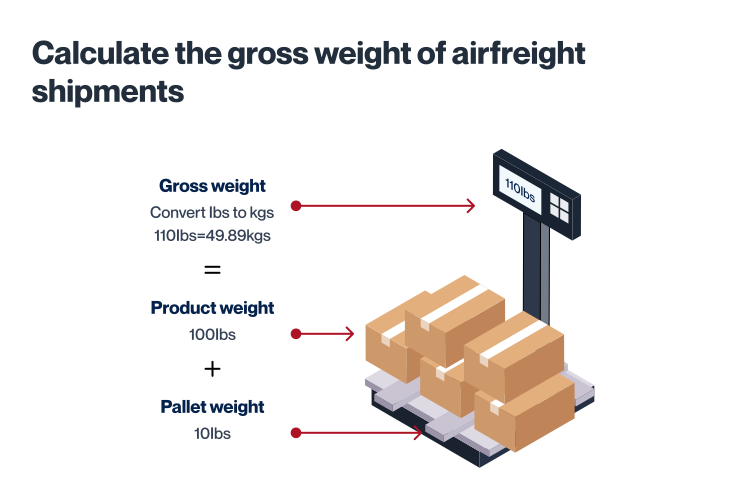
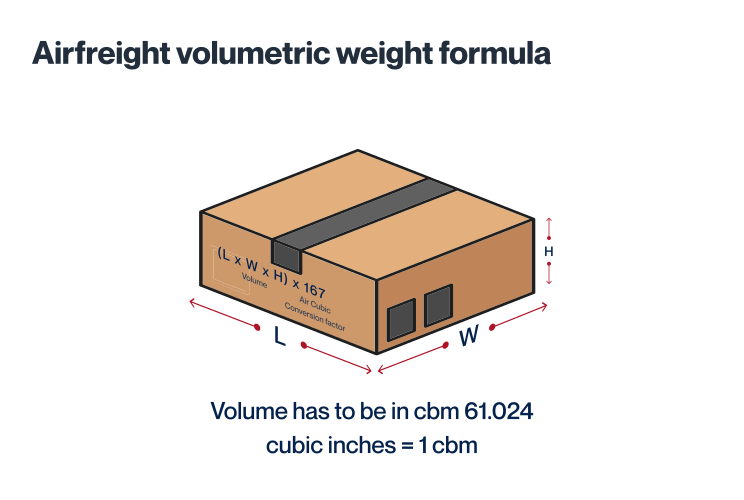
You will notice fast that the costly mistakes are rarely about flying itself. They come from a wrong volumetric weight vs gross weight estimate, weak packaging that fails cargo screening and security check, or missing export documentation for air freight Vietnam. If your supplier misses the flight cut-off by a few hours, you can easily lose a full rotation. That is where hidden airport charges and rebooking fees start to add up.

Air Cargo vs Express Air Freight: How should I ship?

When you compare air cargo Vietnam to Slovakia with express courier services, you are really choosing between control and simplicity. With classic airport to airport air freight or door to door air freight Vietnam Slovakia, you book space on commercial aircraft and manage the structure of your shipment. With express, the integrator handles almost everything under one contract and one tracking number.

This is the real air cargo vs express courier Vietnam Slovakia question. If you ship regularly, care about cost per kilo, or move pallets, air cargo gives you more flexibility. If you ship small cartons occasionally and want minimal coordination, express feels easier. The difference shows up later in billing transparency, customs control, and how your air waybill AWB is structured.

Should I choose Air Cargo between Vietnam and Slovakia?

You should seriously consider standard air cargo Vietnam to Slovakia once your shipment is above 100 to 150 kg or around 1 CBM. From that point, a consolidated air freight service or even a palletized booking usually beats express in cost efficiency. This is especially true for B2B flows, recurring orders, oversized cargo by air, or temperature controlled air cargo.

Before you request an air cargo quote request Vietnam Slovakia, you should have exact dimensions, gross weight, ready date, Incoterm such as FOB or DAP, and the preferred airport. You also need to confirm if your goods fall under dangerous goods air freight Vietnam Slovakia. If you confuse airport to airport with full door to door air freight Vietnam Slovakia, you risk unexpected trucking and airport handling charges at destination.

Extracted Image

Should I choose Express Air Freight between Vietnam and Slovakia?

You should choose express if your shipment is under 100 to 150 kg, below 1 CBM, and you want speed without building a logistics setup. The express air freight delivery time Vietnam Slovakia is often shorter on paper because everything runs under one operator, from pickup to customs. For samples, urgent documents, or small spare parts, it makes operational sense.

The trade-off is control. With express, you accept the carrier rules on chargeable weight calculation, reweighing, and fuel adjustments such as fuel surcharge air cargo equivalents. Many shippers underestimate volumetric weight or assume all duties are prepaid, which leads to unexpected destination invoices. Express is ideal if you prioritize simplicity. It becomes risky if you need tailored customs handling or tight cost monitoring per kilo.

Extracted Image

Main airports to know in Vietnam and Slovakia

When you plan air shipping Southeast Asia to Central Europe, the airport choice changes your real transit time and trucking cost. Here are the main international airports in Vietnam and the nearest international airport to Slovakia options you should evaluate.

  • Tan Son Nhat International Airport, Ho Chi Minh City: Southern Vietnam’s main cargo gateway, strong frequency to Europe via hubs, ideal for industrial zones in the south.
  • Noi Bai International Airport, Hanoi: Key hub for northern factories, stable cargo infrastructure, often used for electronics and high-value exports.
  • Da Nang International Airport: Useful for central Vietnam production, but with fewer long-haul options, often requiring transshipment.
  • M. R. Štefánik Airport, Bratislava: Slovakia’s primary cargo airport, suitable for direct import customs clearance at airport Slovakia, with road links to Austria and Czech Republic.
  • Košice International Airport: Strategic for eastern Slovakia, smaller scale but relevant if your final delivery is in that region.

If you choose the wrong pairing, you increase inland trucking and expose your cargo to capacity backlogs during peak season. The debate between direct flight vs transshipment air cargo also matters here, because transshipment can add one or two extra handling points.

Transit times: how long does air freight take from Vietnam to Slovakia?

ServiceEstimated Transit TimeNotes
Standard air cargoApprox. 3 to 6 daysAirport to airport, depending on connection and capacity
Express courierApprox. 2 to 4 daysDoor to door, subject to customs and flight schedule

Your real air transit time Vietnam to Slovakia depends on the departure airport, the selected service level such as priority air cargo service or standard air freight service, and the available flight schedule and cargo capacity. You should also factor in pre-carriage, customs export clearance, and final delivery.

The main variables are the pre-flight cut-off, the duration of cargo screening and security check, and possible congestion in European hubs before arrival in Slovakia. If your supplier delivers late to the airport warehouse, you can easily miss the booked flight and face rollover to the next rotation. That is why we always confirm ready date and space before locking the booking.

Shipping rates: how much does air freight cost from Vietnam to Slovakia?

For air freight rates Vietnam Slovakia, you will typically see wide ranges depending on weight bracket and season. As a broad market indication, you may encounter figures between 3 and 10 USD per kg for standard cargo, while express services can be higher per kilo. These are not fixed tariffs. Your final air freight cost per kilo depends on your shipment profile.

The first driver is always the chargeable weight, not just the gross kilos. Then come dimensions, packaging quality, and whether you need special handling such as palletized air cargo shipment. After that, urgency and season affect capacity, along with surcharges like fuel surcharge air cargo and security surcharge air freight. If you ignore density or misdeclare cargo type, you risk post-shipment re-invoicing that inflates your budget.

Step-by-step: how an air shipment usually works on this route

When you organize a step by step air shipment process Vietnam Slovakia, you move through a sequence that looks simple on paper but requires tight coordination. From booking to final delivery, each stage influences timing, cost, and customs compliance. Here is how we typically handle air freight tracking Vietnam Slovakia and execution.

  1. You confirm shipment details, including dimensions, weight, Incoterm, and cargo type, and we validate the chargeable weight calculation.
  2. We book space with the airline, issue the master air waybill MAWB, and if consolidated, a house air waybill HAWB.
  3. Your supplier delivers the cargo to the airport warehouse before the official cut-off for screening and export customs clearance.
  4. The cargo passes cargo screening and security check, and any issue here can trigger last-minute flight rejection.
  5. The goods fly, often via a European hub, then arrive for import customs clearance at airport Slovakia.
  6. After clearance, we arrange final delivery and confirm proof of delivery, while you can activate cargo insurance for air shipments if required.

Door to door between Vietnam and Slovakia


When you hear Door-to-Door shipping, think of a busy bee transporting goods from Vietnam directly to Slovakia, with you barely lifting a finger. Incredible, isn’t it? This hassle-free method is a favorite because of its streamlined process and efficiency. So without much ado, let’s unravel this concept and see how it could be your next best logistic solution. Dive in.


Overview – Door to Door


Experience hassle-free shipping from Vietnam to Slovakia with our Door to Door service. A favourite amongst FNM Vietnam’s clients, this solution handles complexities from customs duties to transportation schedules for you, minimizing your shipping stress. While it’s a great timesaver, costs can surge due to expedited service charges. However, considering its efficiency and ease, it’s worth considering when planning your international transportation strategy.


Why should I use a Door to Door service between Vietnam and Slovakia?


Ever tried juggling while riding a unicycle? That’s what managing international logistics can sometimes feel like. If you want to leave the circus tricks to the professionals, consider opting for a Door-to-Door service between Vietnam and Slovakia. Here’s why:


1. Kiss stress goodbye: With Door-to-Door service, kick back and leave the load to us. We handle all the complexities of customs, freight, and trucking, while you focus on your business.


2. Never a second late: In the world of business, time is money. Our Door-to-Door service ensures your shipment reaches its final destination right on schedule. No more worrying about missed deadlines.


3. Expert care for complex cargo: Got intricate machinery or sensitive pharmaceuticals? Our specialised teams treat your complex cargo with lace-glove care, all the way from pick-up to drop-off.


4. End-to-End convenience: Imagine this – your shipment is picked from your Point A and delivered seamlessly to Point B in Slovakia. You don’t have to break a sweat dealing with multiple transport and logistics vendors.


5. That sweet sense of certainty: With Door-to-Door service, there’s a reassuring certainty that your goods are ushered through every transit point by diligent professionals. That’s one less worry off your plate!


In the grand scheme of global business, every piece of cargo has a story to tell. We ensure it’s one of a smooth, hassle-free journey with Door-to-Door services. Let us do the juggling, while you keep the wheels of your business turning.


FNM Vietnam – Door to Door specialist between Vietnam and Slovakia


Welcome to seamless, door-to-door shipping between Vietnam and Slovakia with FNM Vietnam. No need to stress about packing or customs, as our proficient team handles everything from start to finish. We deliver a full suite of services across all shipping methods for your convenience. What’s more, we provide a dedicated Account Executive to streamline your experience. Get your free estimate within 24 hours or connect with our consultants for uncomplicated and hassle-free shipping solutions. Let FNM Vietnam take the reins while you focus on what really matters – your business.


Customs clearance in Slovakia for goods imported from Vietnam

When you handle customs clearance Slovakia for goods from Vietnam, you directly affect your total landed cost, your release timing, and who is legally liable as the Importer of Record. On this route, paperwork accuracy and valuation logic matter more than speed, and we regularly coordinate import customs process Slovakia on behalf of our clients to keep control of duties, VAT, and release timing.

You will notice fast that most delays come from a wrong HS code, a weak commercial invoice for customs, or confusion about origin under the EU Vietnam framework. If you ignore these details, you expose yourself to customs penalties and delays or extended inspections. Below, you will see the exact logic we use for a clear step by step customs clearance Vietnam to Slovakia.

How to calculate duties & taxes when importing from Vietnam to Slovakia?

To build a reliable customs duty estimate Vietnam to Slovakia, you need four inputs: the country of origin, the correct HS code classification Vietnam to Slovakia, the customs value calculation method, and the applicable EU tariff. You also need clarity on your Incoterm because it changes what is included in the taxable base.

Your estimate and the final amount assessed by Slovak customs can differ if your import declaration submission contains incomplete data or if customs adjusts your valuation. This is where many importers get misled by cheap freight quotes that ignore import duties and VAT Slovakia. If you want to understand how to calculate landed cost Vietnam to Slovakia properly and avoid unexpected VAT uplift, follow the steps below.

Step 1 – Identify the Country of Origin

You start with a clear country of origin determination, not the shipping country. For goods produced in Vietnam, you may benefit from preferential origin and trade agreement eligibility under the EU framework, but only if you can prove it with a valid certificate of origin Vietnam.

If you confuse origin with the export country, you risk losing preferential rates or triggering a post clearance audit risk. Slovak customs will check consistency between your invoice, origin statement, and product profile, especially for goods exposed to trade defense measures. Get this right before anything else.

Step 2 – Find the HS Code of your product

Your HS code classification Vietnam to Slovakia determines your duty rate, possible restrictions, and whether additional measures apply. A wrong code does not just change a percentage, it can trigger import license requirements Slovakia or specific product compliance and conformity documents.

The safest method is to start from the EU database, not from guesswork. You can consult the official EU tool here: TARIC consultation, then compare the description with your technical datasheet. If needed, you can request tariff classification assistance before you ship. If your HS code is wrong, you face reclassification and back duties after clearance, which is far more expensive than checking in advance.

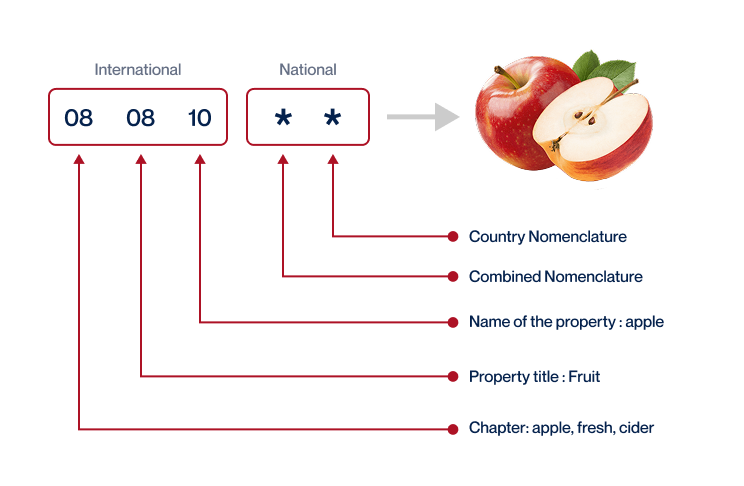
Here’s an infographic showing you how to read an HS code.

Step 3 – Calculate the Customs Value

Slovakia, as part of the EU, applies customs valuation based on transaction value in most cases. That means your taxable base starts from the price actually paid, then you add elements required under EU rules, including freight and insurance inclusion in customs value depending on your Incoterms impact on customs value.

If you buy goods at 10,000 USD under FOB, and you pay 1,000 USD for freight and 200 USD for insurance, your customs value is 11,200 USD. If you buy under CIF, freight and insurance are already included. You also need to consider packing, commissions, or royalties if applicable. If you underdeclare, you expose yourself to a valuation challenge by customs later.

Step 4 – Figure out the applicable Import Tariff

An import tariff is the percentage applied to your customs value to calculate duty. For Slovakia, you use the EU common external tariff through the TARIC system.

Here is the simple method you should follow. First, open the official TARIC tool. Second, enter your full HS code and select Vietnam as country of origin. Third, read the duty rate and any additional measures displayed.

When you check the result, look for:
Standard duty rate
Preferential tariff if origin criteria are met
Additional duties such as anti-dumping
• Specific document requirements linked to the code

If your customs value is 11,200 USD and the duty rate is 5%, your duty equals 560 USD. On this route, eligibility for preferential origin can change your margin significantly, but only if your documentation is consistent. If you want support reviewing your tariff line before shipment, we can check it with you.

Step 5 – Consider other Import Duties and Taxes

Beyond customs duty, you must factor in import duties and VAT Slovakia. VAT is calculated on the customs value plus duty and certain additional costs. If your customs value is 11,200 USD and duty is 560 USD, VAT is calculated on 11,760 USD, not just on the goods price.

Some products may also trigger excise duty or trade defense measures. For example, certain categories can face anti-dumping duty if listed in EU measures. You should also verify CE marking requirements for EU imports where relevant, because non-compliance can lead to customs inspection process Slovakia delays or refusal of entry.

Before you ship, check this:
EORI registration Slovakia is active
• Your customs documentation checklist Vietnam Slovakia is complete
• Any restricted and prohibited goods check has been done
• All compliance documents match your HS code

Step 6 – Calculate the Customs Duties

The core formula is simple. Duty = customs value × duty rate. Then VAT = taxable base × VAT rate, where the taxable base includes customs value plus duty and other applicable charges.

If your customs value is 11,200 USD and the duty rate is 5%, your duty is 560 USD. If the VAT rate is 20%, VAT is calculated on 11,760 USD, which equals 2,352 USD. Your total taxes equal 2,912 USD. This is the number you need in your landed cost model.

In practice, duties are paid by the Importer of Record before or at release, depending on your setup with your customs broker in Slovakia. If payment is delayed, goods will not be released, and storage charges can start quickly. This is also where errors in your single administrative document SAD or data inconsistencies can create extra costs.

Does FNM Vietnam charge customs fees?

We coordinate your import declaration submission, document review, and communication with your customs broker in Slovakia, but we do not set or collect government duties. Customs duties and VAT Slovakia are official charges paid to the authorities, usually by the Importer of Record using an active EORI registration Slovakia.

You receive official assessment documents, so you clearly see what is duty, what is VAT, and what relates to brokerage or handling. This separation protects you from hidden clearance markups and helps you control your landed cost with full visibility.


Contact Details for Customs Authorities


Vietnam Customs

Slovakia Customs

Required documents for customs clearance in Slovakia

When you import from Vietnam into Slovakia, customs clearance usually fails because documents do not match each other, not because “the border is strict.” Your Commercial Invoice, transport document, and declarations must show the same shipper, consignee, values, and product descriptions. Most holds come from inconsistencies or missing proof of value. Think of this as your customs document checklist that keeps your cargo moving inside the EU.

Bill of Lading or Air Waybill

The Bill of Lading for sea freight or Air Waybill for air freight is the transport document issued by the carrier. Customs and your broker use it to confirm who shipped the goods, who receives them in Slovakia, and under which Incoterm. Example: your container departs from Ho Chi Minh City under FOB, and the Slovak consignee listed on the B/L must match the importer declared to customs. A common mistake is changing the consignee last minute without updating all documents, which can trigger a customs data mismatch and delay release.

Packing List

The Packing List details what is physically inside each carton or pallet, including weight, dimensions, and quantities. Customs officers in the European Union use it to verify the goods against the invoice and to assess inspection risk. Example: if you ship 1,200 pieces of footwear from Hanoi, the total gross weight and number of cartons must align with the transport document. A frequent issue is inconsistent weights between the packing list and the Bill of Lading, which raises suspicion and may lead to inspection.

Commercial Invoice

The Commercial Invoice is the financial document that states the transaction value of your goods. Slovak customs use it to calculate customs duties and VAT, based on the declared value and the HS code. Example: if you import wooden furniture, your HS code determines whether preferential duty under EVFTA applies. The most common mistake is under-declaring value or using vague product descriptions, which can lead to a post-clearance audit and reassessment.

Certificate of Origin for EVFTA preference

The Certificate of Origin proves that your goods qualify as originating in Vietnam. Slovak customs require it if you want to claim a preferential tariff under the EU–Vietnam Free Trade Agreement. Example: if your textiles meet the EVFTA origin rules and you provide the correct origin statement, you may benefit from reduced or zero customs duty. A typical mistake is requesting preference without proper origin proof, which results in full duty being applied.

CE marking and Declaration of Conformity

If you import products covered by EU harmonized legislation, you must ensure they carry the CE marking and are backed by an EU Declaration of Conformity. Slovak authorities require this to confirm compliance with EU safety, health, and environmental rules before the goods circulate on the EU market. Example: electronics or machinery shipped from Vietnam must reference the relevant EU directives in the declaration. A frequent problem is placing the CE mark on the product without proper technical documentation, which can lead to market withdrawal.

EORI number of the importer

Your EORI number, Economic Operator Registration and Identification, is mandatory for any company acting as importer in the European Union. Slovak customs use this number to register declarations and track your import activity across EU borders. Example: your Slovak entity or fiscal representative must provide its valid EORI before the customs broker can lodge the import declaration. If you try to clear goods without an active EORI, clearance simply cannot proceed, and storage costs start accumulating.

Get Started with FNM Vietnam

Struggling with the complex customs clearance process for your shipments from Vietnam to Slovakia? FNM Vietnam can solve the headache for you. We simplify every step, ensuring a smooth, hassle-free transition for your goods. Why not save your time and resources? Contact us now. A detailed, free quote is just less than 24h away. Let us make your shipping experience better.

Prohibited and restricted items when importing into Slovakia

When you import into Slovakia, you need to separate two things clearly. Restricted products are allowed, but only if you meet specific EU conditions such as licenses, certificates, or safety approvals. Prohibited products should not enter the EU market at all and may be seized or destroyed. Understanding this difference is part of managing your EU import compliance before your goods even leave Vietnam.

Restricted products

  • Food and agricultural products – require health certificates and possible border inspection.
  • Pharmaceuticals and medical devices – need EU authorization and conformity assessment.
  • Chemicals – subject to REACH registration and safety data requirements.
  • Electrical and electronic equipment – must comply with CE, RoHS, and related directives.
  • Textiles and footwear – may face labeling and market surveillance checks.
  • Dual-use goods – export control authorization may be required.

Prohibited products

  • Counterfeit goods infringing EU intellectual property rights.
  • Hazardous substances banned under EU legislation.
  • Endangered species products without CITES authorization.
  • Illicit drugs and narcotics outside authorized medical channels.

If you are unsure whether your product is restricted or prohibited, you should confirm the correct HS code and check EU-wide rules before shipping. Sending goods first and clarifying later often leads to seizure or forced re-export, which is far more expensive than a compliance check upfront.

Trade agreements and preferential duties for imports from Vietnam to Slovakia

Because Slovakia is part of the European Union, your imports from Vietnam fall under the EU–Vietnam Free Trade Agreement, in force since 2020. Under this agreement, the EU committed to eliminate duties on up to 99% of tariff lines over a phased schedule. For many industrial products, duties have already been reduced to 0%, while some sensitive goods follow longer transition periods.

If you want to benefit from EVFTA rates, you must comply with the rules of origin and provide valid origin proof, typically a statement on origin or certificate issued according to EU requirements. Without that proof, Slovak customs will apply the standard EU Common Customs Tariff rate. You should also remember that even when customs duty is reduced to zero, import VAT still applies at the Slovak rate.

From experience, this is where you gain a real cost advantage. If your supplier in Vietnam understands EVFTA origin rules and structures production accordingly, you can legally reduce duty exposure. If not, you risk paying full tariff because of a technical origin error. Before shipping, you should verify the HS code, applicable EU tariff rate, and EVFTA status so you know exactly what lands on your final cost structure.

Your Next Step with FNM Vietnam

Planning your trade route from Vietnam to Slovakia can feel like a maze, juggling customs, carriers, and costs. With FNM Vietnam, leave the labyrinth of logistics behind. Our experts demystify the import-export process with ease. We’ll ensure your freight navigates smoothly, saving your business time and stress. Ready to streamline your shipping flow? Contact us today, and move your goods confidently.
More than shipping

Additional logistics services

1 Warehousing
1

Warehousing

Struggling to find reliable warehousing in Vietnam or Slovakia? Ideal storage conditions, like temperature control for sensitive cargo, can make or break your business. Don't miss the boat due to inadequate warehousing. Dive deeper to find the perfect warehouse solutions for your specific needs on our dedicated page: Warehousing.
img
2 Packing
2

Packing

Balancing the rigors of transport between Vietnam and Slovakia calls for expert packaging and repackaging. Partnering with a trusted agent ensures your goods, from fragile porcelain to hefty machinery, are well-protected and compliant with both countries' regulations. Take for instance, the assembly of wooden crates, fitting uniquely shaped ceramics, tailored to withstand varying shipping conditions. More info on our dedicated page: Freight packaging
img
3 Transport Insurance
3

Transport Insurance

Securing your goods in transit isn't like keeping your warehouse safe from fire. With Cargo Insurance, curtail unpredictable overseas risks for your valuable cargo. Picture this - turbulent seas tipping a container, a customs official mishandling a box, or unfortunate theft. Fret not, our service mitigates such risks, securing your peace of mind. Learn all there is to know on our dedicated page: Cargo Insurance.
img
4 Household goods shipping
4

Household goods shipping

Shipping personal effects from Vietnam to Slovakia? Don't sweat it! We manage even the trickiest objects - antique Vietnamese pottery or oversized Slovakian tapestries, no problem! Our team offers professional care and bumper-to-bumper flexibility for your precious items. Tap into our experience and make your move stress free. More info on our dedicated page: Shipping Personal Belongings.
img
5 Procurement in Thailand
5

Procurement in Thailand

Looking to manufacture in Asia or East Europe, but don't know where to start? We at FNM Vietnam simplify sourcing for your business through our comprehensive supplier management. We'll find the right suppliers for you, handle the procurement process, and bridge language barriers. For example, when shipping goods from Vietnam to Slovakia, we ensure smooth dealing with both Vietnamese and Slovak suppliers. Need more details? Find them at our dedicated page: Sourcing services.

img
6 Quality Control
6

Quality Control

Quality control is vital in your Vietnam-to-Slovakia shipping journey. It ensures your products match specifications, avoiding disappointing surprises upon arrival. Recall that time when off-color shirts arrived in Bratislava instead of vibrant ones? A QC intervention could've averted it. Rest easy, knowing your goods meet the mark. More info on our dedicated page: Quality Inspection
img
7 Conformité des produits aux normes
7

Conformité des produits aux normes

Ensuring your goods align with destination regulations is critical. Our Product Compliance Services are your trusty map—conducting diligent laboratory tests to secure required certification. It's like having a personal guide through a complex forest of rules. Missteps can be costly, akin to a US toy manufacturer facing fines for non-compliant products. Stay safe, stay compliant with us.
img