In short ⚡
Importing Garments from Vietnam: Factories, MOQs and Compliance requires matching the factory model and material plan to your product specifications, destination-market rules and duty strategy. MOQs vary by style, colour, fabric mill, trims and production plan, while compliance covers quality, labelling, testing, packaging and documentation. Key considerations include:| Area | What to verify |
|---|---|
| Factory model | CMT uses buyer-supplied materials; FOB includes material sourcing and production; ODM adds design and product development. Compare quotations on the same basis, including fabric, trims, testing, packaging and transport. |
| MOQ and sampling | Confirm the MOQ for the complete style and for each colour and fabric. Review prototype, fit, size-set and pre-production samples before bulk production. |
| Lead times | Separate development, material procurement, production, inspection and shipping. Fabric availability may become the critical path. |
| Quality control | Inspect measurements, stitching, fabric appearance, colour consistency, trims, labels, workmanship, carton marking and quantity against the approved sample and technical pack. |
| Compliance and documentation | Check fibre composition, care labels, country-of-origin marking, chemical restrictions, flammability requirements, packaging rules, test reports, invoices, packing lists and inspection results. |
| Fabric origin and duties | Verify the fabric mill, production country, origin evidence and HS code. Under EVFTA planning rules, Vietnamese garments generally require double transformation, while Chinese fabric generally does not qualify for the stated textile preference. |
Key sections cover Vietnam’s garment market and factory hubs, CMT/FOB/ODM production models, MOQ and sampling, lead times, fabric origin, quality control, compliance, duties and shipping.
We hope you’ll find this article genuinely useful, but remember, if you ever feel lost at any step, whether it’s finding a supplier, validating quality, managing international shipping or customs, FNM Vietnam can handle it all for you!
Why produce garments in Vietnam
Vietnam exported an estimated USD 46 billion of textiles and garments in 2025 and serves 138 markets. The country is a strong option for knitwear, outerwear, sportswear and private-label production, but the factory you choose and the origin of your fabric will determine your cost, control and duty outcome.
The industry combines experienced garment factories with a broad supplier base around Ho Chi Minh City, Binh Duong, Dong Nai, Hanoi, Nam Dinh and Hai Phong. These hubs should be treated as starting points for sourcing, not as proof that every factory in the area can produce your product or meet your compliance requirements.
Vietnam’s advantages include established cutting and sewing skills, export experience and access to regional textile suppliers. Its limits are equally important: many factories still import fabric from China, capacity can be concentrated among larger exporters, and a low factory price does not guarantee preferential duty treatment in your destination market.
Vu Duc Giang, Chairman of VITAS, stated that “Export turnover is estimated to reach 46 billion USD, an increase of 5.6% compared to 2024.” The estimate was published on 17 December 2025 and reported by Antidumping.vn.
Use the market data as context, then qualify factories against your product brief, target market, required certifications, production capacity and fabric plan.
| Indicator | Reported information | Why it matters |
| 2025 textile and garment exports | Estimated at USD 46 billion | Confirms Vietnam’s scale as an apparel sourcing market |
| Year-on-year change | Increase of 5.6% | Shows continued export growth, not a guarantee of factory availability |
| Trade surplus | USD 21 billion | Indicates the importance of the sector to Vietnam’s trade balance |
| Export reach | 138 markets | Suggests broad experience with international buyers and documentation |
| Domestic value added | About 52% | Shows that a significant portion of value is created locally, while imported inputs remain relevant |
| 2030 target | USD 64.5 billion | Signals the sector’s development ambition |
DocShipper Info
Get support qualifying reliable garment suppliers against your product, compliance and fabric requirements.
CMT, FOB or ODM: choosing the factory model
Under CMT, you supply the fabric and key inputs while the factory cuts, makes and trims the garment. Under FOB, the factory sources the materials and delivers a finished export order. ODM adds design and product development, so the factory contributes more than manufacturing alone.
Choose CMT when you already control fabric quality, colour, performance and origin. It gives you more control, but it also makes you responsible for fabric purchasing, testing, transport to the factory and the documentation needed to support your origin strategy.
FOB can simplify purchasing because the factory coordinates fabric, trims and production. Before accepting the quotation, request the bill of materials, fabric origin, test reports and the proposed production route. “FOB” does not automatically mean that every input comes from Vietnam or that the finished garment qualifies for a trade preference.
ODM is useful when you need help with patterns, construction or a complete product concept. It can shorten development for a brand without an internal technical team, but you must clarify ownership of patterns, approved samples, artwork, grading files and future production rights.
| Model | Factory responsibility | Your main responsibility | Best fit |
| CMT | Cutting, sewing and finishing using buyer-supplied materials | Fabric, trims, specifications, logistics and often testing coordination | Brands that have an approved fabric supply chain |
| FOB | Material sourcing plus garment production and export preparation | Approving the bill of materials, quality standards, origin evidence and final product | Buyers seeking a more integrated production route |
| ODM | Design or product development in addition to sourcing and production | Brief, approvals, intellectual property and compliance requirements | Brands that need technical development support |
In practical terms, compare quotations on the same basis. Ask whether the price includes fabric, trims, testing, packaging, inspection, export documents and inland transport. A cheaper CMT price can become more expensive once you add the fabric operation; a higher FOB price can conceal an unsuitable fabric origin.
DocShipper Tips
Compare CMT, FOB and ODM quotations with materials, testing, documentation and ownership clearly defined.
MOQ, sampling and lead times
Do not treat the factory’s MOQ as a single number until you know what it covers. Clothing MOQ in Vietnam can depend on the style, colour, size ratio, fabric mill minimum, trim minimum, production line and whether the factory accepts a development order.
Start with a technical pack containing measurements, construction details, artwork, seam requirements, fabric composition, colour references, labelling and packaging instructions. Ask the factory to confirm which specifications it can meet before requesting a final quotation.
Use a controlled sample sequence. First review a prototype or development sample, then a fit sample, followed by a size-set sample where several sizes are checked. Approve a pre-production sample before bulk production, and make sure the factory uses the approved version as its reference.
Lead time should be separated into development, material procurement, production, inspection and shipping. Fabric availability may become the critical path, especially under CMT or when you require a particular composition, colour, recycled input or preferential-origin material.
- Issue the brief: Send the technical pack, target quantity, size breakdown, colour list, destination market and required delivery window.
- Confirm feasibility: Ask about line capacity, fabric minimums, trim minimums, sample charges and the factory’s proposed production route.
- Approve development: Review the prototype and fit sample against measurements, construction and appearance.
- Lock materials: Approve the fabric, trims, labelling and packaging, including their origin and test documentation.
- Approve pre-production: Sign off the final reference sample before bulk cutting.
- Inspect production: Check workmanship and measurements during or after production, before the goods leave Vietnam.
When comparing factories, request the MOQ for the complete style and the MOQ for each colour and fabric. If a supplier provides no sourced MOQ range, do not publish or rely on a generic minimum. Obtain the number in writing for your exact product and material plan.
| Stage | Decision to make | Document to retain |
| Technical review | Can the factory build the garment to specification? | Technical pack and feasibility comments |
| Sampling | Does the product fit and look correct? | Approved sample and measurement comments |
| Material approval | Are composition, colour, performance and origin acceptable? | Fabric approval, test reports and supplier documents |
| Bulk production | Does production match the approved reference? | Inspection report and corrective-action record |
DocShipper Tips
Confirm exact quantities in writing before approving samples or production schedules.
Looking for a Reliable Shipping & Sourcing Partner?


Fabric sourcing and rules of origin
For EVFTA preferential treatment, textile rules generally require double transformation: yarn becomes fabric, then fabric becomes the garment. EU and Korean fabric can benefit from the agreement’s cumulation rules, while garments made with Chinese fabric generally do not qualify for the EVFTA preference simply because they are cut and sewn in Vietnam.
This is the decision that many buyers make too late. A Vietnamese garment factory may offer a competitive price using Chinese fabric, but that material choice can remove the expected EU duty advantage. Decide the fabric source before you approve the quotation, not after production is complete.
Request a fabric composition sheet, mill name, country of production, purchase documents and any origin declaration required for the destination market. Check the actual tariff classification and origin conditions rather than relying on a supplier’s statement that the product is “made in Vietnam.”
The following scenarios are a planning guide. Confirm the final position with the European Commission’s tariff and origin tools for the exact garment HS code and shipment documentation.
| Fabric route | Garment made in Vietnam | EVFTA planning result |
| Fabric woven or knitted in Vietnam | Cut and sewn in Vietnam | Potentially eligible, subject to the exact rule and proof of origin |
| Fabric from the EU | Cut and sewn in Vietnam | May benefit from EU cumulation, subject to the applicable rule and proof |
| Fabric from South Korea | Cut and sewn in Vietnam | May benefit from the relevant cumulation provision, subject to verification |
| Fabric from China | Cut and sewn in Vietnam | Generally not eligible for the EVFTA textile preference under the stated double-transformation route |
Keep the origin file with the commercial documents. It should connect the approved bill of materials to the fabric supplier, production records and origin statement. If the factory changes the mill or fabric after approval, reassess the duty result before bulk production.
DocShipper Alert
Verify the material route before production and secure the documents needed to support your claim.
Quality control and compliance
Inspect garments against the approved sample, measurement chart and packaging instructions. The minimum control points are measurements, stitching, fabric appearance, colour consistency, trims, labels, workmanship, carton marking and quantity.
For measurements, define the tolerance for every critical point and measure a representative selection across sizes. For workmanship, look for skipped stitches, open seams, puckering, loose threads, uneven hems, damaged fabric and incorrect attachments. Colour should be checked against the approved standard under an agreed inspection method.
Compliance depends on the destination market and product. Check fibre composition, care labels, country-of-origin marking, chemical restrictions, flammability requirements where applicable, packaging rules and any retailer-specific testing protocol. The factory’s existing export history is useful, but it does not replace your own product and market assessment.
Schedule inspection before shipment, when corrective action is still possible. If defects are found, record the affected style, colour, size, quantity, defect type, photographs and agreed remedy. Do not accept a replacement or rework plan without confirming how it affects the delivery date and final inspection.
- Measurements: Compare key points of measure with the approved size chart and recorded tolerances.
- Fabric: Check composition, shade, defects, hand feel and consistency with the approved swatch.
- Construction: Inspect seams, stitch density, hems, closures, pockets, elastic and reinforcements.
- Appearance: Check symmetry, print or embroidery placement, pressing, puckering and loose threads.
- Labelling: Verify fibre content, care instructions, size, country-of-origin marking and brand information.
- Packaging: Confirm folding, polybags, carton quantities, shipping marks and barcode information.
- Documentation: Match the purchase order, packing list, commercial invoice, origin evidence and inspection result.
| Control | Question before shipment |
| Product specification | Does the bulk garment match the approved sample and technical pack? |
| Material compliance | Are composition and required test results available for the actual production fabric? |
| Labelling | Does the label meet the rules of the destination market and the buyer’s requirements? |
| Quantity and packing | Do cartons, quantities and shipping marks match the purchase order? |
DocShipper Alert
Protect your shipment with independent quality control before goods leave Vietnam.
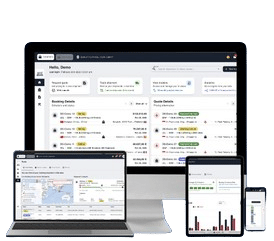
DocShipper Platform
One platform. Your entire supply chain
Sourcing, freight, customs & documents — all centralised, all visible, 24/7.
Duties by market and shipping
Duty depends on the destination, HS classification, customs value, origin qualification and any trade agreement. For the EU, an eligible Vietnamese garment may use EVFTA treatment, while an ineligible garment may face the applicable MFN rate, which is often around 12% for apparel but must be checked by HS code in TARIC.
The UK has its own tariff and origin assessment under the UK-Vietnam trade framework. Do not assume that an EU origin decision automatically applies in the UK. Confirm the product-specific rule, proof of origin and current tariff before calculating landed cost.
For the US, the brief reports a 12.5% Section 301 framework tariff for Vietnam since 24 July 2026, based on Kroll’s 9 September 2026 analysis. This is in addition to the normal tariff treatment stated in the source, so check the exact HTS classification and current USTR or CBP guidance before importing.
Build the landed-cost calculation before selecting the factory model. Include garment price, fabric or trim costs, inspection, inland transport, freight, insurance where applicable, customs brokerage, duty, import taxes and delivery to your warehouse. Freight and customs should be managed from the same commercial file so that the documents remain consistent.
| Market | Duty planning point | Verification source |
| European Union | EVFTA preference may apply if the garment meets the origin rule; otherwise check the applicable MFN rate. Apparel is often around 12% under MFN, but the exact rate varies by HS code. | European Commission Access2Markets and TARIC |
| United Kingdom | Check UK-Vietnam preferential origin rules and the UK tariff separately from the EU. | UK tariff and applicable customs guidance |
| United States | Normal HTS duty plus the reported 12.5% Section 301 framework tariff since 24 July 2026, subject to current classification and guidance. | USTR, CBP and Kroll’s tariff analysis |
Use a line-by-line duty review for every product family. First identify the HS code, then confirm the customs value, origin status, preferential rate or standard rate, additional measures and documentation. A supplier quotation cannot replace this review because the same garment category can contain several classifications and duty outcomes.
DocShipper Info
Get a complete landed-cost review covering classification, origin, tariffs, freight and customs documentation.
Conclusion
To import garments from Vietnam successfully, choose the manufacturing model and fabric source together. The best factory is not simply the one with the lowest FOB or CMT quotation. It is the one that can reproduce your garment, document the material route, meet your compliance requirements and support the duty outcome you used in your business plan.
- Vietnam’s textile and garment exports were estimated at USD 46 billion in 2025, with exports to 138 markets.
- CMT, FOB and ODM shift responsibility for materials, development, cost and control.
- MOQ depends on the style, colour, fabric mill, trims and production plan, so confirm it for your exact order.
- Fabric origin can determine whether a Vietnamese garment qualifies for EVFTA preferential treatment.
- Inspect measurements, construction, colour, labels, packaging and documentation before shipment.
- For the US, the brief reports a 12.5% Section 301 framework tariff since 24 July 2026, in addition to normal tariff treatment.
Producing garments in Vietnam? We help you choose and verify factories, plan fabric origin, inspect production and coordinate freight and customs before shipping.
FAQ | How to Import Garments from Vietnam: Factories, Fabric Origin, Duties and QC
Ask for the factory’s legal entity name, business registration, physical production address, export history and current operating capacity. Cross-check the company details against Vietnamese business records and make sure the bank account belongs to the same legal entity named in the contract. A video call or on-site audit should confirm that the facility, machinery and workforce match the factory’s claims. Be cautious if the supplier refuses an audit, uses several unrelated company names or requests payment to a personal account.
Do not accept subcontracting as an informal arrangement. Require the factory to identify any cutting, sewing, embroidery, printing or finishing subcontractor and obtain your written approval before production starts. The main factory should remain responsible for quality, confidentiality, labour compliance, delivery and documentation. You should also confirm whether subcontracting could change the product’s origin analysis or the records needed to support your customs declaration.
Yes, this can be useful when you need access to several factories or local quality-control support. However, clarify whether the intermediary is acting as an agent, reseller or exporter. The contract should identify who owns the goods, who is responsible for defects, who issues the commercial invoice and who provides origin and compliance documents. Compare the intermediary’s total price with a direct factory quotation so that commission, testing and logistics charges are transparent.
Give the factory only the files required for each approved stage and mark technical documents as confidential. Sign an agreement covering ownership, permitted use, confidentiality, unauthorised production, file deletion and the return of samples or moulds. Register important trademarks and design rights in the markets where you sell, and avoid sending editable artwork or complete production files before the commercial relationship is verified.
Link payment milestones to documented production stages rather than paying the full amount in advance. A common structure is a deposit for approved material purchasing, a production payment after a satisfactory inspection and a small balance after the required export documents are available. The contract should also state what happens if the factory misses the specification, shipment date or agreed corrective-action deadline. Use a company bank account and confirm the beneficiary before every payment.
Stop the shipment or customs filing until the discrepancy is investigated. Compare the commercial invoice, packing list, bill of lading, purchase order, carton marks, quantities, HS classification and origin evidence. Even a small inconsistency in quantity, consignee, product description or origin can delay clearance or undermine a preferential-duty claim. Ask the factory, freight forwarder and customs broker to correct the documents consistently; never ask a supplier to alter the declared value or origin inaccurately.
Need Help with Logistics
or Sourcing in Vietnam ?
First, we secure the right products from the right suppliers at the right price by managing the sourcing process from start to finish. Then, we simplify your shipping experience - from pickup to final delivery - ensuring any product, anywhere, is delivered at highly competitive prices.


Fill the Form
Prefer email? Send us your inquiry, and we’ll get back to you as soon as possible.
Contact us