
Freight Shipping between Vietnam and Qatar | Rates – Transit times – Duties and Taxes

If you underestimate the distance between Vietnam and Qatar, you usually end up paying for it in storage, delays, or the wrong Incoterm, and that is exactly what happens on the freight vietnam qatar route when you rely on generic advice instead of route-specific logic. You are dealing with long sea corridors to Hamad Port, tight air capacity into Hamad International Airport, and customs procedures that can shift depending on your HS code and declared value, so every decision you make affects cost, timing, and risk exposure. In this Destination guide, you will find the operational benchmarks you actually need, from transit times and freight structures to customs clearance steps and duties, so you can plan your shipment from Vietnam to Qatar with clarity instead of guesswork.

Which are the different modes of transportation between Vietnam and Qatar?

If your priority is cost per cubic meter and you can accept longer lead times, you will usually choose sea freight into Hamad Port, especially for full containers or heavy cargo. If you are shipping urgent, high-value, or lightweight goods, you will move by air freight through Hamad International Airport, where speed offsets the higher rate.

You cannot use road or rail end to end, so your real decision is between FCL or LCL by sea and standard or express air depending on volume, urgency, and budget. The first thing we always tell you is to validate space, cut-off times, and market rates in real time, and you can always contact our team because we track capacity and pricing daily and will help you confirm the right option before you book, then we go deeper into each mode below.

How can FNM Vietnam help?

Looking to ship goods between Vietnam and Qatar? Make it hassle-free with FNM Vietnam. From covering intricate paperwork to smooth logistics, we streamline it all. Get your free estimate in less than 24 hours. Have a query? Our consultants are just a call away. Take the first step towards stress-free shipping today.

Sea freight from Vietnam to Qatar

If you are planning sea freight Vietnam to Qatar, the first thing you need to decide is simple, does your cargo justify the time in exchange for lower cost per unit. On this container shipping Vietnam Qatar route, you typically choose ocean transport when you move more than 10 to 15 CBM, heavy machinery, or a full 20ft container Vietnam to Qatar or 40ft container Vietnam to Qatar. You trade speed for savings, but if your margins depend on freight cost, that trade often makes sense.

However, you need to set the right expectations. Sea cargo Vietnam to Doha is not just about booking space on a vessel. You deal with export procedures, port handling, and import formalities at Hamad Port. If you assume port to port means door to door, you will face unexpected destination charges and delays. The smartest approach is to treat maritime shipping Vietnam to Qatar as a structured process where timing, Incoterms, and paperwork matter as much as the freight rate itself.

From experience as a freight forwarder Vietnam to Qatar, we can tell you this route works very well for textiles, furniture, industrial parts, and consolidated cargo. But if you have urgent goods or tight project deadlines, you should compare the sea transit time Vietnam to Qatar with air freight before committing. Once you accept the ocean shipping lead time, sea freight becomes a predictable and cost efficient backbone for your Qatar supply chain.

Which incoterms should you use?

On ocean freight Vietnam Qatar, your Incoterm defines who controls the shipment and who absorbs the risk when something goes wrong. In practice, most shipments move under FOB Vietnam to Qatar or CIF Qatar from Vietnam. With FOB, your supplier handles export customs clearance Vietnam and delivers the cargo on board, and you control the main freight. With CIF, your supplier books the vessel and insurance, but you still pay destination charges in Qatar.

If you buy under EXW Vietnam export to Qatar, you take responsibility from the factory gate. That means you must manage trucking, export clearance, and port formalities. Many first time importers underestimate this and face export clearance delays because the supplier does not cooperate fully. You should only use EXW if you or your forwarder have a strong local presence in Vietnam.

You also need to think about documents. Will you receive an original Bill of Lading (B/L), a telex release B/L, or a sea waybill? On this route, we often recommend telex release to avoid courier delays to Doha. The risk transfer point is not theoretical, it affects insurance claims, cargo release, and who pays if the container arrives damaged. Choose the Incoterm that gives you operational control, not just the lowest invoice price.

Main ports to know in Vietnam and Qatar

When you plan port-to-port shipping Vietnam Qatar, your port choice directly impacts inland cost and sailing frequency. Here are the ports that actually matter for this trade:

  • Hai Phong, Key gateway for northern factories, good access to Hanoi industrial zones, commonly used in main ports in Vietnam for Qatar trade.
  • Ho Chi Minh City, Cat Lai, Largest southern hub, wide carrier coverage and regular container vessel schedule Vietnam to Qatar.
  • Da Nang, Central option, useful for regional cargo but fewer direct services.
  • Hamad Port, Main entry point for Hamad Port Qatar imports from Vietnam, modern infrastructure and containerized cargo focus.
  • Ras Laffan, Primarily energy and industrial cargo, rarely used for standard container imports.
  • Mesaieed, Industrial cargo and project shipments.

In reality, most FCL container Vietnam to Qatar and LCL consolidation Vietnam to Qatar shipments arrive at Hamad. If you choose a northern Vietnamese port but your supplier is in the south, you increase inland trucking cost and risk missing vessel cut off. Always align factory location with port selection before confirming your booking.

Transit times: How long does it take to ship from Vietnam to Qatar?

RouteService TypeEstimated Transit Time
Ho Chi Minh City to HamadFCL direct or 1 transshipment16 to 22 days
Hai Phong to HamadFCL with transshipment18 to 25 days
Vietnam main ports to DohaLCL consolidation20 to 28 days

If you look at the numbers, the average sea transit time Vietnam to Qatar is around 16 to 25 days port to port. But you should add pre carriage, export handling, and import release in Doha. Your real ocean shipping lead time Vietnam Qatar is often closer to 22 to 30 days door to port.

You will also notice that many services include at least one transshipment in Singapore, Port Klang, or Colombo. That affects the sailing schedule Vietnam to Doha and adds variability. During peak seasons or before major holidays, space tightness can create rollover risk, meaning your container misses the planned vessel. Always check the confirmed container vessel schedule Vietnam to Qatar before you promise delivery dates to your client.

Should I choose FCL or LCL when shipping between Vietnam and Qatar?


Embarking on a shipping journey between Vietnam and Qatar? The choice between Full Container Load (FCL) and Less than Container Load (LCL) can be game-changing! This pivotal decision holds sway over cost, delivery time, and much more.


Get ready to delve into the key differences, analyze your specific needs, and chart a successful course for your goods with an option that fits like a glove. Decoding sea freight has never been simpler! Stay tuned as we navigate these waters together.


Full container load (FCL)

Definition: FCL, or Full Container Load, is a type of shipping where a full container is dedicated solely to one cargo, ensuring a sealed journey from origin to destination.
When to Use: FCL shipping is a cost-effective method when your cargo volume exceeds 13/14/15 CBM. Because it offers exclusivity and enhanced security, it’s also an ideal choice if safety for high-value goods is a major concern.
Example: For instance, a company shipping a large consignment of 15 CBM of electronic commodities from Ho Chi Minh City to Doha would secure an fcl shipping quote and opt for a 20'ft FCL container for safety, cost-effectiveness, and efficiency.
Cost Implications: An FCL container, either 20'ft or 40’ft, often presents a cheaper per CBM cost compared to LCL when you have a larger shipment. This cost advantage, combined with added cargo security, makes FCL shipping a go-to option for large volume or valuable cargos moving from Vietnam to Qatar.

Less container load (LCL)

Definition: LCL, or Less than Container Load, is a type of ocean shipping where you share container space with other businesses. It's a cost-effective solution for transporting smaller quantities of goods.
When to Use: LCL shipping is an ideal choice when your cargo volume is less than 13, 14, or 15 CBM. It offers flexibility as you only pay for the container space you use and it's an affordable option for those not needing a full container.
Example: Imagine selling petite furniture from Vietnam to Qatar, and you have about 6 CBM of goods. Using an LCL shipment lets you share a 40-foot container with other exporters which allows you to save on freight costs.
Cost Implications: The cost for an LCL freight is typically lower than full-container shipments for lower volume cargo because you're only billed for the space your cargo occupies inside the container. However, bear in mind that the rates are not fixed, they can fluctuate based on peak shipping season, available space, and other determining factors.

Hassle-free shipping

At FNM Vietnam, our aim is to make cargo shipping a breeze for businesses. With deep insights into the world of marine transportation, our ocean freight experts are prepared to guide you towards the best shipping option, whether consolidation or full container. We consider essential factors such as your budget, time restrictions, cargo size, and security needs. Let us simplify your shipping decisions between Vietnam and Qatar. Get in touch for a free estimation, and experience hassle-free cargo shipping today.

Shipping rates: how much does a sea freight shipment cost from Vietnam to Qatar?

ServiceTypeIndicative Range
LCLCost per CBM40 to 100 USD per CBM
FCL20ft containerRequest quote
FCL40ft containerRequest quote

For planning purposes, sea freight rates Vietnam to Qatar for LCL usually range between 40 and 100 USD per CBM, depending on the season and consolidation volume. The real cost per container Vietnam to Qatar for a full 20ft container Vietnam to Qatar or 40ft container Vietnam to Qatar fluctuates with carrier capacity and fuel levels. Ocean freight is only one part of the equation. You still pay origin charges, port handling charges, documentation, and import handling in Doha. That is why the cheapest base rate does not always mean the lowest total landed cost.

How to estimate your sea freight cost before requesting a quote

If you want a realistic idea before asking for a freight quote Vietnam to Qatar, start with four elements, total CBM, gross weight, chosen Incoterm, and origin and destination ports. For LCL, carriers charge per cubic meter. If you ship 12 CBM at 60 USD per CBM, your base ocean freight is about 720 USD, before origin and destination charges.

You also need to compare volume and weight. In sea freight, you usually pay by volume, but extremely heavy cargo may trigger special handling. If you ignore this and focus only on the headline rate, you risk accepting a quote that excludes documentation fee sea freight and local charges. That is how importers end up with surprise invoices at destination. If you share your packing list and Incoterm with us, we can calculate your how to estimate sea freight cost Vietnam Qatar scenario and provide a detailed quotation within 24 hours.

Surcharges and hidden cost drivers to watch for

The first shock usually comes from destination charges. Even if your supplier sells under CIF Qatar from Vietnam, you still pay import handling in Qatar port, terminal handling, and delivery order fees. These are standard, but many buyers assume they are included and face release delays when payment is not ready.

Next, time related costs. Once the container arrives at Hamad Port, you have limited free time. After that, demurrage and detention apply daily. A small paperwork mistake on the Bill of Lading (B/L) can quickly turn into real money.

Finally, market driven surcharges. Carriers may apply ocean freight surcharges such as bunker adjustment factor (BAF) or congestion fees. These depend on fuel prices and port conditions. The key is to review the full breakdown before booking, not just the base ocean rate.

Step-by-step: how a sea freight shipment usually works on this route

When you book maritime shipping Vietnam to Qatar, you are committing to a sequence of coordinated steps. On this route, timing and documentation accuracy matter more than speed. Most delays do not happen at sea, they happen at origin paperwork or during cargo release in Doha. If you understand the process in advance, you avoid last minute surprises.

  1. You confirm volume, weight, Incoterm, and preferred port with us.
  2. We book space according to the container vessel schedule Vietnam to Qatar.
  3. Your supplier prepares cargo and completes export customs clearance Vietnam.
  4. The container is loaded on board and the Bill of Lading (B/L) is issued.
  5. The vessel sails, often with one transshipment hub in Asia.
  6. Before arrival, you prepare import documents for clearance at Hamad Port.
  7. You pay destination charges and arrange delivery or pickup.

If you work with us as your NVOCC services Vietnam Qatar partner, we coordinate each step and monitor the timeline closely. Most problems arise from late document approval or unpaid local charges, not from the sailing itself.

Special sea freight solutions

Out of Gauge and project cargo

If your cargo exceeds standard container dimensions, you can use out of gauge cargo by sea Vietnam Qatar with flat rack or open top equipment. This is common for industrial machinery and construction equipment. You must check port handling capability in advance because improper lashing can lead to cargo damage risk. We review dimensions and loading plans before booking to secure safe stowage.

Breakbulk shipping

For oversized units that cannot fit in any container, breakbulk shipping Vietnam to Qatar is an option. Cargo is loaded directly onto the vessel. You gain flexibility, but you must plan lifting operations and port equipment carefully. This solution suits turbines, steel structures, and heavy industrial components.

Reefer and temperature controlled containers

If you ship food or pharmaceuticals, a reefer container maintains a controlled temperature during the full sea transit time Vietnam to Qatar. You define the temperature set point and ventilation settings before departure. A wrong setting can cause cargo spoilage, so we always validate product requirements with you in writing.

Whether you choose full container load Vietnam Qatar or less than container load Vietnam Qatar, the decision depends on volume, sensitivity, and delivery timeline. If you are unsure about FCL vs LCL Vietnam to Qatar, share your packing list and we will recommend the most efficient structure for your shipment.

Air freight between Vietnam and Qatar

If you’re planning air freight Vietnam to Qatar, you’re usually doing it for one reason: speed. Whether you ship electronics, fashion, spare parts, or high-value cargo air freight Vietnam Qatar, air gets your goods from Ho Chi Minh or Hanoi to Doha in days, not weeks. But here’s what you’ll notice fast, it’s quick, yet it’s also strict. Cut-off times, security screening, and chargeable weight rules leave little room for approximation.

Most importers believe air is always 3 days, always too expensive, and priced on real weight only. None of that is fully true. Your air transit time Vietnam to Qatar depends on the airport pair and flight schedule. Your air freight cost per kg Vietnam Qatar depends on dimensions more than scale weight. And if you misdeclare your goods or underestimate packaging requirements for air cargo, you can face unexpected storage and reweigh fees at departure or during import clearance at Doha airport.

Air Cargo vs Express Air Freight: How should I ship?

Guiding your goods from Vietnam to Qatar can feel like a bewildering task. Choosing between air cargo and express air freight – the former being traditional airline shipments and the latter using dedicated planes for speed – can make a notable difference in your business’s shipping experience and bottom line.

Let’s dive into both options, helping you decide which air-ride is best for your parcels.

Should I choose Air Cargo between Vietnam and Qatar?

You should consider standard air freight Vietnam to Qatar when your shipment exceeds 1 CBM or roughly 100 to 150 kg. From experience, once you cross that threshold, airport-to-airport air freight Vietnam Qatar becomes structurally more competitive than express. This is especially true if you ship regularly, consolidate cargo, or manage B2B flows into Doha.

Before requesting an air cargo quote Vietnam to Qatar, you need exact dimensions, gross weight, your Incoterm such as FOB or EXW, the chosen airport, the ready date, and a clear product description. If your goods fall under IATA cargo regulations or include dangerous goods by air Vietnam Qatar, you must declare it early. The most common mistake we see is confusion between airport-to-airport and door-to-door air freight Vietnam Qatar, which leads to missing local charges and customs fees in the budget.

Extracted Image

Should I choose Express Air Freight between Vietnam and Qatar?

You should look at express air freight Vietnam to Qatar if your shipment stays under 1 CBM or below 100 to 150 kg, and you want simplicity. Express works well when you do not have a logistics team, when you ship samples, or when a production line in Doha is waiting for urgent parts. It’s the fastest way to move small parcels with built-in tracking and minimal coordination.

That said, the trade-off is control. Couriers calculate strictly on volumetric weight vs gross weight, and they remeasure at their hub. If your packing is bulky, your invoice can increase after pickup. Many shippers also assume everything is included, while duties, VAT, or specific import clearance at Doha airport conditions can still apply depending on the Incoterm. If you underestimate dimensions or ignore packaging requirements for air cargo, you risk post-shipment surcharge adjustments that erase the speed advantage.

Extracted Image

Main airports to know in Vietnam and Qatar

When you organize air shipping Vietnam Qatar, your airport choice affects trucking cost, flight frequency, and real air freight lead time Vietnam Doha. Here are the ones you should actually focus on.

  • Tan Son Nhat International Airport, Ho Chi Minh City. The main southern gateway for exports, with frequent long-haul capacity and strong links to industrial zones. If your factory is in the south, this often reduces inland trucking and avoids last-minute cut-off stress.
  • Noi Bai International Airport, Hanoi. Key for northern manufacturers and electronics clusters. It’s often used for consolidated loads and air freight consolidation Vietnam to Qatar.
  • Da Nang International Airport. Useful if your cargo originates in central Vietnam and you want to limit domestic trucking to Hanoi or Ho Chi Minh.
  • Hamad International Airport cargo, Doha. The primary entry point for commercial freight into Qatar, with advanced handling for temperature-controlled air freight Vietnam Qatar and perishable cargo Vietnam to Qatar. Your import clearance at Doha airport will be processed here in almost all cases.

If you rely on a direct flight cargo Vietnam Doha, capacity can vary by season. Many shipments move as transit cargo via hub Vietnam to Qatar, which can slightly extend handling time but improves space availability.

Transit times: how long does air freight take from Vietnam to Qatar?

Your air transit time Vietnam to Qatar depends on whether you ship direct or via a hub, the departure airport, and the service level you select.

Service typeTypical transit timeScope
Standard air freightApproximately 3 to 6 daysAirport-to-airport, depending on flight schedule cargo Vietnam to Qatar
Express air freightApproximately 2 to 4 daysDoor-to-door with courier network

These are operational ranges, not guarantees. Pre-flight handling and export customs for air freight Vietnam usually take 1 to 2 days. Security screening or special cargo such as dangerous goods can extend timelines. During peak seasons, limited space on popular routes to Hamad International Airport cargo can create rollover to next flight, which adds unexpected delay. If timing is critical, always check the exact ready date and confirm booking before your supplier finishes production.

Shipping rates: how much does air freight cost from Vietnam to Qatar?

Your air freight rates Vietnam to Qatar are primarily driven by chargeable weight, not just kilograms on a scale.

Service typeIndicative cost structureBilling basis
Standard air cargoRate per chargeable kg, plus surchargesHigher of gross or volumetric weight
Express courierAll-in rate per chargeable kgVolumetric weight with courier divisor

In practice, your air freight cost per kg Vietnam Qatar depends first on your chargeable weight calculation. Then come dimensions and packaging density. Urgency, available capacity, and seasonal demand influence the base rate, while items like fuel surcharge air freight and security surcharge air cargo are added on top. If you ignore volume or misdeclare goods, you can face costly reweigh and reclassification fees after cargo acceptance. The safest way to control budget is to confirm exact dimensions before booking and request a detailed breakdown in your air cargo quote Vietnam to Qatar.

Step-by-step: how an air shipment usually works on this route

If you’ve ever wondered how does air freight from Vietnam to Qatar work in practice, here’s the real sequence. Each step has timing and cost implications, especially when you ship B2B cargo into Doha.

  1. You confirm dimensions, weight, product details, and Incoterm, then we issue a booking based on the agreed flight schedule cargo Vietnam to Qatar.
  2. Your supplier prepares goods according to packaging requirements for air cargo and provides commercial invoice and packing list for export customs for air freight Vietnam.
  3. Cargo is delivered to the departure airport, screened under IATA cargo regulations, and accepted by the airline with an air waybill AWB, either house AWB and master AWB depending on consolidation.
  4. The shipment flies direct or as transit cargo via hub Vietnam to Qatar, then lands at Hamad International Airport cargo.
  5. We coordinate import clearance at Doha airport, settle duties if applicable, and arrange final delivery if you selected door-to-door air freight Vietnam Qatar.
  6. You receive updates through air cargo tracking Vietnam to Qatar until proof of delivery.

The moments where delays usually appear are documentation errors, late arrival before cut-off, and incomplete customs data. If one document is inconsistent, you risk customs hold at destination, which is far more expensive to solve than to prevent.

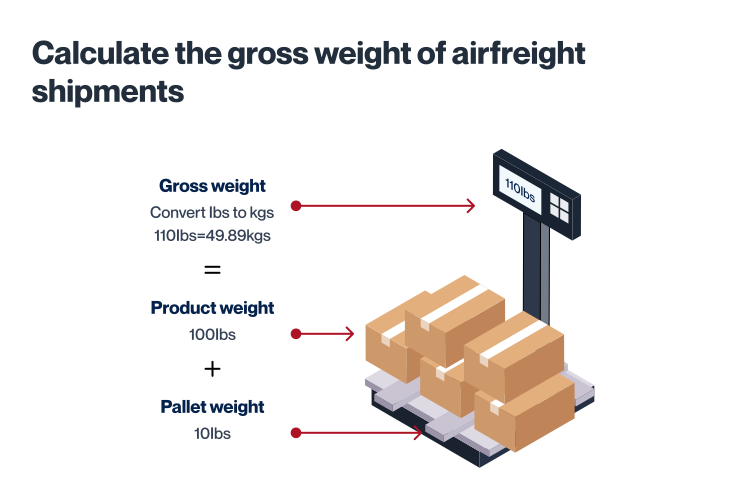
What is the difference between volumetric and gross weight?

When you ship air cargo Vietnam to Doha, airlines do not charge based only on scale weight. They use the higher value between gross weight and volumetric weight. This rule directly affects your air freight cost per kg Vietnam Qatar, especially if your cartons are large but light.

  • Gross weight. The real weight of your cargo including packaging, measured in kilograms.
  • Volumetric weight. A calculated weight based on dimensions, reflecting the space your cargo occupies in the aircraft.
  • Chargeable weight. The higher of gross or volumetric weight, used for billing.

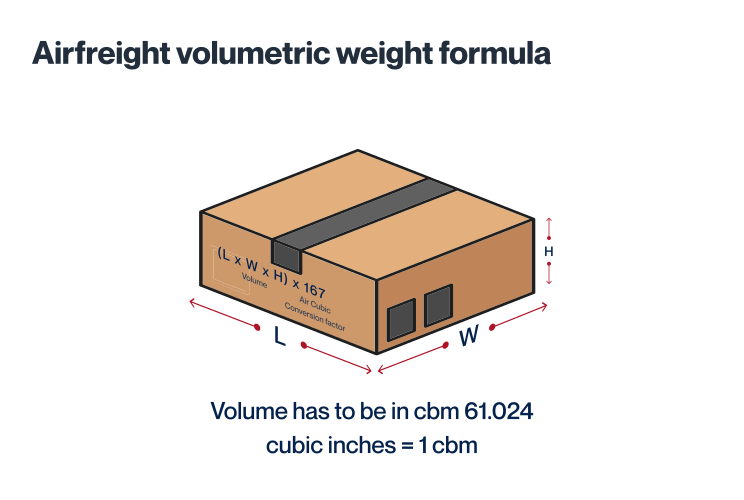
To calculate volumetric weight for standard air cargo, use: length x width x height in cm divided by 6000. For express services, divide by 5000. For example, a carton of 50 x 40 x 30 cm equals 60,000 cubic cm. In air cargo, 60,000 divided by 6000 equals 10 kg. If the real weight is 22 kg, you pay on 22 kg. In express, 60,000 divided by 5000 equals 12 kg.

Air cargo reference: 1 m3 equals 167 kg.
Express reference: 1 m3 equals 200 kg.

The most common mistake is estimating weight without final packaging. If your supplier increases carton size, your chargeable weight calculation changes instantly and can trigger unexpected freight increase. Always confirm packed dimensions before requesting your final air cargo quote Vietnam to Qatar.

Door to door between Vietnam and Qatar


Navigating the intricate world of international shipping? Consider Door to Door service between Vietnam and Qatar. This seamless solution handles every step, from collection to customs, right through to the final delivery point. With its convenience and efficiency, it’s a hassle-free choice that can significantly streamline logistics. Ready for the specifics? Let’s dive in!


Overview – Door to Door


Shipping goods from Vietnam to Qatar? Embrace door-to-door shipping: a top-notch service advocated by FNM Vietnam’s clients for its convenience and ease.


Deal with complex shipping logistics in a jiffy without facing hassles of customs clearance or bureaucratic procedures. Operate your trade without a hitch, streamline your supply chain process, and let professionals help you all along the journey.


Keep in mind though, while this service negates unnecessary stress, it can be more costly than other methods. However, the time and effort you save might just make it the ideal shipping method for you.


Why should I use a Door to Door service between Vietnam and Qatar?


Ever wondered about chucking down the logistics stress ball? Well, Door to Door service has got you covered! Here are five solid reasons why you might want to opt for this service between Vietnam and Qatar.


1. Say Goodbye to Stress: With Door to Door service, you get to outsource your freight worry! From goods pick-up from your desired location to delivery at the end recipient’s address, the service handles everything, making you relaxed.


2. Tick-Tock, meet your Clock: Urgent shipments? No sweat. Door to Door service ensures your cargo reaches on-time, so your deadlines stay as firm as ever.


3. Specialized Care for Special Cargo: Unique, intricate, or complex – your cargo type doesn’t shake this service. Dealing with intricate goods often can be a nightmare, but this service ensures your cargo receives the special attention it deserves.


4. Trucking? Check.: In Door to Door service, your cargo is trucked from the collection point till destination, meaning reduced transition points, less paperwork, and a smooth freight ride!


5. Convenience at Fingertips: Lastly, convenience is king here! With this service, you can sit back while the fine threads of administrative procedures, custom clearance, and documentation get neatly tied up.


So, next time you have a shipment from Vietnam to Qatar, remember – Door to Door service is never a door away!


FNM Vietnam – Door to Door specialist between Vietnam and Qatar


Trust FNM Vietnam for stress-free door-to-door shipping from Vietnam to Qatar. Our expertise lies in comprehensive handling – from packing your goods to ensuring their seamless journey via air, sea, road or rail, and tactful navigation of customs procedures. You won’t lift a finger! Plus, you’ll have a dedicated Account Executive at your service.


Inquire today for a free estimate within the next 24 hours, or consult our advisors for free guidance. Begin your hassle-free international shipping experience with us now.


Customs clearance in Qatar for goods imported from Vietnam

When you handle customs clearance in Qatar for goods from Vietnam, you are deciding your total landed cost, your release timing, and who carries the legal responsibility as Importer of Record. One wrong document or valuation detail can shift your budget in hours. We coordinate the full import customs procedures Qatar side for you, including working with your customs broker in Qatar when required.

You will notice fast that delays usually come from incorrect HS code classification Vietnam exports, incomplete commercial invoice requirements, or missing certificate of origin Vietnam to Qatar. On this route, small paperwork gaps can trigger a customs inspection hold or valuation reassessment. Let us break down how you calculate duties and how clearance really works in practice.

How to calculate duties & taxes when importing from Vietnam to Qatar?

To answer how to calculate import duties Qatar, you need five inputs: country of origin Vietnam, the correct HS code, the customs value calculation method, the applicable import tariff Qatar, and any other import taxes and fees Qatar. If one of these is off, your duty and tax estimation Vietnam to Qatar will be wrong.

Quotes often look cheap because they ignore valuation adjustments or assume a simplified scenario. Customs, however, recalculates based on declared documents and can apply customs valuation adjustments if something looks inconsistent. If your paperwork does not match your pricing logic, you risk a post-clearance audit Qatar or reassessment later. Here is the practical sequence we follow.

Step 0 – Quick checks before you calculate

Before you run any numbers, you should confirm three basics that shape the whole file:

  • Importer of Record, who is legally responsible in Qatar and whose trade license is used.
  • Incoterm, which determines who controls clearance and the Incoterms impact on customs value.
  • Low-value eligibility, whether your shipment qualifies for a simplified or express path depending on value and shipment type.

If you skip these checks, you can miscalculate duties or assign liability to the wrong party, which often causes a clearance delay at arrival.

Step 1 – Identify the Country of Origin

Your country of origin Vietnam drives the tariff outcome and determines whether you can claim any preferential origin documents. Customs in Qatar will expect a valid certificate of origin Vietnam to Qatar that matches your invoice and product description.

If you confuse origin with the shipping country, which happens more than you think, you risk a tariff reclassification or rejection of your claim. Origin also affects exposure to trade defense measures and document scrutiny under customs compliance Vietnam to Qatar.

Step 2 – Find the HS Code of your product

Your HS code classification Vietnam exports determines your duty rate, possible restrictions, and whether your product falls under restricted goods Qatar import or even prohibited items Qatar customs. This is not just a number, it is your risk profile at entry.

You can start with a structured harmonized system code lookup using an official tariff database such as Harmonized Tariff Schedule search tool, then cross-check the product description line by line with your supplier specifications. If doubt remains, you should request a written opinion before shipping.

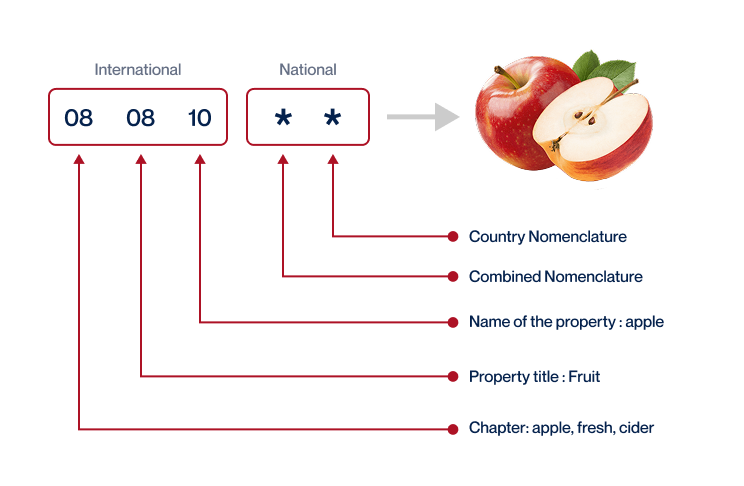
If your HS code is wrong, customs can reassess duties, apply penalties, or trigger a customs inspection process Qatar that slows everything down. In our experience, this is one of the most expensive “small” mistakes. Here’s an infographic showing you how to read an HS code.

Step 3 – Calculate the Customs Value

In Qatar, you usually calculate duties based on the CIF value for customs, meaning Cost, Insurance and Freight up to the port or airport of entry. The declared amount must follow the recognized customs value calculation method and reflect the real transaction.

You must include adjustments such as international freight under CIF, insurance, certain commissions, assists, packing, or royalties when applicable. For example, if your goods cost 5,000 USD, freight is 1,000 USD and insurance 100 USD, your customs value becomes 6,100 USD, not 5,000 USD.

If your Incoterm is FOB, you must add freight and insurance to reach the taxable base in Qatar. Ignoring these elements can trigger customs valuation adjustments and delay release under the Qatar import framework.

Step 4 – Figure out the applicable Import Tariff

An import tariff Qatar is the customs duty rate applied to your product based on its HS code and origin. It directly shapes your customs duties Qatar imports calculation.

You can determine it in three steps. First, open the official Qatar customs tariff tool. Second, enter your HS code and confirm the product description matches exactly. Third, read the duty rate and any notes linked to origin or special measures.

  • Duty rate, percentage applied to the customs value.
  • Additional notes, references to restrictions or extra measures.
  • Origin conditions, whether specific documents are required.

If your customs value is 10,000 USD and the duty rate is 5%, your customs duty equals 500 USD. The formula is simple, but classification and origin must be correct first.

On Vietnam to Qatar flows, we often see issues when invoice descriptions do not match the HS wording, which can trigger a manual review by customs. If you want, we can verify the tariff logic before shipment under the step by step customs clearance Vietnam to Qatar approach.

Step 5 – Consider other Import Duties and Taxes

Beyond customs duty, you must check whether VAT on imports Qatar or specific excise regimes apply to your goods. VAT, when applicable, is usually calculated on the customs value plus customs duty.

For example, if your customs value is 10,000 USD and duty is 500 USD, VAT would be calculated on 10,500 USD at the applicable rate. That difference impacts your cash flow at clearance.

You should also verify exposure to special measures such as excise on selected goods or controls linked to restricted goods Qatar import. Certain categories may require prior approval under import license requirements Qatar, and failing to check this can lead to a shipment blocked at port.

  • Confirm VAT treatment, and whether you can recover it.
  • Check product-specific taxes, excise or trade measures.
  • Review document checklist for Qatar customs, invoice, packing list for customs clearance, and origin documents.

Step 6 – Calculate the Customs Duties

The core formulas are straightforward. Customs duty equals customs value multiplied by the duty rate. VAT, when applicable, equals the taxable base multiplied by the VAT rate.

If your customs value is 10,000 USD and the duty rate is 5%, duty equals 500 USD. If VAT applies at 5% on 10,500 USD, VAT equals 525 USD. Your total payable at clearance would then be 1,025 USD.

In practice, the Importer of Record or your customs broker in Qatar settles these amounts before or at release, depending on the account setup and electronic customs filing Qatar process. If payment is delayed, cargo can remain on hold and storage charges start accumulating, which quickly turns into a cost escalation at terminal.

Step-by-step: how customs clearance usually works on this route

When you follow a clear sequence, the step by step customs clearance Vietnam to Qatar process becomes predictable. The exact order can differ depending on the airport, seaport, Incoterm, and whether you ship by air or sea, but the operational logic stays similar. Here is how we typically coordinate it.

  1. You prepare the commercial invoice requirements, packing list for customs clearance, transport document, and certificate of origin Vietnam to Qatar before departure.
  2. You confirm whether a power of attorney customs broker Qatar is required so your broker can legally submit the file.
  3. We arrange pre-arrival review and, where possible, electronic customs filing Qatar to reduce waiting time after landing.
  4. Customs registers the customs declaration form Qatar and assesses duties based on declared HS code, origin, and value.
  5. If flagged, the shipment enters the customs inspection process Qatar, which is one of the main moments of truth where document inconsistencies surface.
  6. Once duties and taxes are paid, customs issues release and the cargo can exit the port or airport.
  7. If goods are under temporary import into Qatar or planned for re-export procedures Qatar, additional guarantees and tracking apply.
  8. After clearance, authorities may still conduct a post-clearance audit Qatar, especially if valuation or classification seems inconsistent.

Where do delays really happen? Usually at document mismatch, incorrect HS coding, or missing licenses. When you control those three points, your customs clearance lead time Qatar becomes far more predictable.


Contact Details for Customs Authorities


Vietnam Customs

Vietnam customs

Official name: Vietnam Customs

Official website: https://www.customs.gov.vn/

Qatar Customs

qatar customs

Official name: Qatar General Authority of Customs

Official website: www.customs.gov.qa

Required documents for customs clearance in Qatar

When you ship from Vietnam to Qatar, customs clearance usually runs smoothly if your paperwork tells one consistent story. You would be surprised how often shipments get stopped not because of the goods, but because values, weights, or consignee names do not match across documents. In Doha, most delays come from inconsistent paperwork, not from inspections at the port.

The first thing we always tell you is simple. Make sure every document shows the same shipper, consignee, HS code, description, and value. If one line differs, Qatar Customs can flag the file and you lose days.

Bill of Lading or Air Waybill

The Bill of Lading for sea freight or the Air Waybill for air cargo is the transport contract issued by the carrier. Customs and your broker use it to confirm who is shipping what, from which port in Vietnam to which entry point in Qatar.

In practice, you might ship a container from Cat Lai Port to Hamad Port under FOB terms, and the B/L will show the consignor in Ho Chi Minh City and the Qatari importer as consignee. If you use a telex release, your broker in Doha can clear cargo faster.

A common mistake is leaving the consignee name slightly different from the company registered with Qatar Customs. That small mismatch can trigger a customs hold at arrival.

Packing List

The Packing List details exactly how your cargo is packed, carton by carton or pallet by pallet. Customs officers in Qatar use it to verify quantities, weights, and dimensions against the declaration.

For example, if you export 1,000 cartons of garments weighing 8,500 kg gross, the Packing List should break down cartons per SKU and show net and gross weight. Your broker will rely on this to complete the customs entry correctly.

The classic error is rounding weights differently from the Commercial Invoice. Even small differences can raise questions and slow your customs inspection process.

Commercial Invoice

The Commercial Invoice is the financial document that states the seller, buyer, product description, unit price, total value, and currency. Qatar Customs calculates duties and taxes based directly on this document.

If you ship electronics valued at USD 50,000 under CIF Doha, the invoice must clearly show Incoterms, freight cost if included, and correct HS classification. Your declared value must reflect the real transaction.

Undervaluing goods to reduce duty is a serious risk. If customs suspects under-declaration, you could face reassessment and administrative penalties, plus delays you did not budget for.

Certificate of Origin

The Certificate of Origin confirms that your goods are manufactured in Vietnam. It is usually issued by a recognized chamber of commerce and may need legalization depending on your product and importer requirements.

Your Qatari importer may request it to determine eligibility for any preferential tariff treatment under regional trade frameworks. For agricultural or food products, origin can also influence additional checks.

A frequent mistake is submitting a certificate with product descriptions that do not match the invoice word for word. That inconsistency alone can delay clearance at Hamad Port.

Get Started with FNM Vietnam

Navigating the intricate customs maze between Vietnam and Qatar can be daunting, but with FNM Vietnam, you enjoy a stress-free experience. Our professional team expertly handles every customs clearance step for you. No more worries about complex procedures or documentation. Ready to make the move? Contact us now for a hassle-free, no-obligation quote within 24 hours. Expertise meets efficiency at FNM Vietnam. Ship smart, ship with us.

Prohibited and restricted items when importing into Qatar

Before you load cargo in Vietnam, you need to understand the difference. Restricted products can enter Qatar, but only if you meet specific conditions such as permits, prior approvals, or special labeling. Prohibited products should not enter at all and can be seized or destroyed.

From experience, this is where many first-time importers get caught. You assume your product is normal in Vietnam, but in Qatar it falls under controlled import regulations. If you guess wrong, you risk seizure or forced re-export.

Restricted products

  • Pharmaceuticals and medical devices requiring prior health authority approval
  • Food and beverages subject to labeling in Arabic and shelf-life rules
  • Cosmetics and personal care items needing ingredient compliance review
  • Telecommunication equipment requiring technical conformity clearance
  • Chemicals and hazardous materials controlled under safety regulations
  • Agricultural products requiring phytosanitary certification

Prohibited products

  • Narcotics and controlled drugs outside authorized medical channels
  • Weapons and ammunition without official government authorization
  • Pornographic materials or content violating local laws
  • Counterfeit goods infringing intellectual property rights
  • Products of Israeli origin restricted under national policy

If you are unsure about your product category, do not rely on assumptions. Confirm the HS code and check with your broker in Doha before shipping. A five-minute verification in advance can save you weeks of disruption at the port.

Trade agreements and preferential duties for imports from Vietnam to Qatar

When you import from Vietnam into Qatar, you operate under the tariff framework of the Gulf Cooperation Council. Qatar applies a general customs duty that is commonly around 5% on most standard goods, although certain categories such as alcohol or tobacco are taxed at much higher rates.

As of recent trade frameworks, there is no bilateral free trade agreement granting automatic zero duty between Vietnam and Qatar. However, you should still verify your product classification carefully. Some essential goods can benefit from reduced or exempt rates under GCC unified customs rules, while specific items may face additional charges.

Trade volumes between the two countries have grown steadily, with bilateral trade reaching several hundred million US dollars in recent years. Vietnam mainly exports electronics, garments, seafood, and agricultural products, while Qatar exports energy-related products. This means customs authorities on both sides are familiar with these flows, which helps if your documentation is precise.

Your real leverage is not a free trade agreement, but correct classification and valuation. If you misclassify your goods, you may lose access to any applicable relief and face reassessment. Always confirm the HS code, check the applicable GCC common external tariff, and ensure your Certificate of Origin is properly issued before the cargo leaves Vietnam.

Your Next Step with FNM Vietnam

Sailing the seas of international transport, dealing with customs, and tracking duties got you swamped? FNM Vietnam turns complicated into simple. Let our team handle every detail of shipping between Vietnam and Qatar. Start focusing on growing your business instead of paperwork and logistics. Ready to simplify shipping? Reach out to us today!
More than shipping

Additional logistics services

1 Warehousing
1

Warehousing

Seeking robust warehousing in Qatar from Vietnam is quite the feat, especially when temperature-sensitive goods are involved. A chilled warehouse, essential for perishables, can be tough to nail down. Breathe easy - our robust warehousing services offer the right conditions along with relentless reliability.
img
2 Packing
2

Packing

Just picture it - your shipment making a 7,000 km journey from Vietnam to Qatar. The right packaging isn’t just crucial; it's a safeguard. That's why turning to a trusted agent for expert packing or repackaging is a no-brainer. Be it ceramics from Bat Trang or bamboos from Mekong Delta, proper packaging ensures they make the journey in one piece.

img
3 Transport Insurance
3

Transport Insurance

Transporting goods comes with inevitable risks. Enter Cargo Insurance - your best bet to safeguard against mishaps. Unlike fire insurance, it covers not just fire, but mishaps like theft, mishandling, or damages during transit. Picture this: a consignment of rare antiques gets damaged en route. Cargo Insurance steps in to mitigate your financial loss. Prevention is key, isn't it?
img
4 Household goods shipping
4

Household goods shipping

Want to move treasured possessions between Vietnam and Qatar smoothly? Entrust your fragile and bulky items to trusted hands. Our moving services put care, professionalism, and flexibility to work—imagine an antique vase traveling secure and untouched. No worries on your heirloom corner table being bulky, it's maneuvered with precision.
img
5 Procurement in Thailand
5

Procurement in Thailand

Got a business to run and need help sourcing from Asia or East Europe? FNM Vietnam has got your back. Our team takes the stress out of procurement, finding the right suppliers, and streamlining the whole process. Don't know the local language? No worries. We bridge language gaps and make sure nothing gets lost in translation.

img
6 Quality Control
6

Quality Control

Shipping from Vietnam to Qatar? Precision is paramount. A meticulous quality inspection reduces costly export errors, ensuring your products meet both countries stringent standards. For instance, our team recently halted a shipment of garments with mismatched stitching - a last-minute save from expensive customs disputes.

img
7 Conformité des produits aux normes
7

Conformité des produits aux normes


Keeping your products compliant is crucial in smooth international trading. Our Product Compliance Services test your goods in our labs for certifications, ensuring they meet all local regulations. Think of it like a visa for your products, avoiding unnecessary delays or blocks upon arrival. It's akin to airbags in cars—necessary, tested, and meeting global safety standards. With us, your products will sail right through customs.
img