In short ⚡
Vietnam Coffee Export: How to Import Robusta and Arabica from Vietnam starts with defining the product, verifying the exporter, checking compliance documents, approving a representative sample, and coordinating contract, container and customs requirements. The key steps are:- Define the buying brief: Specify green, roasted or instant coffee; robusta or arabica; grade, processing method, quantity, packaging, destination and delivery window.
- Shortlist and verify exporters: Check company identity, export experience, origin information, technical specifications, samples and traceability records.
- Approve the sample: Record the lot reference, screen specification, defects, moisture result, processing method and cup profile, then approve the reference sample in writing.
- Prepare compliance documents: For EU shipments, request plot-level geolocation data, EUDR due-diligence information and the food-safety documents required by the destination market.
- Structure the contract: Define the price basis, differential, quantity, tolerances, Incoterm, payment terms, inspection rights, claims procedure and document deadlines.
- Plan and inspect the shipment: Confirm the clean, dry container, moisture protection, packing, port cut-off and shipping documents, then compare the loaded coffee with the approved sample before dispatch.
Vietnam’s 2026 coffee market, robusta and arabica grades, exporter verification, EUDR and food-safety requirements, contracts and pricing, container shipping, and the steps to your first container are covered in detail.
We hope you’ll find this article genuinely useful, but remember, if you ever feel lost at any step, whether it’s finding a supplier, validating quality, managing international shipping or customs, FNM Vietnam can handle it all for you!
To import coffee from Vietnam successfully, you need to control three points before signing a purchase order: the exact grade and processing method, the exporter’s traceability documents, and the container’s moisture protection. Vietnam is especially attractive for robusta, but the right sourcing process differs for green, roasted and instant coffee.
This guide explains how to select a Vietnamese coffee exporter, verify quality, prepare for the EU Deforestation Regulation (EUDR), structure your contract and ship coffee from Vietnam without avoidable compliance or condition problems.
DocShipper Info
Separate the commodity benchmark from the supplier’s differential, grade and documentation before approving a quotation
Vietnam’s coffee market in 2026
Vietnam exported about 1.59 million tonnes of coffee in 2025, generating more than USD 8.92 billion. Robusta represented over 90% of national output, while the European Union remained one of the country’s most important destinations.
The export figures show both the scale and the volatility of the market. According to data reported by Ascentium, based on USDA/FAS, VICOFA and Vietnam Customs sources, export volume increased by 18.3% while export value rose by 58.8% in 2025. The difference matters: your purchasing budget can change sharply even when the physical volume changes less dramatically.
The EU reportedly absorbed roughly 47% to 60% of Vietnamese coffee exports, with Germany, Italy and Spain among the leading destinations. The main production hubs are in Vietnam’s Central Highlands, particularly Dak Lak, Lam Dong and Gia Lai. When you evaluate an exporter, ask whether it buys directly from these areas or consolidates coffee through several intermediaries.
Price discussions should therefore separate the commodity market from the supplier’s commercial differential. A low initial quotation may reflect a different grade, a less demanding preparation, a later shipment window or incomplete documentation rather than a genuinely cheaper equivalent product.
| Market indicator | Data to use when sourcing |
| 2025 export volume | About 1.59 million tonnes |
| 2025 export value | More than USD 8.92 billion |
| Volume change | +18.3% |
| Value change | +58.8% |
| Main production profile | Robusta represents over 90% of output |
| Main production hubs | Dak Lak, Lam Dong and Gia Lai |
| Important export market | The EU, with Germany, Italy and Spain among leading destinations |
Source: Ascentium market overview, citing USDA/FAS, VICOFA and Vietnam Customs, consulted for the 2026 market context.
DocShipper Tips
Request a representative sample, confirm defects and moisture, then validate the cup profile before contracting
Robusta, arabica and grades
Vietnam produces mainly robusta, sold according to quality grade, screen size, defect count, moisture condition and processing method. Arabica is available in smaller volumes, while specialty and fine robusta lots require more detailed sampling than a standard commercial contract.
Start by specifying the product form. Green coffee is unroasted and normally purchased for roasting; roasted coffee requires control of roast profile, packaging and shelf-life information; instant coffee is a processed product with different manufacturing, labelling and supplier requirements. Do not compare quotations for these products as if they were interchangeable.
Vietnamese grades should be confirmed against the current specification used by the exporter and checked against applicable Vietnamese standards, including relevant TCVN requirements. Screen size describes bean dimensions, while defect specifications address physical imperfections. Neither term alone proves cup quality, so request a representative sample and perform a cupping assessment before approval.
For a green coffee sample, record the lot reference, origin area, harvest information, processing method, screen specification, defect tolerance, moisture result and cup profile. Compare the pre-shipment sample with the approved reference sample. If the contract does not define what happens when the shipped lot differs, quality discussions become difficult after loading.
| Product or specification | What to confirm before purchase |
| Green robusta | Origin, processing method, grade, screen size, defects, moisture, crop information and cup profile |
| Green arabica | Growing area, variety if relevant, processing method, grade, sample profile and available volume |
| Roasted coffee | Bean origin, roast profile, packaging format, production date, shelf-life information and labelling requirements |
| Instant coffee | Product type, ingredients, manufacturing site, specifications, packaging and destination-market compliance |
| All products | Representative sample, inspection method, documentation and acceptance procedure |
DocShipper Alert
Record the approved sample, lot reference and acceptance procedure, including the remedy for non-conforming coffee
Looking for a Reliable Shipping & Sourcing Partner?


Choosing an exporter
Choose a Vietnamese coffee exporter that can demonstrate export experience, product consistency and traceability rather than relying only on a catalogue or a low price. Before contracting, request company details, export references, product specifications, certificates and the information needed for customs and destination-market compliance.
Use a staged verification process. First, check the legal identity and business information supplied by the company. Second, ask where the coffee was produced, processed, stored and packed. Third, compare the exporter’s documents with the physical sample and the proposed contract. If the answers change between the quotation, sample and contract, stop the process until the discrepancy is resolved.
For EU-bound coffee, ask for plot-level information before you place a large order. An exporter who can only provide the country of origin may not be ready to support the EUDR due diligence process. You should also establish who collects the geolocation data, who validates it and who supplies the due diligence statement information.
Quality verification should combine documents and an inspection. A pre-shipment inspection can check packaging, marking, quantity, container condition and the agreed product characteristics, but it does not replace laboratory testing or a proper cup evaluation. For a first transaction, sourcing, quality control and freight coordination in one file can reduce the risk of gaps between supplier and forwarder.
| Verification point | Documents or evidence to request |
| Company identity | Legal company details, address, contact person and export activity |
| Product capability | Technical specification, representative sample and processing information |
| Supply chain | Origin area, producer or collection information, processor and storage location |
| Export readiness | Previous export documentation or references, packing details and proposed shipping terms |
| Traceability | Plot-level data where required, lot references and a method for linking documents to the shipment |
| Quality control | Sampling method, laboratory or inspection records and procedure for non-conformity |
DocShipper Info
Request geolocation data early and link it to each lot before shipment planning begins
EUDR and food safety for EU buyers
For large operators, the EUDR applies to coffee from 30 December 2026; the deadline for other SMEs is 30 June 2027. Coffee is one of the seven commodities covered by the regulation, and importers must be able to support a due diligence statement showing that the product is deforestation-free and legally produced.
The operational requirement is more precise than a country-of-origin declaration. You need information connected to the production plot, including geolocation data, so the supply chain can be assessed at the required level. Ask the exporter to provide this information before shipment planning, not after the container has reached the EU.
Food safety remains a separate control. Confirm the destination market’s rules for contaminants, pesticide residues, microbiological requirements, packaging materials, labelling and any required laboratory analysis. The applicable limits depend on the product, destination and regulatory framework, so use the current requirements of the European Commission and your importing country’s competent authorities rather than relying on a generic certificate.
Build the documents into the purchase contract. Identify the party responsible for supplying each record, the required format, the deadline and the remedy if information is incomplete. For an EU shipment, your document file should allow you to connect the commercial invoice, packing information, lot reference, origin data, geolocation data and due diligence process to the physical coffee.
| EUDR and food-safety file | Action before shipment |
| Due diligence status | Confirm whether the importer is a large operator or SME and apply the relevant date |
| Commodity scope | Confirm that the coffee product falls within the applicable EUDR classification |
| Plot geolocation | Request production-plot coordinates or the required geolocation data from the exporter |
| Traceability link | Connect plot data to producer, lot, processing site and shipment references |
| Legality evidence | Request the information needed to demonstrate legal production under the applicable rules |
| Food safety | Check current destination-market requirements and arrange appropriate testing or certificates |
| Due diligence statement | Prepare and retain the required statement and supporting records before placing the product on the EU market |
The Netherlands Enterprise Agency’s EUDR guidance confirms the 30 December 2026 date for large operators, the later SME date and the requirement for a due diligence statement and plot geolocation. Always confirm the current implementation guidance with the European Commission and your customs adviser.
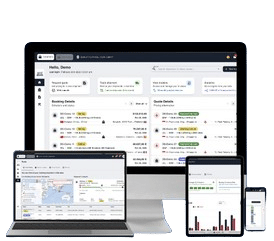
DocShipper Platform
One platform. Your entire supply chain
Sourcing, freight, customs & documents — all centralised, all visible, 24/7.
Contracts, pricing and shipping
Coffee is commonly priced by reference to the London robusta futures market, then adjusted by a differential for the physical coffee, quality, origin, preparation and commercial terms. In simple terms, the futures reference is the market benchmark, while the differential is the amount added or subtracted for the specific lot you are buying.
Your contract should state the product, grade, screen specification, processing method, crop or harvest information where relevant, quantity, packaging, price basis, currency, Incoterm, shipment window and payment terms. It should also define sampling, inspection, claims, tolerance, document delivery and the procedure for replacing or rejecting non-conforming coffee.
Container preparation is critical because coffee can lose value through moisture exposure, condensation, odour contamination or unsuitable storage. Before loading, confirm that the container is clean, dry, free from strong odours and structurally suitable. Discuss the use of container liners, moisture-control materials and pallets with the exporter, quality controller and freight forwarder, then document the agreed method.
For container shipments from southern Vietnam, coordinate the inland movement, port cut-off, export customs, inspection and booking as one schedule. The selected route and port depend on the supplier’s location, the cargo form and the destination. If you import smaller lots, compare consolidation with a full container because handling, protection and transit arrangements can differ.
| Shipping control | What to confirm |
| Container | Clean, dry, odour-free and suitable for coffee |
| Moisture protection | Container liner and moisture-control method, subject to operational confirmation |
| Packing | Bag type, markings, lot references and palletisation where applicable |
| Schedule | Ready date, inspection date, port cut-off, vessel departure and document deadlines |
| Customs file | Commercial invoice, packing list, transport document, origin information and destination-specific documents |
| Trade terms | Incoterm, transfer of risk, insurance responsibility and cost allocation |
Green coffee duty in the EU is generally 0% under the MFN framework, but you should verify the product classification and current TARIC treatment. Roasted coffee can be treated differently. For the United States, a 12.5% Section 301 framework tariff for Vietnam was reported from 24 July 2026, but you must check whether coffee is exempted and confirm the applicable classification before calculating landed cost.
Sources for these checks include the Kroll tariff analysis for the reported US framework and the relevant customs authorities for the final product classification.
DocShipper Tips
Align the sample, inspection, moisture protection, documents and freight schedule before loading
Steps to your first container
Your first container should be treated as a controlled qualification process, not simply as a price negotiation. Define the product, approve a representative sample, verify the exporter and documents, then align quality, compliance and freight instructions before loading.
- Define the buying brief. Specify green, roasted or instant coffee; robusta or arabica; origin preference; grade; processing method; quantity; packaging; destination market and target delivery window.
- Shortlist exporters. Request company information, export history, technical specifications, samples, origin details and the documents required for your market.
- Evaluate the sample. Record the lot reference, physical condition, screen specification, defects, moisture result if available, and cup profile. Approve the sample in writing.
- Check compliance readiness. For EU coffee, request the EUDR data package, including plot geolocation information and the records needed for due diligence. Check food-safety and labelling requirements for the destination.
- Negotiate the contract. Set the price basis, differential, quantity, tolerances, Incoterm, payment terms, inspection rights, claims procedure and documentation deadline.
- Plan the container. Confirm the container standard, liner or moisture-control approach, packing, markings, loading date, port cut-off and shipping documents.
- Inspect before shipment. Compare the production lot with the approved sample and contract. Check quantity, packaging, container condition, markings and available quality records.
- Clear and receive the goods. Send the complete document file to the customs broker, monitor the shipment and inspect the coffee promptly on arrival.
| Stage | Release condition |
| Product definition | Grade, process, form, quantity and destination are written down |
| Supplier approval | Exporter identity, capability and traceability information have been checked |
| Sample approval | Physical and cup characteristics are recorded and accepted |
| Contract approval | Price basis, inspection, claims, documents and delivery terms are clear |
| Loading approval | Container, moisture protection, packing and inspection plan are confirmed |
| Import approval | Customs, EUDR and food-safety records are complete for the destination |
Conclusion
Importing coffee from Vietnam can give roasters, traders and private-label brands direct access to a major robusta origin, but the commercial opportunity depends on operational discipline. Select the grade carefully, verify the exporter, obtain plot-level traceability for EU shipments and protect the coffee from moisture throughout the container journey.
- Vietnam exported about 1.59 million tonnes of coffee in 2025 for more than USD 8.92 billion.
- Robusta represents over 90% of Vietnam’s coffee output.
- The EUDR applies to coffee from 30 December 2026 for large operators, with a later date for other SMEs.
- Exporter verification must cover quality, export capability and traceability data.
- Container cleanliness, moisture control and complete shipping documents are essential for a sound delivery.
Buying coffee in Vietnam? We help you verify exporters, check documents and ship your containers from the south to your market, combining sourcing, quality control, freight and customs coordination in one file.
FAQ | How to Import Coffee from Vietnam: Grades, EUDR and Shipping
Yes. A consolidated shipment or smaller lot can help you validate the exporter, packaging and cup profile before committing to a full container. However, confirm how the coffee will be stored and handled during consolidation, because additional transfers can increase exposure to humidity, odours and damage. Use the trial shipment to verify the actual lot, not just the supplier’s sample.
Do not assume that a country-of-origin certificate will be sufficient. Ask whether the exporter can provide geolocation data linked to the specific producer, lot and processing site. If the information is unavailable or cannot be matched to the shipment, place the order on hold, request another traceable lot or use a supplier with a reliable EUDR data process.
The Incoterm allocates specific transport costs, risks and responsibilities, but it does not automatically make the exporter responsible for all destination-market compliance. Confirm in writing who will provide export documents, arrange insurance, manage import clearance, pay duties and supply records required for EUDR or food safety. Your contract should also state when each document must be delivered.
Preserve evidence before the coffee is blended, roasted or redistributed. Record the container and lot numbers, photograph the bags and condition, retain representative samples and arrange an independent inspection or laboratory analysis where appropriate. Then compare the results with the contractual specification and follow the agreed notice period and claims procedure. Avoid relying only on a visual impression or a cup evaluation made after poor storage.
No. A certificate of origin generally confirms where the product originates for customs or commercial purposes, but it does not prove the coffee is deforestation-free, legally produced or compliant with food-safety limits. For an EU shipment, you need a traceability file connecting the coffee to the relevant production plots, while food-safety compliance may require separate specifications, tests or certificates.
Verify the company and bank details independently before making an advance payment. The beneficiary name should correspond to the legal exporter or to a clearly documented contracting entity. Treat last-minute changes to bank accounts, pressure to pay through a personal account or discrepancies between invoices and company details as warning signs. For a first transaction, consider staged payment linked to sample approval, inspection and document release rather than paying the full amount upfront.
Need Help with Logistics
or Sourcing in Vietnam ?
First, we secure the right products from the right suppliers at the right price by managing the sourcing process from start to finish. Then, we simplify your shipping experience - from pickup to final delivery - ensuring any product, anywhere, is delivered at highly competitive prices.


Fill the Form
Prefer email? Send us your inquiry, and we’ll get back to you as soon as possible.
Contact us