Freight Shipping between Vietnam and Koweit | Rates – Transit times – Duties and Taxes
If you underestimate the distance and customs formalities between Vietnam and Kuwait, your freight vietnam koweit project will quickly face delays, unexpected charges, or paperwork issues that could have been avoided. You are dealing with a route that links major export hubs like Ho Chi Minh City to Gulf entry points such as Shuwaikh Port, with strict import controls and documentation that must match perfectly, especially under Incoterms like FOB or CIF. The first thing we always tell you is this, clarity on transit time, landed cost, and customs structure matters more than headline freight rates. In this destination guide, we will cover transport options, transit logic, duties and taxes, and the operational checkpoints you should validate before you book your shipment.
Which are the different modes of transportation between Vietnam and Koweit?
You will choose between sea freight and air freight, and the logic is simple, if your cargo moves in full containers from Cat Lai Port to Shuwaikh Port and you prioritize cost over speed, sea is usually the right call. If you ship high-value or urgent goods through Kuwait International Airport, air freight reduces transit time but increases your cost per kilo.
You should base your decision on cargo volume, chargeable weight, budget pressure, and delivery deadlines that your client will not extend. If you want a clear recommendation, we can check real-time capacity and rate levels for you, then you will see in the rest of this guide how each option impacts transit time, customs, and total landed cost.
Need help with your shipment?
Need assistance with your shipment? Dont hesitate to contact us even for a simple question. Choose the option that suits you
Live chat with an expert Chat on WhatsApp Free Quote 24hHow can FNM Vietnam help?
Sea freight between Vietnam and Koweit
If you are planning ocean freight from Vietnam to Kuwait, the first question is simple. Does sea shipping actually make sense for your cargo? In most cases, yes, especially if you are moving more than 3 to 5 CBM, a full pallet load, or a complete container. sea shipping Vietnam to Kuwait is usually the most cost-efficient option for industrial goods, furniture, consumer products, and project cargo. You trade speed for volume efficiency. Transit is measured in weeks, not days, but your cost per unit drops significantly.
Here is what you should expect in real operations. This maritime transport Vietnam Kuwait route often involves transshipment in Singapore, Port Klang, or Jebel Ali, so you need to build buffer time into your shipping lead time by sea. If you assume a direct service and plan tight delivery dates, you risk missing your vessel schedule. The first thing we always tell clients is to align production, container stuffing, and booking cut-off around the carrier’s estimated time of departure and arrival, not around supplier promises.
If you are comparing air and sea, think about volume, urgency, and budget. If you are comparing FCL and LCL, think about control and handling. Sea freight works best when you plan ahead, choose the right port-to-port shipping service or door-to-port and door-to-door options, and structure your freight terms and transfer of risk correctly from day one.
Main ports to know in Vietnam and Koweit
When you organize international container shipping Vietnam to Kuwait, your port choice will impact cost, transit time, and inland trucking. You do not just pick the closest port. You pick the one that matches your supplier location and carrier schedule. Here are the main seaports in Vietnam and Kuwait that matter operationally.
- Cai Mep, South Vietnam, Deep-water terminals handling long-haul vessels, often better for direct or fewer-transshipment services. If your factory is near Ho Chi Minh City, this is usually your most stable option for FCL.
- Cat Lai, Ho Chi Minh City, High-volume container terminal operations, ideal for LCL consolidation but sometimes exposed to congestion during peak export seasons.
- Hai Phong, North Vietnam, Strategic for suppliers near Hanoi or industrial parks in the north. Choosing Hai Phong instead of trucking to the south can reduce inland costs significantly.
- Shuwaikh Port, Kuwait, Main commercial port handling general cargo and containers. If you need efficient customs brokerage at destination port, this is where most forwarders operate daily.
- Shuaiba Port, Kuwait, Close to industrial zones. Often preferred for project cargo and industrial imports.
Your decision should balance inland trucking distance, terminal reliability, and carrier rotation. If you choose the wrong port based only on ocean freight price, you may create unexpected inland and port handling charges that erase your savings.
Transit times: How long does it take to ship from Vietnam to Koweit?
Your sea transit time Vietnam to Kuwait depends on the port pair and whether the carrier offers a direct service vs transshipment. On this route, most services involve one transshipment in Southeast Asia or the Middle East. That means your total transit includes feeder leg, mainline vessel, and connection time.
| Port of Loading | Port of Discharge | Estimated Transit Time |
|---|---|---|
| Ho Chi Minh City | Shuwaikh | 18 to 25 days |
| Hai Phong | Shuwaikh | 20 to 28 days |
| Da Nang | Shuwaikh | 19 to 26 days |
| Cai Mep | Shuaiba | 18 to 24 days |
You should read these numbers as port-to-port sailing time, not door delivery. Add origin trucking, export clearance, and destination customs clearance to calculate your real shipping lead time by sea. During peak export months or when carriers adjust their sailing schedule and vessel schedule, you may face rollovers to the next vessel. That is why we always align production completion with the carrier’s booking cut-off and confirm the estimated time of departure and arrival before issuing the final plan.
Should I choose FCL or LCL when shipping between Vietnam and Koweit?
Contemplating sea freight options between Vietnam and Kuwait? Deciding between Full Container Load (FCL) and Less than Container Load (LCL), also called consolidation, can be a game-changer. Your choice directly influences cost, delivery time, and ultimately, the success of your shipment. This section shines a light on both these options, letting you balance your needs and make a savvy shipping decision. Get ready to demystify freight jargon and gear up for a successful international journey — unpacking each option with care!
Full container load (FCL)
Definition: FCL, or Full Container Load, refers to a method of shipping where an entire container is used for a single shipment. This is ideal for large-volume shipments and offers advantages like cost-effectiveness for high volume and enhanced safety as the container remains sealed from origin to destination.
When to Use: FCL shipping is the best option when your cargo is more than 13/14/15 CBM. Beyond this volume, it becomes more cost-efficient to use FCL rather than LCL (Less than Container Load).
Example: For instance, a manufacturer exporting 30 CBM of machinery parts from Vietnam to Koweit would benefit from FCL shipping. They could opt for a standard 20'ft container, or even a larger 40'ft container, depending on the volume of their shipment.
Cost Implications: While the initial FCL shipping quote may seem higher than LCL, it becomes cheaper per unit when shipping large volumes. Furthermore, an FCL container ensures that your goods are not sharing space with others, reducing risk of damage. This consolidation of shipment can lead to significant savings for your business in the long run. Therefore, the choice between FCL and LCL ultimately depends on the type, volume, and value of cargo you’re shipping.
Less container load (LCL)
Definition: Less than Container Load (LCL) shipping is a method of transportation where multiple shippers consolidate their goods in one container. It is a cost-efficient solution in international freight.
When to Use: LCL shipping is ideal when your cargo volume is less than 13-15 CBM. This option provides flexibility with pricing and shipment schedules.
Example: Suppose a Vietnam-based shoe manufacturer, producing in low volume, needs to ship products to various retailers in Kuwait. For 10 CBM, it isn't cost-effective to book a full container. With LCL, the manufacturer can share container space, reducing shipping costs and ensuring the goods are transported in a timely manner.
Cost Implications: LCL freight costs are calculated based on the volume (CBM) or weight (kg) of your shipment, whichever is greater. By choosing this method, shippers only pay for the space their goods occupy, making LCL a budget-friendly choice for lower volume shipments.
In summary, LCL shipping offers substantial cost savings and flexibility for low-volume shippers transporting goods from Vietnam to Kuwait.
Hassle-free shipping
Simplify your shipping decisions with FNM Vietnam, a front-runner in the world of international forwarding. Our seasoned ocean freight experts analyze your cargo specifics, such as size, weight, and type, to accurately gauge whether consolidation or a full container best suits your needs. No more stressful decisions, instead a streamlined, hassle-free process aided by professionals! Get in touch with us today for a free, no-obligation freight estimation. Let's make freight forwarding less complicated, together.
Shipping rates: how much does a sea freight shipment cost from Vietnam to Koweit?
Your sea freight rates Vietnam to Kuwait will fluctuate depending on capacity, fuel, and seasonal demand. Below are indicative planning ranges for freight rate per container and LCL shipments.
| Mode | Type | Indicative Range |
|---|---|---|
| LCL | Per CBM | USD 60 to 120 per CBM |
| FCL | 20ft container | USD 1,200 to 2,200 |
| FCL | 40ft container | USD 1,800 to 3,200 |
These figures cover ocean freight only. Your real container shipping cost breakdown includes origin charges and destination charges, documentation, customs clearance, and inland trucking. Rates move with the bunker adjustment factor, peak season surcharge, and capacity shifts. If you compare quotes, make sure you are not focusing only on the ocean line, because that is where many importers underestimate their total landed cost.
How to estimate your sea freight cost before requesting a quote
Before starting your freight quote request process, prepare four elements. Your total volume in CBM, total weight, chosen Incoterms FOB CIF CFR DAP DDP, and exact origin and destination ports. Without this, any price is just an approximation.
For example, if you ship 12 CBM at 3,000 kg under FOB Ho Chi Minh City to Shuwaikh, you compare LCL at USD 90 per CBM, so roughly USD 1,080 ocean freight, versus a 20ft FCL at USD 1,500. If your cargo fills more than half a container, FCL full container load service may give you better control and fewer handling risks than LCL less than container load service. Cheap-looking LCL quotes sometimes exclude destination fees, which creates surprise charges at arrival.
When we calculate your estimate, we always look at total landed cost, not just the ocean rate. If you send us your packing list and commercial invoice details, we can provide a free, route-specific quote within 24 hours.
Special sea freight solutions
Standard containers are not your only option when planning how to ship goods from Vietnam to Kuwait by sea. Depending on your cargo profile, you may need tailored equipment or handling.
Out of Gauge and Breakbulk cargo
If your machinery exceeds standard container dimensions, you can use out of gauge and breakbulk cargo solutions. With OOG, part of the cargo extends beyond the container frame. With breakbulk, units are loaded directly onto the vessel. This is common for project cargo by sea such as industrial equipment or construction components. You must plan lifting points, port cranes, and lashing in advance to avoid loading refusal at terminal.
Reefer container for temperature-controlled cargo
If you export food or pharmaceuticals, a reefer container for temperature-controlled cargo maintains a constant range, usually between -25°C and +25°C. You need clear temperature instructions in your booking and correct settings on the bill of lading B/L. A wrong setting can compromise the entire shipment.
Cargo consolidation and standard container services
If your shipment is small, cargo consolidation services combine your goods with other exporters in one container. If you prefer exclusivity and reduced handling, choose container stuffing and devanning under FCL. In both cases, we coordinate export documentation process, including packing list and commercial invoice, booking, and freight forwarder coordination from pickup to delivery.
No matter the configuration, you should always consider cargo insurance for maritime shipments. Sea freight is reliable, but accidents, weather events, or handling damage can occur. Insurance protects your margin and keeps your cash flow predictable.
Special transportation services
Out of Gauge (OOG) Container
Definition: An Out of Gauge (OOG) container is designed to carry oversized cargo that cannot fit within standard shipping containers. These containers conveniently enable the shipment of out of gauge cargo, offering additional side or top-openings for functionality.
Suitable for: This method is suitable for transporting outsized or oddly-shaped goods, and machinery that cannot be disassembled.
Examples: You might utilize an OOG container for items such as large manufacturing equipment, construction machinery, or oil and gas industry elements.
Why it might be the best choice for you: If you deal with goods that are oversized or over-dimensional, OOG container shipping can accommodate your unique shipping needs between Vietnam and Kuwait.
Break Bulk
Definition: Break Bulk is a method in which goods are individually loaded onto the ship, without the use of containers. It’s particularly useful for oversized cargo that can’t be split into separate smaller shipments.
Suitable for: This type of shipping is ideal for dealing with oversized and over-dimensional items, or very large quantities of loose cargo load that can’t fit or be effectively shipped in containers.
Examples: If you’re shipping heavy machinery or large volumes of construction materials from Vietnam to Kuwait, Break Bulk shipping could be a good option for you.
Why it might be the best choice for you: If your cargo is too weighty or large to be handled by standard methods, Break Bulk can offer a streamlined and efficient solution.
Dry Bulk
Definition: Dry Bulk shipping involves loading dry cargo like minerals or grains directly onto a vessel, without the use of shipping containers.
Suitable for: This method is ideal if you’re transporting large volumes of dry commodities such as food grains, coal, or sand.
Examples: You could use this shipping method if, for example, you’re trading a substantial quantity of rice from Vietnam to Kuwait.
Why it might be the best choice for you: Dry Bulk is a cost-effective and efficient mode of transporting vast amounts of loose dry goods overseas.
Roll-on/Roll-off (Ro-Ro)
Definition: A Ro-Ro is a type of ship where all cargo is loaded and unloaded via its own wheels or using a platform vehicle. Vehicles and machinery can be driven on at the origin and driven off at the destination.
Suitable for: This mode suits all types of wheeled cargo such as automobiles, trucks, semi-trailer trucks, trailers, and railroad cars.
Examples: If you’re a dealer exporting cars from Vietnam to Kuwait, Roll-on/Roll-off could be your ideal shipping solution.
Why it might be the best choice for you: If your business involves the transportation of wheeled vehicles or machinery, Ro-Ro vessels provide a fast and efficient option of getting your goods to their destination.
Reefer Containers
Definition: Reefer containers are essentially refrigerated containers, used for shipping goods that require a specific temperature to maintain their quality during transit.
Suitable for: This option is optimal for temperature-sensitive goods like pharmaceuticals, fruits, vegetables, and other perishable items.
Examples: If you’re exporting dairy products or tropical fruits from Vietnam to Kuwait, reefer containers will ensure your products arrive fresh and in excellent condition.
Why it might be the best choice for you: If your goods require controlled temperatures for preservation, Reefer Containers will be critical in ensuring the quality of your products upon arrival in Kuwait.
At FNM Vietnam, we understand the varied shipping requirements of businesses and strive to provide the best solutions to fulfill your needs. Contact us for a free shipping quote in less than 24 hours, and let’s make your shipping experience easier and more efficient.
Air freight from Vietnam to Kuwait
If you need speed between Vietnam and Kuwait, air freight Vietnam to Kuwait is often the right call. You use it for urgent production parts, high-value electronics, or time-sensitive samples. But you should not assume it is always 3 to 5 days, always expensive, or priced only on real weight. On this lane, your chargeable weight, your supplier’s readiness, and airline capacity matter more than distance.
You will also notice that air shipping from Vietnam to Kuwait is fast but demanding. You must respect cut-off times, cargo security screening, and strict documentation rules like the air waybill AWB. If you underestimate packaging, misdeclare goods, or ignore volumetric weight, you risk unexpected surcharges at departure or clearance delays in Kuwait. The first thing we always tell you is simple, treat air freight as a precision process, not just a fast truck in the sky.
Air cargo vs express: how should you ship on this route?
When you compare standard air cargo vs express courier for a shipment between Vietnam and Kuwait, you are really choosing between control and simplicity. With an airport-to-airport air freight model, you book space with an airline and manage customs and delivery separately. With a door-to-door air freight solution, usually via integrators, you delegate almost everything.
The difference between air cargo and express shipping becomes clear once you look at volume and internal resources. If you ship regularly, have a logistics team, or move pallets, classic air cargo service Vietnam Kuwait gives you more flexibility. If you ship small cartons occasionally and want one invoice and one tracking link, express may feel easier. You will see in the next sections how to decide based on weight, urgency, and risk exposure.
Should you choose air cargo from Vietnam to Kuwait?
You should seriously consider classic air cargo once your shipment reaches around 1 CBM or more than 100/150 kg. At that point, a consolidated air freight service or direct booking with an airline usually becomes more cost-efficient than express. This is especially true if you ship B2B pallets, industrial parts, or recurring volumes on a fixed schedule.
Before you request a quote, you need your exact dimensions, gross weight, Incoterm such as FOB or CIF, the departure airport like SGN or HAN, the ready date, and a clear description of goods. Without this, airlines cannot confirm space allocation and you risk last-minute rate adjustments. You should also clarify if you want strict airport-to-airport air freight or full door delivery, because mixing the two creates confusion on handling charges in Kuwait.
Should you choose express air freight from Vietnam to Kuwait?
Express makes sense if you ship small parcels under 1 CBM or below 100/150 kg, and you need an urgent shipment by air with minimal coordination. You get one provider, integrated tracking, and simplified paperwork. If you do not have a logistics department, this can save you time and internal effort.
The trade-off is cost visibility and flexibility. Couriers remeasure and reweigh every carton, and if your volumetric weight vs gross weight calculation is wrong, you will face reweigh surcharges. You should also check what is really included, because duties, storage, or special services like dangerous goods by air DGR or temperature-controlled air freight may generate extra fees. Express is a good fit if your priority is speed and simplicity, but it becomes risky if you ship bulky goods or assume everything is automatically covered.
Main airports to know in Vietnam and Kuwait
When you plan air shipping from Vietnam to Kuwait, airport choice directly affects trucking cost, flight frequency, and clearance speed. Here are the main international airports in Vietnam and Kuwait you should know.
- Nội Bài International Airport (HAN), Hanoi. Key gateway for northern factories, strong international connections, and regular cargo capacity. If your supplier is in the north, this reduces inland trucking and avoids unnecessary domestic transfers.
- Tân Sơn Nhất International Airport (SGN), Ho Chi Minh City. Main southern hub with high cargo throughput and frequent international departures. Ideal if your goods move from industrial zones around HCMC.
- Da Nang International Airport (DAD). Useful for central Vietnam production, often for smaller volumes or specific routings.
- Kuwait International Airport (KWI). The primary cargo gateway in Kuwait, equipped for perishable cargo handling, high-value cargo transport, and regulated goods under IATA cargo standards.
If you choose the wrong departure airport to save a small line-haul cost, you may increase total lead time and handling charges. We always check supplier location first, then flight options, not the other way around.
Transit times: how long does air freight take from Vietnam to Kuwait?
If you are asking how long does air freight take from Vietnam to Kuwait, you should think in ranges, not fixed promises. The typical air transit time Vietnam to Kuwait depends on flight routing, cargo type, and booking timing.
| Service type | Estimated transit time |
|---|---|
| Standard air cargo | Approximately 3 to 6 days |
| Express courier | Approximately 2 to 4 days |
You should add pre-flight handling and export customs clearance before air departure in Vietnam, plus import customs clearance on arrival in Kuwait. If your shipment misses the airline cut-off, or if security checks flag your cargo, you may face rollover to the next flight. Capacity peaks, especially during high season, also affect your real air shipping lead time.
How long does air freight take between Vietnam and Koweit?
The average time to ship by air freight between Vietnam and Kuwait generally lies within 3 to 5 days. It’s important to understand, however, that this time can fluctuate depending on factors like the specific airports involved, the weight of your shipment, and the nature of goods being transported. To ensure you have the most accurate information, always consult with a seasoned freight forwarder like FNM Vietnam.
Shipping rates: how much does air freight cost from Vietnam to Kuwait?
When you estimate air freight rates Vietnam to Kuwait, you should work with indicative ranges only. In most cases, you will see an air cargo cost per kilogram between 3 and 7 USD, depending on volume, density, and season.
| Service type | Indicative cost per kg |
|---|---|
| Standard air cargo | 3 to 7 USD/kg |
| Express courier | Usually higher, based on service level and weight bracket |
Your final price depends first on chargeable weight calculation, then on dimensions and packaging density. After that come fuel surcharge in air freight, airline capacity, and airport handling charges. If you ignore volumetric weight or underestimate pallet size, you risk sharp price corrections after measurement. We always recommend validating dimensions before booking space.
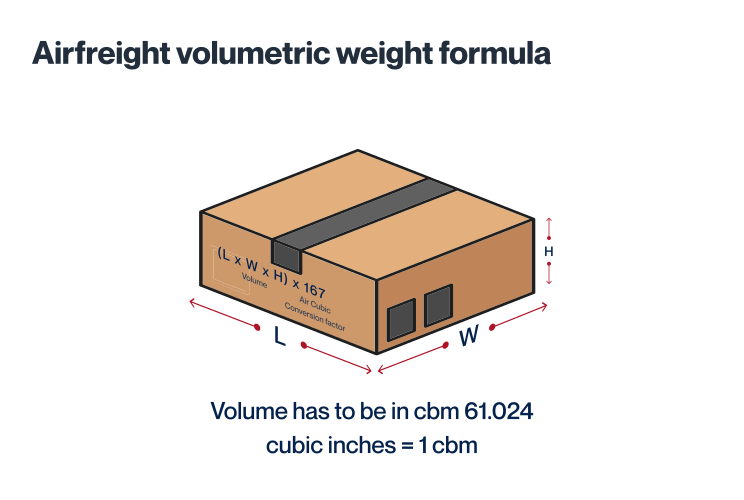
What is the difference between volumetric and gross weight?
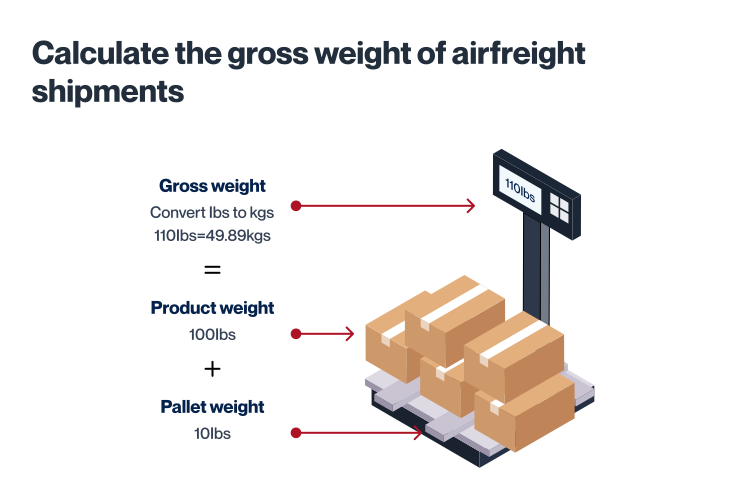
If you ship by air, airlines charge you based on the higher value between gross weight and volumetric weight. This is the core of every chargeable weight calculation. Because aircraft space is limited, a light but bulky shipment can cost more than a dense one of the same actual weight.
- Gross weight, the real weight of your cargo including packaging and pallets.
- Volumetric weight, a theoretical weight based on dimensions.
- Chargeable weight, the higher of gross or volumetric weight.
- IATA cargo standards, the rules defining how airlines calculate and apply these values.
To calculate volumetric weight for air cargo, use: Length x Width x Height in cm / 6000. For express services, divide by 5000. For example, a box of 40 x 30 x 20 cm gives 4 kg using 6000, but if the real weight is 10 kg, you pay on 10 kg. If the box is larger but lighter, the volumetric value becomes the billing base.
The most common mistake is guessing dimensions or forgetting pallets in the formula. That is how you trigger unexpected remeasurement charges at the airport. Before you confirm any air freight booking process, always double-check measurements and align them with your forwarder.
Door to door between Vietnam and Koweit
International door-to-door shipping is your all-in-one transportation solution, smoothly ferrying goods from Vietnam to Kuwait without requiring any legwork from you. Offering stellar convenience and efficiency, this service is your golden ticket to stress-free shipping. No more freight linguistics or border headaches – just a seamless delivery experience. Ready to unpack the benefits further? Let’s dive in!
Overview – Door to Door
Stressed by complexities of shipping goods from Vietnam to Koweit? Door to Door service might be your savior. It’s a hassle-free logistics solution taking care of everything, from transportation to customs clearance. No wonder why it’s FNM Vietnam’s most sought-out service! But it’s not all roses – higher costs and dependence on one provider are the drawbacks. Despite these, the simplicity and ease it provides often outweigh the cons. With Door to Door service, you can sidestep the complexities and focus on what you do best – growing your business!
Why should I use a Door to Door service between Vietnam and Koweit?
Ever tried juggling while walking a tightrope? Well, that’s what international shipping can feel like without Door to Door service. Here’s why the Door to Door service between Vietnam and Kuwait is your business lifesaver:
1. It’s Stress-Free: The logistic challenges of international shipping are numerous. Door to Door service eases this headache. Right from picking up the goods at your place in Vietnam, to delivering them at the specified address in Kuwait, everything is taken care of.
2. Timely Delivery: Is time of the essence for your shipment? This service ensures the most efficient routes are taken and all paperwork is fast-tracked, resulting in a speedy and punctual delivery.
3. Specialized Cargo Care: If you have unique or complex goods needing special care, this service is your best bet. A professional team maintains the shipment’s integrity, ensuring it arrives in pristine condition.
4. Full Responsibility: Door to Door service takes full ownership of the journey. This includes navigating various intermediaries, dealing with customs, and tracking goods. You can sit back and relax, saving your juggling act for the circus.
5. Ultimate Convenience: Trucking until the final destination is also covered. You won’t have to worry about coordinating with different trucking companies or pick-up points, making this process as smooth as silk.
In a nutshell, Door to Door service becomes your logistics superhero, swooping in to save you from potential headaches and logistic nightmares. Make the smart choice for your business today.
FNM Vietnam – Door to Door specialist between Vietnam and Koweit
Experience hassle-free shipping from Vietnam to Kuwait with FNM Vietnam — your dependable partner in international freight forwarding. We curate every aspect of your logistics seamlessly: packaging, transportation, customs clearance, employing all modes of shipping. Our world-class Account Executives are just a call away, ready to provide a free estimate within 24 hours. Leverage our extensive expertise for your shipping needs, and transform logistics from a chore into an advantage. Contact us today, and let’s move forward together.
Customs clearance in Koweit for goods imported from Vietnam
When you handle customs clearance in Kuwait for goods from Vietnam, you are deciding your final landed cost, your release timing, and who legally carries the risk as Importer of Record. One mistake in your commercial invoice requirements, packing list details for customs, or bill of lading for customs clearance can shift liability back to you. We coordinate the full import customs process in Kuwait for you, from document check to customs release and cargo delivery process.
On this Vietnam to Kuwait route, you will typically see delays caused by incorrect HS code classification, missing country of origin declaration or certificate of origin, and weak product compliance verification such as a missing conformity certificate. You may also face random customs risk assessment and inspection. If you understand the logic behind duties and documents, you control the outcome. Let us break it down step by step.
How to calculate duties & taxes when importing from Vietnam to Koweit?
To understand how to calculate import duties from Vietnam to Kuwait, you need five inputs: the country of origin declaration, the correct HS code classification, the customs value calculation method, the applicable tariff rate, and any additional measures. What you see in an online import tariff lookup Kuwait tool is only an estimate, because customs can adjust the value or question your classification during import declaration submission.
The first thing we always tell you is this, cheap freight quotes often ignore duties and taxes estimation. If your supplier under-declares or gives you the wrong code, you may face a clearance delay or reassessment. The key concept here is landed cost accuracy, not just freight cost.
Step 0 – Quick checks before you calculate
Before you open any calculator, confirm three operational points:
Importer of Record, you or your Kuwaiti partner must hold the proper registration and accept importer of record responsibilities.
Incoterm, FOB, CIF, or DDP will determine who controls the import customs process Kuwait side.
Low-value or simplified path, check if your shipment qualifies for any reduced or courier-based clearance channel.
Step 1 – Identify the Country of Origin
Your country of origin declaration determines tariff eligibility, access to any preferential tariff, and exposure to trade defense measures. Kuwait customs will expect a consistent certificate of origin aligned with your invoice and export declaration in Vietnam.
The common mistake is confusing shipping country with manufacturing origin. If your goods transit through another hub but are made in Vietnam, origin remains Vietnam. If you declare it incorrectly, you risk a customs challenge and reassessment. This is where the origin consistency check matters.
Step 2 – Find the HS Code of your product
Your HS code classification drives duty rate, restrictions, and whether your product triggers a restricted and prohibited goods check. If you get it wrong, you do not just miscalculate duties, you may trigger the wrong compliance requirements.
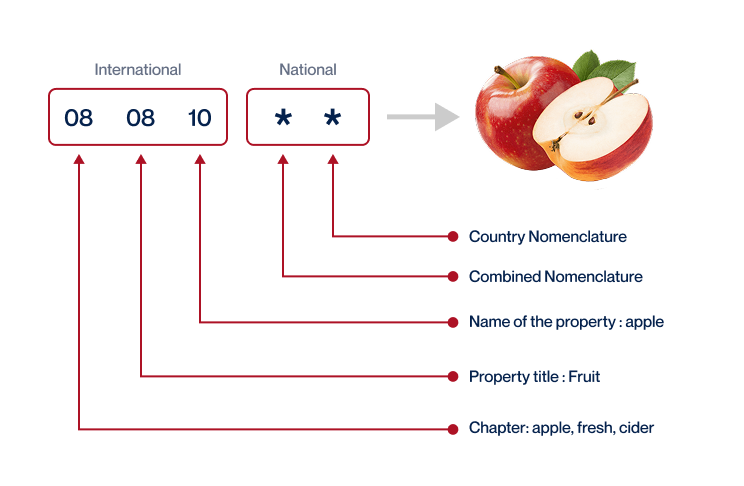
Start with your supplier, then verify independently using a reliable harmonized system code lookup tool such as Harmonized Tariff Schedule search. Compare product composition, function, and technical specs, not just product name. This is how you answer the real question, how to find the correct HS code.
If your HS code is inconsistent across invoice, packing list, and declaration, you increase the chance of customs inspection process and fines. The anchor concept here is classification defensibility. Here’s an infographic showing you how to read an HS code.
Step 3 – Calculate the Customs Value
Now you move to the customs value calculation method. In most cases, Kuwait customs will assess duties on the CIF value for customs purposes, meaning product price plus international freight plus insurance.
If you buy under FOB, you must add freight and insurance to reach the correct customs base. If you buy under CIF, those costs are already embedded. You must also review assists, commissions, special packing, or royalties that should be included.
Example, if your goods cost 10,000 USD, freight is 1,000 USD, and insurance 200 USD, your customs value becomes 11,200 USD. If you understate this, you expose yourself to a value reassessment. The key anchor is accurate CIF build-up.
Step 4 – Figure out the applicable Import Tariff
An import tariff is the percentage applied to your customs value to determine basic duty.
To proceed, open the official Kuwait customs portal, run your import tariff lookup Kuwait, enter the confirmed HS code, and verify the origin as Vietnam. Then read the duty rate and any attached notes.
When you review the result, check:
Duty rate type, ad valorem percentage or specific amount.
Additional measures, anti-dumping or excise references.
Product conditions, licenses or conformity certificate requirements.
If your customs value is 11,200 USD and the duty rate is 5%, your estimated duty is 560 USD. Simple math, but only if your inputs are correct. On this route, electronics, food, and regulated goods often trigger extra document checks. If you want, we can validate your tariff scenario before shipment.
Step 5 – Consider other Import Duties and Taxes
Beyond customs duty, you must assess VAT and other measures. VAT, when applicable, is usually calculated on the customs value plus duty. If your customs value is 11,200 USD and duty is 560 USD, VAT would apply on 11,760 USD.
You also need to evaluate anti-dumping, excise, or sector-specific rules. For example, certain goods may require a pre-shipment inspection, a conformity certificate, or strict product compliance verification before customs release.
This is where many shipments face clearance delay reasons, missing certificates or inconsistent documentation. Keep your focus on full tax exposure review.
Before shipment, you should:
Run a restricted goods check for Kuwait.
Prepare a customs documentation checklist, invoice, packing list, certificate of origin.
Align values and HS codes across all documents.
Step 6 – Calculate the Customs Duties
The core formula is straightforward. Duty = customs value × duty rate. If applicable, VAT = tax base × VAT rate, where the tax base often includes customs value plus duty.
Example, customs value 11,200 USD, duty rate 5%. Duty equals 560 USD. If VAT applies on 11,760 USD, you multiply that base by the VAT rate to estimate the tax. This gives you a structured duties and taxes estimation.
After calculation, you or your appointed agent handle customs broker representation and import declaration submission. Payment is typically required before customs release and cargo delivery process. If customs selects your file for inspection, storage and demurrage can start quickly. This is why we verify everything before cargo arrival.
Step-by-step: how customs clearance usually works on this route
When you move cargo from Vietnam to Kuwait, the customs timeline starts before the vessel sails or the aircraft departs. The operational flow depends on your Incoterm, shipment type, and port or airport of entry. Air waybill for customs clearance is handled differently from bill of lading for customs clearance. Here is how the step by step customs clearance Vietnam to Kuwait process usually unfolds when we coordinate it for you.
1. We review your commercial invoice requirements, packing list details for customs, certificate of origin, and export declaration in Vietnam before departure.
2. Your supplier completes export customs procedures in Vietnam and obtains export clearance.
3. Cargo departs under the agreed Incoterm, FOB, CIF, or others, which defines who controls the import side.
4. Before arrival, we prepare the import declaration submission in Kuwait and confirm importer of record responsibilities.
5. Kuwait customs runs a customs risk assessment, which may route the file to automatic release or physical customs inspection process.
6. If inspection is required, goods are checked against HS code, value, origin marking, and compliance documents.
7. Duties and taxes are assessed, and payment is arranged through the appointed customs broker representation.
8. Once cleared, customs release is granted and the cargo delivery process moves forward to your warehouse.
9. If you use a bonded warehouse option, temporary import procedure, or plan a re-export process, we structure the declaration differently from the start.
The moments of truth are document alignment and value declaration. This is where most delays originate, not at sea or in the air. When you control these steps early, you control your timeline.
Contact Details for Customs Authorities
Vietnam Customs
Official name: General Department of Vietnam Customs Official website: https://www.customs.gov.vn/

Koweit Customs
Official name: Kuwait General Administration of Customs Official website: https://www.customs.gov.kw/
Required documents for customs clearance in Koweit
The first thing we always tell you is simple, every document must match. Your shipper, consignee, product descriptions and values must be identical across all paperwork. In Kuwait, most delays do not happen because of the border itself, they happen because of inconsistencies. If one figure changes between your invoice and your bill of lading, you risk a customs hold for discrepancy. Below is your operational checklist for a smooth customs clearance.
Commercial Invoice
The Commercial Invoice is the document that states what you are selling, to whom, and at what value. Kuwaiti customs use it to calculate import duties and verify the HS code classification.
Example: 1,200 cartons of rubber sheets, FOB Ho Chi Minh City, total value USD 85,000, buyer in Kuwait City.
A common mistake is using vague product descriptions such as “electronic goods” instead of a precise commercial name, which can trigger valuation queries and slow your release.
Bill of Lading or Air Waybill
The Bill of Lading for sea freight, or Air Waybill for air freight, is the transport contract and proof your cargo was loaded. Customs and your broker use it to confirm routing, carrier, and consignee details.
Example: Original B/L issued at Cat Lai Port showing final discharge at Shuwaikh Port, consignee matching the importer’s commercial registration.
If your consignee name on the B/L does not match the registered importer in Kuwait, you can face a release refusal at port until corrected.
Packing List
The Packing List details how your goods are physically packed, including quantities, net weight, gross weight, and dimensions. Customs rely on it to cross-check the shipment against your invoice and to plan inspections.
Example: 20 pallets, each containing 60 cartons, total gross weight 14,500 kg, with carton dimensions clearly stated.
If your weights on the packing list differ from the Bill of Lading, you risk a physical inspection request, which means time and extra port charges.
Certificate of Origin
The Certificate of Origin confirms that your goods were manufactured in Vietnam. Kuwaiti customs use it to determine eligibility for any preferential tariff treatment or specific origin rules.
Example: Chamber-stamped CO stating “Made in Vietnam” for textile products exported to Kuwait.
A frequent issue is submitting a CO with product descriptions that do not exactly match the Commercial Invoice, which can delay duty assessment.
Import License and Kuwaiti Importer Registration
Before your goods can clear, your local partner must hold a valid Import License and be registered as the Importer of Record in Kuwait. Customs use this to confirm the shipment is legally tied to an authorized entity.
Example: Vietnamese supplier ships under CIF terms, while the Kuwaiti buyer provides its commercial registration and import code to the broker.
If you ship without confirming your buyer’s registration status, you can face a clearance blockage on arrival that you cannot fix remotely.
Product Conformity Certificate
Some products require proof that they comply with Kuwaiti technical standards before clearance. This may include a Certificate of Conformity issued by an approved body.
Example: Electrical appliances shipped from Vietnam with a conformity certificate confirming voltage and safety compliance for the Kuwaiti market.
Shipping regulated goods without verifying conformity requirements can result in a mandatory re-export order at your expense.
Get Started with FNM Vietnam
Prohibited and restricted items when importing into Koweit
You need to understand the difference before you book your freight. Restricted products are allowed, but only if you meet specific conditions or provide approvals. Prohibited products should not enter Kuwait at all and can be seized, returned, or destroyed. If you are unsure, check before loading the container, not after it arrives at Kuwaiti customs.
Restricted products
- Pharmaceuticals, require prior health authority approval and registration.
- Food products, subject to labeling rules and possible health certificates.
- Cosmetics, may require ingredient disclosure and conformity checks.
- Electrical equipment, must comply with local voltage and safety standards.
- Chemicals, controlled depending on composition and end use.
- Telecommunication devices, often require type approval before import.
Prohibited products
- Narcotics and controlled drugs, strictly banned.
- Weapons and ammunition, unless under special government authorization.
- Pornographic materials, prohibited under local law.
- Counterfeit goods, subject to seizure and penalties.
If you are shipping a product that sits in a grey area, you should request written confirmation from your local broker before departure. Ignoring this step can lead to seizure or heavy fines, and storage costs at port accumulate fast.
Trade agreements and preferential duties for imports from Vietnam to Koweit
When you ship from Vietnam to Kuwait, you should know that Kuwait applies the GCC Common Customs Tariff. In most cases, the standard import duty is around 5% of the CIF value, but the exact rate depends on your HS code. There is currently no bilateral free trade agreement granting automatic zero duty between Vietnam and Kuwait, so you should plan your landed cost accordingly.
Kuwait is part of the Gulf Cooperation Council, which means once your goods are cleared in one GCC country, they can circulate under certain conditions within the customs union. That can matter if your final customer operates regionally. You should also verify whether your product category is subject to higher protection, anti-dumping measures, or special excise treatment, because that is where costs can quietly increase.
The practical takeaway is simple. Do not assume reduced tariffs without checking your exact HS classification and origin documentation. A wrong assumption here can lead to a duty reassessment after clearance, which is never a pleasant surprise.
Your Next Step with FNM Vietnam
Additional logistics services
Warehousing
Finding a trusted space for your goods, especially when temperature control matters isn't child’s play. Mistakes in storage could affect product quality and your customer relationships too! Shy away from risks and check out our comprehensive warehousing solutions designed to cater to your specific needs. Details are just a click away on our dedicated page: Warehousing.
Packing
Shipping from Vietnam to Kuwait? Your goods deserve flawless packaging, ensuring faultless delivery. Whether it's delicate ceramics or robust machinery, our experienced team secures your items, minimizes the risk of customs issues, or unexpected damages. Even bulky or unusual-shaped goods aren't a problem. We've got it all in hand, right down to the necessary repackaging. Intrigued? Find out more at our dedicated page: Freight Packaging.
Transport Insurance
Safeguard your shipment's journey with the ideal shield - cargo insurance. Unlike fire insurance, it's tailored to cover potential damage, loss, or theft during transit. Imagine you're shipping delicate ceramics; even a slight mishandling could lead to damage, right? That's where our insurance steps in, providing that stress-free buffer. Dip into our resource pool for Cargo Insurance to mitigate any transport risks. More details on our dedicated page: Cargo Insurance.
Household goods shipping
Moving personal effects from Vietnam to Kuwait? Ensuring the safe transport of fragile or bulky items can be a struggle. Don't worry! Our reliable hands will care for your objects, adjusting our approach to perfectly fit each unique item. Just like how we handled Mr. Vo's cherished heirloom vases, we'll ensure your precious possessions reach Kuwait seamlessly. For more specifics, jump over to our dedicated page: Shipping Personal Belongings.
Procurement in Thailand
Embracing unfamiliar territories like Asia or East Europe for your business expansion? FNM Vietnam has got you covered. We're pros in overcoming language hurdles and guiding you end-to-end, from finding reliable suppliers to overseeing your entire procurement process. Picture it, sourcing and manufacturing has never been simpler. For a deeper dive into what we offer, feel free to explore: Sourcing services.

Quality Control
Shipping from Vietnam to Kuwait isn't just about the physical journey; it begins at the manufacturing stage. Quality control is vital. Imagine you're shipping 1000 custom-made chairs, but 200 are flawed. That’s cargo space and money wasted. We inspect your goods right on the factory floor, ensuring they meet all quality standards and avoid any costly surprises. More info on our dedicated page: Quality Inspection.
Conformité des produits aux normes
Avoid logistical headaches with our Product Compliance Services. Making sure your goods adhere to import regulations is critical to avoid customs issues. With our in-depth lab testing, you can secure necessary certifications with confidence, ensuring your products are welcomed at their destination every time. We make the complex clear - achieving smooth shipments starts with compliant goods.