
Freight Shipping between Vietnam and Serbia | Rates – Transit times – Duties and Taxes

If you treat freight Vietnam Serbia like a standard Asia-Europe lane, you will miscalculate timelines, overlook inland constraints, and expose yourself to avoidable customs friction. You are moving cargo from major export hubs like Ho Chi Minh City or Hai Phong into a landlocked Balkan market that depends on tight coordination with regional gateways, and that changes your cost structure and risk profile. The first thing we always tell you is simple, your real challenge is not booking space, it is aligning transit time, documentation, and Serbian import rules from day one. In this destination guide, you will find clear guidance on transport options, realistic lead times, customs duties and taxes, and the operational checkpoints that make your Vietnam to Serbia shipment predictable instead of stressful.

Which are the different modes of transportation between Vietnam and Serbia?

You should choose sea freight when your priority is cost per cubic meter and you can absorb longer lead times, especially if your cargo departs from Cat Lai Port and moves via a European gateway before reaching Serbia by truck or rail. You should choose air freight when timing is critical or your goods are high value, with departures from Tan Son Nhat Airport into hubs that connect efficiently to Nikola Tesla Airport Belgrade.

Here is the catch, if you underestimate inland transit and cut-off constraints, you risk unexpected storage or demurrage at the European entry point. You can always ask us to benchmark current capacity and rate levels in real time, and we will help you decide based on your cargo profile, budget, and deadline before we break each option down in detail below.

How can FNM Vietnam help?

When shipping goods between Vietnam and Serbia, let FNM Vietnam take the helm. Our experts take on the complexities of global freight, ensuring your cargo journeys smoothly, from pickup to customs clearance. No more shipping woes. Call our consultants for zero-charge advice or request a free estimate in under 24 hours. Transit peace of mind begins with us!

Sea freight between Vietnam and Serbia

If you are considering sea freight Vietnam to Serbia, the first thing we always tell you is simple. It makes sense when you ship medium to large volumes, when your timeline is measured in weeks, not days, and when you want to optimize your cost per CBM or per container. For most industrial goods, furniture, textiles, machinery, and consolidated cargo, ocean freight Vietnam Serbia remains the most economical backbone of your supply chain.

However, you need to understand one structural reality. Serbia is a landlocked country, so your port of discharge will often be a major European gateway such as Rijeka, Koper, or Bar, followed by inland transport to Belgrade or another Serbian city. If you assume your container sails directly into Serbia like a coastal country, you risk underestimating inland costs and lead time. From experience, this is where first-time importers miscalculate their budget.

You should also weigh speed versus stability. Container shipping Vietnam to Serbia typically involves at least one transshipment hub in Asia or the Mediterranean. That means more handling, more coordination, and longer shipping lead time by ocean freight compared to intra-Asia routes. In return, you get predictable weekly sailings and a cost structure that is usually far more competitive than air freight for anything above a few cubic meters.

If your cargo is urgent, high value, or very small in volume, sea freight might not be your best move. But if you are planning structured imports, building inventory, or shipping full containers under a FCL full container load service, then international sea logistics Vietnam Serbia gives you control, scale, and long-term cost efficiency.

Which Incoterms should you use?

Your choice among Incoterms FOB CIF EXW DAP DDP directly shapes who controls the shipment and who carries the risk. On the freight Vietnam Serbia by sea route, we often see suppliers proposing FOB or CIF. Here is what you need to think about in real operational terms, not theory.

With FOB, your supplier handles export clearance and loading at the port of loading in Vietnam, and you take control once the cargo is on board. This usually gives you better visibility on the ocean freight quote Vietnam Serbia and the inland leg into Serbia. With CIF, the seller books the main transport, but you still pay destination charges. Many importers wrongly assume CIF means everything is covered, which leads to unexpected destination costs at arrival.

If your supplier proposes EXW, you must handle export formalities in Vietnam. That means you or your freight forwarder Vietnam Serbia route must manage export documentation for ocean freight and local trucking. In practice, EXW gives you control but increases operational responsibility. On the other end, DAP or DDP can simplify things, but you should check who acts as the Importer of Record in Serbia and how freight terms and responsibilities buyer seller are structured.

The key decision anchor is simple. Decide who controls the bill of lading B/L and the freight contract. If you control it, you control costs, timelines, and the choice between telex release sea waybill options. If you do not, you depend entirely on your supplier’s logistics choices.

Main ports to know in Vietnam and Serbia

When planning container shipping Vietnam to Serbia, you should focus on operationally relevant ports and gateway strategies rather than long port lists. Because Serbia is landlocked, your decision involves both a Vietnamese export port and a European gateway port before inland delivery.

In Vietnam:

  • Ho Chi Minh City, Cat Lai, The busiest southern hub, ideal if your factory is in the south and you need frequent sailings and strong global connectivity.
  • Cai Mep Thi Vai, Deep sea port handling larger vessels, often used for long haul services to Europe with fewer transshipments.
  • Hai Phong, Main northern gateway, suitable if your supplier is near Hanoi or in northern industrial zones.
  • Da Nang, Relevant for central Vietnam, but usually involves feeder connections to a larger hub.

For Serbia, via gateway ports:

  • Rijeka in Croatia, A common gateway port for Serbian cargo with road or rail to Belgrade.
  • Koper in Slovenia, Efficient inland rail connections into Central Europe and Serbia.
  • Bar in Montenegro, Sometimes competitive for southern Serbia depending on inland trucking rates.
  • Belgrade river port, Final inland hub on the Danube for barge or truck delivery.

Your choice affects not only sea freight but also multimodal transport sea and road costs. If you choose a gateway with weak rail links, you may face higher inland trucking expenses or longer delivery time. This is why the port of loading and port of discharge must be aligned with your final warehouse location, not just the cheapest ocean leg.


Should I choose FCL or LCL when shipping between Vietnam and Serbia?


Shipping between Vietnam and Serbia? Two options command the high seas – Full container load (FCL) and Less than container load (LCL or consolidation). Picking the right one can sail or sink your shipping goals, affecting cost, timeframe, and delivery success. Before you make the plunge, understanding these sea freight titans can help hone your decision to your specific needs. Let’s dive in and explore how to tailor your choice for smooth sailing all the way!


Full container load (FCL)

Definition: FCL, or Full Container Load, refers to a shipping mode where the entire container is utilized by one shipper. This type of shipping is suitable for bulky cargo and involves packing and sealing the container at the origin, and only being unsealed at your specified destination.
When to Use: If you're shipping large quantities of goods - particularly more than 13, 14, or 15 cubic meters - then FCL shipping is the optimal choice due to its efficiency and cost-effectiveness for high volume loads.
Example: Consider you are a furniture manufacturer in Vietnam shipping a large order of dining sets to a customer in Serbia. With each set taking up around 2 CBM, an order of 7 sets would already make a FCL shipment more suitable, loading it all into a single 20'ft container.
Cost Implications: With FCL shipping, the cost per unit is generally lower when shipping large volumes than if you were to use LCL or Less Container Load. Moreover, since the FCL container is solely reserved for your goods, your fcl shipping quote will not be affected by the sharing of container space, which may result in a far more predictable and consistent shipping cost.

Less container load (LCL)

Definition: LCL or Less-than-Container Load, means your cargo is combined with others in a single container.
When to Use: If your cargo volume is under 13-15 CBM (Cubic Meters), LCL freight could be an economical and flexible choice. It allows for shipping smaller quantities without the need for a full container, making it a cost-saving strategy for low volume shipments.
Example: Suppose a Vietnamese crafts business wants to export handmade goods to a boutique store in Serbia. The cargo size is 10 CBM, which doesn't require a whole container. Hence, choosing an LCL shipment can serve their needs effectively without incurring the cost of a full container.
Cost Implications: By consolidating small volumes into one container, you pay for the exact space your cargo occupies, rather than the whole container. This consolidating method drastically reduces costs compared to full container load (FCL) shipping. However, the overall cost might be higher than FCL if calculated per unit or per CBM, as LCL freight involves more handling processes.

Hassle-free shipping

Are you overwhelmed by shipping options between Vietnam and Serbia? Let FNM Vietnam simplify the process for you! We are constantly striving to make cargo shipping a breeze for businesses. Our ocean freight experts analyze multiple factors including cost efficiency, shipment size, and transit time, to recommend either consolidation shipping or full container load. No more guesswork, let us provide clarity! Take your first step towards hassle-free shipping by asking for a free estimate today.

Transit times: How long does it take to ship from Vietnam to Serbia?

If you look at sea transit time Vietnam to Serbia, you need to separate pure ocean time from total door delivery. Most services include at least one feeder service and transshipment hub, typically in Singapore, Port Klang, or a Mediterranean hub before reaching a European gateway.

Port of loading (Vietnam)Gateway port (Europe)Estimated transit time
Ho Chi Minh CityRijeka30 to 40 days
Hai PhongKoper32 to 42 days
Cai MepRijeka28 to 38 days

From the European gateway to Belgrade or another Serbian city, you should add several days for inland rail or truck, depending on the service. In total, your realistic shipping lead time by ocean freight from factory in Vietnam to warehouse in Serbia often ranges between 35 and 50 days.

You also need to factor in port congestion, especially during peak export months before major holidays, and the impact of transshipment. Each additional handling point increases the risk of schedule shifts. If you ignore this and promise fixed delivery dates to your client, you expose yourself to avoidable delays. The safer approach is to plan with buffers and monitor cargo tracking for ocean shipments closely.

Shipping rates: how much does a sea freight shipment cost from Vietnam to Serbia?

If you are estimating sea freight rates Vietnam Serbia, you need to separate LCL and FCL pricing and remember that Serbia involves a European gateway plus inland delivery.

Service typeIndicative market range
LCL, 1 to 5 CBMUSD 80 to 150 per CBM, excluding destination charges
FCL 20ftUSD 1,800 to 3,500 per container, port to port
FCL 40ftUSD 2,800 to 5,500 per container, port to port

These figures are planning estimates for ocean freight Vietnam Serbia. Your final freight rate per container depends on season, carrier capacity, fuel costs such as bunker adjustment factor BAF, and space pressure during high season. More importantly, the ocean leg is only one part of your freight cost breakdown ocean shipment. You must add origin charges, terminal handling charges THC, inland transport to Serbia, customs clearance, and possible storage. This is why a cheap port to port rate rarely reflects your true landed cost.

Special sea freight solutions

Standard containers work for most cargo, but sometimes your shipment requires more specific handling on the Vietnam Serbia route. Here is how you decide.

Out of Gauge OOG cargo

If your machinery exceeds standard container dimensions, you will need out of gauge OOG cargo solutions. This may involve open top or flat rack containers and specific lashing plans. You should confirm port handling capability at both the Vietnamese port and the European gateway to avoid last minute handling refusals.

Breakbulk and project cargo

For very large industrial units that cannot be containerized, breakbulk and project cargo services allow individual lifting and stowage. This requires detailed planning, heavy lift equipment booking, and precise documentation in the bill of lading B/L.

Reefer container for temperature controlled cargo

If you ship food or pharmaceuticals, a reefer container for temperature controlled cargo ensures stable conditions during the sea transit time Vietnam to Serbia. You should also verify power availability during transshipment and inland segments to avoid temperature deviations.

Shipping hazardous goods IMDG

If your products fall under shipping hazardous goods IMDG rules, you must provide correct classification, packaging, and documentation. Carriers may restrict certain classes, and misdeclaration can result in fines or cargo rejection.

Whatever your cargo type, we handle container stuffing and devanning, documentation, booking, and inland delivery as part of a complete door to port vs door to door service setup. If you want a structured container shipping cost estimate or a tailored ocean freight quote Vietnam Serbia, we can review your cargo details and provide a clear breakdown in less than 24 hours.

Air freight between Vietnam and Serbia

When you choose air freight Vietnam to Serbia, you choose speed, predictability, and tighter control over your timeline. It makes sense for high-value goods, urgent replenishment, or sensitive cargo under IATA air freight rules. But you should not assume it is always “3 days” or automatically expensive. On this lane, routing often involves direct flight vs transshipment air cargo, and that alone can shift your schedule.

Here is what usually causes problems. You underestimate your chargeable weight calculation, your supplier misses the cut-off, or your packing is not compliant for air cargo security screening. That is when costs rise and space gets reallocated. If you treat international air logistics Vietnam Serbia as a timed operation with strict documentation and handling steps, you stay in control and avoid last-minute storage or rebooking fees.

Air Cargo vs Express Air Freight: How should I ship?

Choosing between air cargo Vietnam Serbia and an express air freight Vietnam Serbia solution directly impacts your cost structure, control level, and delivery timeline. With standard airline freight, you book space under an air waybill AWB, often using cargo consolidation by air. With courier networks, you rely on an integrated air cargo vs express courier service model where pickup, customs, and delivery are bundled. The real question is simple, do you want more control and optimization, or maximum simplicity for smaller shipments?

Should I choose Air Cargo between Vietnam and Serbia?

You should consider a standard air freight service once your shipment exceeds about 1 CBM or 100 to 150 kg. Above that threshold, classic freight Vietnam Serbia by air is usually more structured and cost-efficient. It works best for B2B flows, regular volumes, oversized cargo by air, or goods that require temperature controlled air freight.

Before requesting your air freight quote request, you need precise dimensions, gross weight, Incoterm such as FOB or DAP, departure airport in Vietnam, arrival airport in Serbia, ready date, and product details including any dangerous goods by air IATA DGR or lithium batteries air shipping constraints. If you ignore the difference between airport to airport vs door to door air service, you risk surprise trucking and customs charges. Many importers also forget airport handling charges at destination, which leads to unexpected release delays.

Extracted Image

Should I choose Express Air Freight between Vietnam and Serbia?

You should choose express if you ship small parcels under 1 CBM or around 100 kg, and you need an urgent shipment Vietnam to Serbia without building a full logistics setup. The courier manages pickup, export, flight, customs clearance for air cargo, and final delivery under a door to door air freight service. It is practical when you do not have an internal logistics team.

The trade-off is control. Courier invoices include base rate, fuel surcharge air freight, remote area fees, and reweigh adjustments. If you underestimate volumetric weight vs gross weight, your final bill increases. If you assume everything is included under DDP without checking, you face destination duty disputes. Express is excellent if your shipment is small, urgent, and standardized. It becomes risky when your packaging is non-compliant or your goods fall under restricted categories.

Extracted Image

Main airports to know in Vietnam and Serbia

When you plan air cargo capacity and space allocation, the airport pair you select shapes your real lead time and total cost. Here are the main international airports in Vietnam and Serbia that matter for this route.

  • Tan Son Nhat Airport, Ho Chi Minh City is the main southern export gateway, close to major industrial zones. You benefit from frequent departures, but peak season congestion can trigger space shortages if you book late.
  • Noi Bai Airport, Hanoi serves northern factories and electronics clusters. You often route European-bound cargo from here, especially for structured B2B flows.
  • Belgrade Nikola Tesla Airport is Serbia’s primary cargo hub with established customs infrastructure and handling for general and special cargo.
  • Niš Constantine the Great Airport can serve as a secondary option for regional distribution in Southern Serbia and nearby Balkan markets.

If your factory is far from the selected airport, pre-carriage trucking time becomes part of your air shipping lead time. The wrong airport choice can quietly increase inland cost and handling steps.

Transit times: how long does air freight take from Vietnam to Serbia?

Service typeEstimated transit time
Standard air cargoApproximately 5 to 12 days door to door
Express courierApproximately 3 to 7 days door to door

Your real air transit time Vietnam to Serbia depends on the departure airport, airline routing, and whether your cargo moves via direct flight vs transshipment air cargo. Pre-flight handling and air cargo security screening usually add one to three days before departure. Customs clearance in Serbia can add additional time if documents under the air waybill AWB are incomplete.

You should always check cut-off times, space confirmation, and the exact ready date at supplier level. Most delays happen before the aircraft departs, not in the air. If you misalign paperwork or miss screening windows, you face rolled cargo to the next flight, which resets your schedule.

Shipping rates: how much does air freight cost from Vietnam to Serbia?

There is no single flat air freight rates Vietnam Serbia number. Your final air cargo cost per kilogram depends first on your chargeable weight calculation, then on dimensions, packaging density, urgency, season, and chosen airports. Space constraints and fuel surcharge air freight adjustments also influence the rate.

If your cargo is light but bulky, volumetric weight drives the price. If you ship during peak export periods from Vietnam, limited capacity increases spot rates. Inland trucking to the airport and airport handling charges in Serbia complete the total landed air cost. The only reliable way to budget correctly is to simulate the full routing, not just multiply kilograms by a generic rate.

What is the difference between volumetric and gross weight?

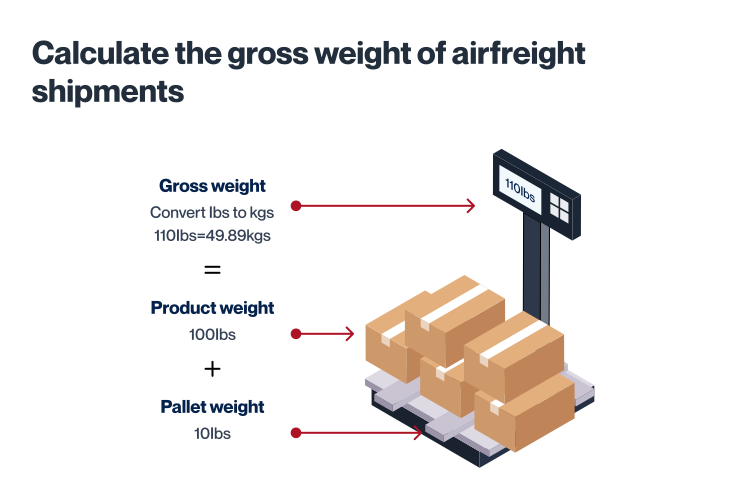
In air freight, the airline charges you based on the higher value between gross weight and volumetric weight. Gross weight is what your cargo physically weighs on the scale. Volumetric weight reflects the space your shipment occupies in the aircraft. This distinction drives your chargeable weight calculation and directly impacts your invoice.

  • Gross weight, the actual weight in kilograms including packaging and pallets.
  • Volumetric weight, the space-based weight calculated from dimensions.
  • Chargeable weight, the higher of gross or volumetric weight.
  • IATA air freight rules, the standards defining divisors and calculation logic.

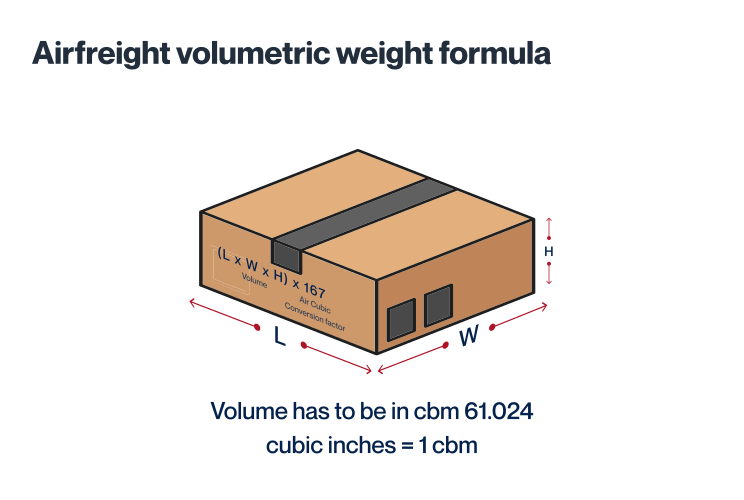
To calculate volumetric weight for standard air cargo, use: Length × Width × Height in cm ÷ 6000. For express, divide by 5000. For example, 50 × 40 × 30 cm ÷ 6000 equals 10 kg in standard air freight.

As a rule of thumb:
Air cargo: 1 m³ = 167 kg
Express: 1 m³ = 200 kg

The most common mistake is assuming your goods are light so air will be cheap. If your cartons are bulky, volumetric weight dominates and you face unexpected cost increases. Proper export packing for air cargo helps you control both space and budget.


Door to door between Vietnam and Serbia


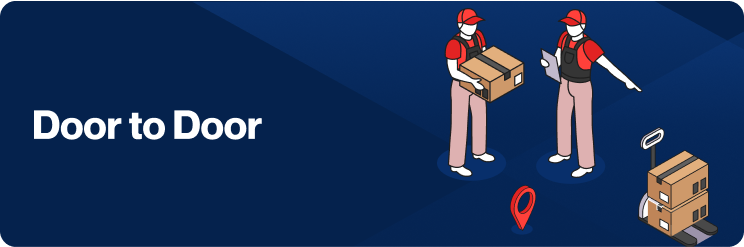
Navigating the maze of international shipping? Our guide on door-to-door shipping, from Vietnam to Serbia and vice-versa, is designed just for you. This full-service option lets you sit back, while we handle every shipping twist and turn, offering ease and peace of mind. Enjoy benefits like straightforward customs clearance and delivery right to your step. Keen on discovering more? Well, let’s dive in!


Overview – Door to Door


Shipping between Vietnam and Serbia can seem like a daunting task. Complex regulations, language barriers, and transit uncertainties can complicate matters. But don’t fret – the solution lies in Door to Door shipping! Preferred by many of FNM Vietnam’s clients, this service eases the shipment process, handling everything from customs clearance to final delivery. However, be mindful as it might not be the cheapest option, but its convenience and ease surely outweigh the costs. So, if you’re after stress-free logistics, consider this service for a smooth shipping experience. This section will guide you through the nuts and bolts of Door to Door shipping!


Why should I use a Door to Door service between Vietnam and Serbia?


Ever shipped a package and thought, ‘boy, that was more confusing than solving a Rubik’s cube in a blackout’? Fret not! That’s where Door to Door service scoops in to turn your international shipping experience from Vietnam to Serbia into a breezy task.


1. Elimination of Logistical Backache: This service takes over all the intricate steps like booking cargo space, transport organization, customs procedures, and storage. You simply provide the pickup and delivery addresses, and consider it done!


2. Timely Delivery: When you’re racing against the clock, Door to Door works wonders. By handling everything from loading to trucking, it mitigates potential delays, ensuring your goods reach Serbia from Vietnam right on schedule.


3. Specialized Care for Complex Cargo: High-value artwork? Fragile antiques? Specialized care is a game-changer here. Your unique cargo is handled proficiently to prevent damage during loading, transit, and unloading stages.


4. Enhanced Convenience: Save yourself from the trucking headache! With this service, transportation to the final destination in Serbia is taken care of without you fussing over trucking arrangements.


5. Single Point of Contact: One provider, zero stress. Having a single contact simplifies communication and speeds up resolution in case any issues arise during the transportation.


So, if you’re shipping goods between Vietnam and Serbia, why juggle lots of logistic balls when Door to Door can juggle them for you? Remember, professional juggling is always better, and in this case, it comes with timely delivery, enhanced convenience, and swoon-worthy cargo care.


FNM Vietnam – Door to Door specialist between Vietnam and Serbia


Experience stress-free shipping from Vietnam to Serbia with FNM Vietnam. Entrust us to manage your goods’ transportation process from start to finish – packing, transport, customs, and beyond. Our savvy team has refined expertise in all shipping methods, ensuring efficiency and peace of mind. You’re never alone on this journey – your dedicated Account Executive is ready to assist you every step of the way. Get your free estimate within 24 hours. Need quick guidance? Call our consultants, always available to cater to your queries. FNM Vietnam is at your service!


Customs clearance in Serbia for goods imported from Vietnam

When you handle customs clearance in Serbia for goods from Vietnam, you are deciding three things at once, your total landed cost, your release timing, and who carries the legal liability as Importer of Record. On this route, the paperwork, the declared value, and the HS classification will directly impact how fast your cargo moves and how much you finally pay. We coordinate the full import customs process Serbia side for you, from documents check to release.

You will notice fast that most delays do not come from transport, but from incorrect HS code classification, incomplete commercial invoice requirements, or confusion about country of origin declaration. This is where costs quietly increase through storage or amendments. Below, you will see exactly how to import from Vietnam to Serbia without guessing.

How to calculate duties & taxes when importing from Vietnam to Serbia?

To understand how to calculate import duties from Vietnam to Serbia, you need four inputs, the country of origin, the HS code, the customs value, and the applicable customs tariff Serbia rate. If one of these is wrong, your estimate will be wrong. It is as simple as that.

You should also expect that the amount customs finally assesses can differ from your first estimate. Why? Because officers can challenge your customs value calculation method, reclassify your goods, or request additional proof. Many low freight quotes look attractive but ignore import duties and taxes Serbia, which means you discover the real cost only at arrival. Let us break down the logic step by step under the customs clearance step by step Vietnam to Serbia approach.

Step 1 – Identify the Country of Origin

Your country of origin declaration determines whether you access a preferential origin and trade agreement rate or the standard tariff. Origin is about where the product was manufactured or substantially transformed, not where it was shipped from. If your goods are produced in Vietnam but consolidated in another country, Vietnam can still be the origin.

You must support your claim with the right certificate of origin form. If customs doubts your statement, they can request proof and apply the higher duty rate until you clarify. A common mistake is confusing shipping country with origin, which often leads to tariff reassessment and delays.

Step 2 – Find the HS Code of your product

Your HS code classification is the backbone of your file. It determines duty rate, VAT base, potential restrictions, and whether additional controls apply. When you perform a harmonized system code lookup, you are not just picking a number, you are defining how customs sees your product.

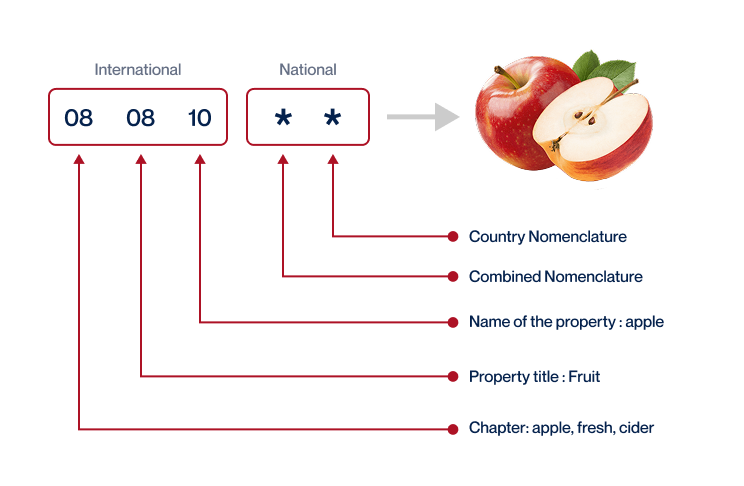
You can start with your supplier, but you should always verify independently. Use an official database such as the Harmonized Tariff Schedule search tool to compare descriptions and headings. Match technical characteristics, materials, and main function. If your classification is wrong, you risk retroactive duties and fines, especially after a post clearance audit customs review. Here’s an infographic showing you how to read an HS code.

Step 3 – Calculate the Customs Value

Serbian customs generally rely on the transaction value, meaning the price you actually paid, adjusted according to the customs valuation methods overview. In practice, you often work with the CIF value for customs purposes, which includes cost of goods, freight, and insurance up to the Serbian border.

The Incoterms impact on customs value is critical. Under FOB, you must add international freight and insurance to reach the customs base. Under CIF, these are usually already included. You must also check assists, packing, commissions, or royalties that customs may add. For example, if your goods cost 10,000, freight is 2,000 and insurance 500, your customs value becomes 12,500 before duty is applied.

Step 4 – Figure out the applicable Import Tariff

An import tariff is the percentage applied to your customs value to calculate duty. In Serbia, you check the rate based on your HS code and declared origin.

Here is the simple method you should follow. First, open the official Serbian customs tariff tool. Second, enter your HS code classification. Third, confirm the duty rate applicable to Vietnam as origin. While reviewing, check:
Preferential rate versus standard rate
• Any anti-dumping duty
• Additional measures or licensing notes

If your customs value is 12,500 and the tariff rate is 5%, your duty would be 625. That is the base calculation. On this route, we often see confusion between preferential and standard rates, so you should double-check your origin documents before confirming your budget. If you are unsure, a customs broker in Serbia can validate the rate before shipment.

Step 5 – Consider other Import Duties and Taxes

After duty, you must account for VAT on imports. VAT is calculated on the customs value plus customs duty, and sometimes other charges. If your customs value is 12,500 and duty is 625, VAT is applied on 13,125. This is where many importers underestimate their real cash flow needs under the import customs process Serbia.

You should also verify whether your goods fall under excise, anti-dumping, or specific control measures. For example, certain categories can trigger additional documentation or laboratory checks, and ignoring this can lead to customs inspection procedures that hold your cargo. Before shipment, you should:
• Confirm restricted and prohibited goods status
• Prepare required product conformity documents
• Validate your import compliance checklist

Step 6 – Calculate the Customs Duties

The core formula is straightforward. Duty = customs value × duty rate. Then, VAT = tax base × VAT rate, where the tax base usually equals customs value plus duty.

If your customs value is 12,500 and the duty rate is 5%, your duty is 625. If VAT applies on 13,125, you calculate VAT on that amount. The principle stays the same even if excise or anti-dumping duties apply, you add them into the taxable base according to regulation.

What happens next is operational. As Importer of Record, you or your representative must ensure payment before or at release. Delays in payment, missing import declaration filing, or errors in the single administrative document SAD can trigger storage and extra handling costs. This is usually the moment where small mistakes become expensive.

Does FNM Vietnam charge customs fees?

We act as your operational partner and, when mandated, as your representative under customs representation direct or indirect. We do not charge you customs duties themselves, these are paid to Serbian authorities. What we invoice are service fees related to coordination, documentation control, and communication with customs.

In practice, we help you prepare the full file, including commercial invoice requirements, packing list for customs, bill of lading for customs clearance or air waybill for customs purposes, and verify your EORI number registration. Whether your shipment moves under a customs transit procedure with a T1 transit document, enters a bonded warehouse storage, or uses a temporary import procedure, you always see a clear breakdown so you know exactly what goes to customs and what covers the service.


Contact Details for Customs Authorities


Vietnam Customs

Vietnam Customs

Official name: General Department of Vietnam Customs Official website: https://www.customs.gov.vn/

Serbia Customs

Serbia Customs

Official name: Customs Administration of the Republic of Serbia Official website: https://www.carina.rs/en.html

Required documents for customs clearance in Serbia

When you import from Vietnam into Serbia, customs does not block shipments because the border is strict. In most cases, it is because your documents do not match. The customs clearance file must show the same shipper, consignee, values, weights, and product descriptions across every document. If one detail conflicts, you risk a customs hold for discrepancy. The first thing we always tell you is simple, make your paperwork tell one consistent story.

Bill of Lading or Air Waybill

The Bill of Lading for sea freight or Air Waybill for air freight is the transport contract between you and the carrier. Serbian customs and your broker use it to confirm who shipped the goods, who receives them, and under which Incoterm. For example, if you ship a container from Ho Chi Minh City to Belgrade under FOB, the consignee shown must match your commercial invoice exactly. A common mistake is amending the consignee name on the invoice but not on the B/L, which can trigger a clearance delay at arrival.

Packing List

The Packing List details what is physically inside your shipment, including number of packages, gross and net weight, and dimensions. Customs uses it to verify inspection results and compare declared data with the actual cargo. If you ship 10 pallets of footwear from Hanoi, your packing list should clearly break down cartons per pallet and total weight in kilograms. You will run into trouble if weights on the packing list differ from the Bill of Lading, because that inconsistency often leads to physical inspection.

Commercial Invoice

The Commercial Invoice is the document that declares the value of your goods for duty and VAT assessment in Serbia. Customs relies on it to calculate import charges and confirm the correct HS code classification. If you export industrial machinery from Vietnam, you must clearly describe the model, function, unit price, currency, and total value. The classic mistake is under-describing goods with generic terms like “equipment”, which can result in reclassification and a higher duty assessment.

Certificate of Origin

The Certificate of Origin confirms where your goods were manufactured. Serbian customs uses it to determine whether standard MFN duties apply or whether any preferential regime can be claimed. For instance, if your textiles are fully manufactured in Vietnam, the origin must be clearly stated and supported by production evidence if requested. If you declare Vietnamese origin without meeting origin rules, you risk losing any potential tariff benefit and facing penalties for incorrect declaration.

Import Declaration and Serbian Customs Broker Details

To clear goods in Serbia, you must lodge an official import declaration through a licensed Serbian customs broker. This electronic filing includes tariff classification, customs value, and applicable duties. In practice, your broker will submit the declaration once all documents are aligned and the cargo arrives at the Serbian entry point. A frequent issue is appointing a broker too late, which delays submission and can lead to storage charges at the terminal.

Importer Registration and Tax Identification

Your Serbian buyer must have a valid Tax Identification Number and be properly registered as an importer with Serbian authorities. Customs uses this data to link the shipment to the responsible Importer of Record and apply VAT correctly. If you sell under DDP, you need to clarify in advance who acts as importer, because Serbia is not part of the EU customs territory. Many first-time exporters assume an EORI is enough, but in Serbia what really matters is local registration, and confusion here can block clearance before it even starts.

Get Started with FNM Vietnam

Navigating customs can be complex and time-consuming. At FNM Vietnam, we take this burden off your shoulders, ensuring seamless clearance for your Vietnam-Serbia shipments. With a deep understanding of international rules and regulations, we expedite the process effortlessly. Need assistance? Reach out anytime, and get a free, no-obligation quote returned in less than 24 hours. Let us simplify your shipping.

Prohibited and restricted items when importing into Serbia

Before you ship from Vietnam to Serbia, you need to understand one key difference. Restricted goods are allowed, but only if you meet specific conditions such as licenses, health certificates, or technical approvals. Prohibited goods should not enter at all, and if you attempt it, you risk seizure, return, or fines. This is where the import compliance check saves you from a costly customs seizure.

Restricted products

  • Pharmaceuticals and medical devices, require prior health authority approval.
  • Food and agricultural products, subject to sanitary and phytosanitary controls.
  • Electrical and electronic equipment, must comply with safety and technical standards.
  • Chemicals and hazardous materials, controlled under safety and environmental rules.
  • Dual-use goods, may need export and import licenses.
  • Used machinery, often requires technical inspection or conformity proof.

Prohibited products

  • Narcotics and psychotropic substances, except for strictly licensed medical use.
  • Counterfeit goods, infringing trademarks or intellectual property rights.
  • Weapons and ammunition, without special governmental authorization.
  • Hazardous waste, banned under international conventions.

If you are unsure about your product category, you should confirm the HS code and licensing requirements before departure from Vietnam. We always recommend verifying restrictions with your Serbian broker in advance, because once the cargo lands, your options become limited and expensive.

Trade agreements and preferential duties for imports from Vietnam to Serbia

When you import into Serbia, you need to understand that it is not part of the European Union customs territory. That means EU agreements such as the EVFTA do not apply automatically to Serbian imports. In most cases, goods from Vietnam enter Serbia under standard WTO Most Favoured Nation duty rates, unless a specific bilateral arrangement applies.

Serbia maintains its own network of trade agreements, including arrangements with regional partners and certain economic unions, but there is no comprehensive free trade agreement currently granting broad preferential tariff treatment for Vietnamese origin goods. As a result, you should expect standard customs duties plus Serbian import VAT, unless your product qualifies under a specific tariff line reduction.

Here is the practical takeaway. Before you calculate your landed cost, you should confirm the exact HS code, check the applicable Serbian duty rate, and verify whether any anti-dumping measures or special regimes apply to your product category. If you assume zero duty based on an EU agreement, you could face a budget gap at clearance. From experience, this is where many importers miscalculate their margins.

Your Next Step with FNM Vietnam

Dodging customs pitfalls and complex logistics, shipping between Vietnam and Serbia can be daunting! Turn that challenge into a smooth sail with FNM Vietnam – your trusted freight forwarder. Benefit from our comprehensive, hassle-free services and expert guidance. Ready for a seamless shipping experience? Reach out to us today!
More than shipping

Additional logistics services

1 Warehousing
1

Warehousing

In the intricate world of international shipping, finding quality warehousing solutions in Serbia and Vietnam that cater to your specific needs, such as temperature control for certain products, can feel like a real uphill battle. The right conditions can make all the difference to your goods. Need deeper insights? We've got you covered on our Warehousing page.
img
2 Packing
2

Packing

Packing your goods for shipping from Vietnam to Serbia? Choosing the right protective materials is crucial for different items – delicate ceramic crafts demand cushioning, while textiles need waterproof wrapping. Don't gamble with your goods; a reliable agent can sort this. Like that handmade lacquer vase? Our expert in repackaging ensures it lands in Belgrade unscathed. Get the whole rundown on our dedicated page: Freight Packaging.
img
3 Transport Insurance
3

Transport Insurance

Despite their common root in risk mitigation, cargo insurance and fire insurance differ significantly. Cargo insurance, designed for the uncertainties of transport, acts as your financial guard against incidents like cargo damage, theft, or even total loss. For instance, envision your goods suffering scratches during the rough sea journey or catching severe weather. Opting for cargo insurance ensures your investments stay safe, unlike fire insurance that only kicks in for fire-related hazards. Curious to learn more? Find comprehensive details on our dedicated page: Cargo Insurance.
img
4 Household goods shipping
4

Household goods shipping

Moving your delicate, oversized stuff between Vietnam and Serbia? Entrust the task to our proven Personal Effects Shipping service. Our professionals respect and handle your items as their own, tailoring our approach to meet the distinctive logistics challenges of each piece entrusted to us. Think antiques transported with ease, or artwork reaching Belgrade unblemished. Take the hassle out of your move with us. Want more insights? Head to our dedicated page: Shipping Personal Belongings.
img
5 Procurement in Thailand
5

Procurement in Thailand

With FNM Vietnam, you're not alone in the search for reliable suppliers overseas. We ease the complex process of sourcing and manufacturing in Asia or Eastern Europe, making sure language isn't a speed bump on your success journey. Picture the relief of overcoming the procurement hassle with expert guidance. Curious? Get the full picture at our Sourcing services page.

img
6 Quality Control
6

Quality Control

When shipping goods from Vietnam to Serbia, you don’t want surprises. Our quality control service ensures your goods meet both your standards and regulatory requirements. Ever had a shipment of gorgeous, hand-carved Vietnamese furniture rejected because of poor finishing? Ouch! Avoid such headaches with our meticulous checks that leave no room for error. A stitch in time saves nine! More info on our dedicated page: Quality Inspection.
img
7 Conformité des produits aux normes
7

Conformité des produits aux normes

Ensuring your goods meet both origin and destination market standards is vital. Our Product Compliance Services simplify this complex task. We conduct thorough laboratory tests, provide certifications, helping secure hassle-free travel for your products. It's like buying a ticket for your cargo to smoothly pass through all regulatory checkpoints. At the receiving end, your clients get products that fit right into their market laws. Imagine shipping toys; we verify they’re lead-free, ensuring their safe arrival on the store shelves.
img