


Freight Shipping between Vietnam and Saudi Arabia | Rates – Transit times – Duties and Taxes

If you underestimate the distance and regulatory gap between Vietnam and Saudi Arabia, you will feel it in delays, unexpected fees, or cargo stuck at customs. The reality of freight vietnam saudi arabia is that your choice of Incoterms, port of loading, and documentation accuracy will shape your total landed cost far more than the base freight rate itself. You are dealing with long sea corridors, strict Gulf import procedures, and suppliers who do not always prepare export paperwork properly the first time. The first thing we always tell people is simple, if you align your transport mode, timeline, and customs strategy early, you avoid the surprises that usually appear at clearance. In this destination guide, we will cover transport options, transit times, customs clearance, duties and taxes, and the practical decisions you need to secure your shipment from Vietnam to Saudi Arabia.

Which are the different modes of transportation between Vietnam and Saudi Arabia?

If your priority is cost efficiency and you are shipping standard commercial cargo, sea freight via major gateways like Cat Lai Port toward Jeddah Islamic Port will usually make sense. If you are moving urgent, high-value, or time-sensitive goods, air freight from Tan Son Nhat Airport to King Khalid International Airport gives you speed and tighter control.

You should choose based on your deadline, cargo volume, and cash flow, because FCL behaves very differently from LCL, and air freight pricing depends on chargeable weight. If you are unsure, you can always contact our team, we track real-time capacity and rate shifts on this corridor and we will help you validate the right option before you book, then we will go deeper into each mode below.

How can FNM Vietnam help?

Sailing the sea of international shipping? Fear not, FNM Vietnam handles all logistics, customs, and admin headaches for you. We’re experts in transporting goods between Vietnam and Saudi Arabia. Ready for a smoother shipping journey? Get a free estimate in under 24 hours or chat with our consultants at no cost. Contact us now!

Sea freight from Vietnam to Saudi Arabia

If you are planning sea freight Vietnam to Saudi Arabia, you usually choose it for one reason, volume. When you ship heavy cargo, full pallets, or a FCL full container load Vietnam Saudi Arabia, ocean transport gives you far better cost per unit than air. On this corridor, container shipping Vietnam to Saudi Arabia works best when you can accept longer lead times and when your supply chain can absorb schedule variability.

You should not choose sea freight if your cargo is urgent or if your Saudi buyer imposes tight delivery windows. The average sea transit time Vietnam to Saudi Arabia is measured in weeks, not days, and sailing schedule Vietnam Saudi Arabia changes are common during peak season. From experience, you will also see that documentation such as the bill of lading B/L and export paperwork can slow you down more than the vessel itself if you are not prepared.

We always tell you to decide early if you want port-to-port shipping Vietnam Saudi Arabia, door-to-port sea freight, or a full door-to-door ocean freight service. The difference is not just transport, it is who handles export customs clearance Vietnam and import clearance Saudi Arabia. This is where most first-time shippers underestimate the real operational work behind maritime transport between Vietnam and Saudi Arabia.

Which Incoterms should you use?

On this route, your choice between Incoterms FOB CIF CFR DAP DDP will directly impact your control over cost and risk. If you buy under FOB Ho Chi Minh to Saudi Arabia, you control the freight forwarder and the ocean freight Vietnam Saudi Arabia contract from the Vietnamese port onward. This gives you transparency on freight rates Vietnam to Saudi Arabia and avoids inflated destination charges.

If you buy under CIF Jeddah from Vietnam, your supplier books the freight and insurance, but you still pay local charges in Saudi Arabia. Many importers assume CIF means everything is covered. It does not. You will still handle import clearance Saudi Arabia, port charges, and potential demurrage and detention charges if clearance is delayed. That misunderstanding is a very costly mistake.

When you want maximum simplicity, you may consider DAP or DDP, especially if you are new to how to ship commercial goods from Vietnam to Saudi Arabia by sea. But with DDP, your supplier becomes responsible for Saudi compliance, and if documentation is wrong, you can still face delays. We usually recommend FOB when you want control, and DAP or DDP only when you fully trust the exporter and understand the tax structure.

Main ports to know in Vietnam and Saudi Arabia

When you organize container shipping Vietnam to Saudi Arabia, you should focus on ports that truly handle international container volumes and offer reliable connections.

In Vietnam:

  • Ho Chi Minh City, Cat Lai and Cai Mep, Major container terminals in Ho Chi Minh City, best for southern factories and direct long-haul services.
  • Hai Phong, Key gateway for northern Vietnam, ideal if your supplier is near Hanoi or industrial parks in the north.
  • Da Nang, Useful for central Vietnam, but often with more transshipment options.

In Saudi Arabia:

Your port choice affects inland trucking cost, customs workload, and even clearance time. If you choose the wrong gateway, you may face unexpected inland transport costs across Saudi Arabia, which can exceed the ocean freight itself.


Should I choose FCL or LCL when shipping between Vietnam and Saudi Arabia?


Choosing between full container load (FCL) and less than container load (LCL), also known as consolidation, can make a world of difference to your import-export business. This choice impacts not only your bottom line but also the speed of delivery and the success of your shipping from Vietnam to Saudi Arabia. Knowing the difference and choosing wisely can empower your business to thrive in the global competitive landscape. Get ready to gain insights to facilitate your decision process, and remember – the right choice can redefine your shipping strategy!


Full container load (FCL)

Definition: FCL (Full Container Load) shipping refers to when a single container is used solely for your goods, providing exclusivity and privacy. This is a common choice for larger shipment volumes.
When to Use: Typically, FCL becomes the go-to choice when the volume of the cargo is more than 13/14/15 CBM. This is primarily due to economics of scale as FCL shipping can be more affordable for heavier cargo. Also, FCL container guarantees extra safety as the container is sealed off from origin to destination, reducing the risk of goods damage.
Example: Let's say you own a business supplying home appliances. Your demand in Saudi Arabia suddenly spikes, so you decide to export a large number of goods from your warehouse in Vietnam. The total volume is say, 25 CBM. In this case, a 20'ft container or even a 40'ft container would be your ideal options to ensure the safety and affordability of transportation.
Cost Implications: The expenses can slightly fluctuate given the nature of the goods and the required shipping journey. However, keep in mind that the higher the volume of your shipment, the less your cost per unit will be. For budget, ensure to request an FCL shipping quote from your freight forwarder for accuracy.

Less container load (LCL)

Definition: LCL, Less than Container Load, is the choice of shipment when your cargo doesn't completely fill a standard-sized container. It means sharing a container with others, grouping smaller shipments together.
When to Use: LCL is ideal when your freight's volume is less than 13 to 15 CBM (cubic meters). It's more flexible for low-volume shipments because you don't have to wait until you have enough cargo to fill a container.
Example: For instance, a furniture manufacturer in Vietnam may need to send a small batch of chairs to a distributor in Saudi Arabia. The shipment is too large for express air freight but too small to justify a full container. This is where LCL shipment shines—it can get the cargo delivered cost-effectively and on time.
Cost Implications: LCL freight can be more cost-effective compared to other options. You only pay for the exact volume of space utilised by your cargo in the shared container. But, it's important to note that LCL often has more handling involved, which can translate to additional charges. Hence, it's vital to factor in all costs to get a comprehensive LCL shipping quote.

Hassle-free shipping

With international shipping complexities, making the right choice can be tough. Let FNM Vietnam, your dependable freight forwarder, make cargo shipping effortless. Our ocean freight experts evaluate critical factors- such as cargo size, shipping costs, and time sensitivity- to advise whether consolidation or full container is your best bet between Vietnam and Saudi Arabia. Ready to make shipping a breeze? Contact us now for a free estimation.

Transit times: How long does it take to ship from Vietnam to Saudi Arabia?

On average, the shipping time by sea Vietnam Saudi Arabia ranges between 18 and 32 days port to port, depending on origin, destination, and whether the service is direct or via transshipment. Below is an indicative overview for standard container services.

Port of LoadingPort of DischargeEstimated Transit Time
Ho Chi Minh CityJeddah18 to 25 days
Hai PhongKing Abdullah20 to 28 days
Da NangDammam22 to 32 days

You should treat these numbers as planning ranges, not guarantees. A direct service reduces risk, but many shipments move via transshipment hubs in Asia or the Middle East. During peak season, port congestion surcharge and rolling schedules can add several days. We always advise you to check the exact sailing schedule Vietnam Saudi Arabia before confirming production deadlines.

Shipping rates: how much does a sea freight shipment cost from Vietnam to Saudi Arabia?

The short answer is that freight rates Vietnam to Saudi Arabia fluctuate with season, capacity, and fuel costs. For planning purposes, you can use the following indicative ranges for port-to-port shipping Vietnam Saudi Arabia.

ModeIndicative RateNotes
LCL less than container load Vietnam Saudi ArabiaUSD 60 to 120 per CBMMinimum volume usually 1 CBM
FCL 20ft containerUSD 1,200 to 2,500 per containerStandard dry container
FCL 40ft containerUSD 1,800 to 3,800 per containerBetter cost per CBM than 20ft

These figures reflect only the ocean leg. Your real ocean freight cost per container depends on fuel via the bunker adjustment factor BAF, seasonal pressure like peak season surcharge PSS, and local charges at destination. This is why the ocean line is rarely the final invoice you pay.

How to estimate your sea freight cost before requesting a quote

Before asking for a freight quote Vietnam to Saudi Arabia, you should prepare four elements, total CBM, gross weight, chosen Incoterms FOB CIF CFR DAP DDP, and exact origin and destination ports. For LCL, carriers charge per CBM or per metric ton, whichever is higher. This is called chargeable weight.

For example, if you ship 8 pallets totaling 10 CBM and 6,000 kg, your chargeable volume is 10 CBM because 6 tons equals 6 revenue tons. If the rate is USD 90 per CBM, your base ocean freight is about USD 900, excluding origin and destination charges. Many low offers exclude local fees, which later become a budget surprise at destination.

You should always calculate your total landed cost, including export handling, ocean freight, insurance, customs, VAT or duties, and inland delivery. We can provide a detailed and transparent quote in under 24 hours, tailored to your cargo and this specific route.

Surcharges and hidden cost drivers to watch for

The first shock usually comes from destination charges in Saudi Arabia. Terminal handling, documentation, and import clearance Saudi Arabia fees are not included in basic ocean freight. If you buy under CIF, you still pay these locally.

Second, time-related costs such as demurrage and detention charges start quickly if your container is not cleared on time. Once free time expires, you pay per day, and this can escalate fast. A missing document or delayed bill of lading B/L can trigger avoidable storage costs.

Finally, market surcharges like bunker adjustment factor BAF or peak season surcharge PSS can change between booking and departure. You cannot control global fuel prices, but you can lock your booking early and verify all cost components with your freight forwarder Vietnam Saudi Arabia route.

Step-by-step: how a sea freight shipment usually works on this route

When you organize step by step sea freight process Vietnam to Saudi Arabia, you need to understand that the vessel movement is only one part of the chain. Most delays happen before loading or after arrival. This route requires planning, especially around documentation and customs compliance.

  1. We confirm your cargo details, volume, weight, and chosen Incoterm.
  2. We book space according to the agreed sailing schedule.
  3. Your supplier prepares goods and we arrange export customs clearance Vietnam.
  4. The container is delivered to port and loaded onboard.
  5. The carrier issues the bill of lading B/L, either original, telex release bill of lading, or sea waybill.
  6. The vessel sails to Saudi Arabia, sometimes via transshipment.
  7. We coordinate import clearance Saudi Arabia and settle local charges.
  8. The container is released and delivered to your final address if you selected door-to-door ocean freight service.

Special sea freight solutions

If your cargo does not fit standard containers or requires specific handling, you still have several options on this corridor.

Out of Gauge OOG cargo

If your machinery exceeds standard dimensions, you can use out of gauge OOG cargo on flat rack or open top containers. This solution is common for industrial projects and project cargo by sea between Vietnam and Saudi Arabia.

Breakbulk shipping

For oversized units or heavy pieces that cannot be containerized, breakbulk shipping Vietnam Saudi Arabia allows direct loading onto the vessel. You need proper lifting plans and port coordination.

Reefer container shipping

If you export food or pharmaceuticals, reefer container shipping Vietnam Saudi Arabia ensures temperature control during the full sea transit time Vietnam to Saudi Arabia. You should also secure adequate cargo insurance for sea freight for temperature-sensitive goods.

Consolidation and multimodal

If your volume is small, consolidation service Vietnam to Saudi Arabia under LCL reduces cost. For inland Saudi delivery, we often combine multimodal transport sea and road Vietnam Saudi Arabia to reach warehouses outside major port cities.

Your cargo is never standard. We design the solution around your constraints, whether you need FCL, LCL, reefer, or special equipment. Send us your shipment details and we will structure the right operational plan and a clear quotation within 24 hours.

Air freight between Vietnam and Saudi Arabia

When you choose air freight Vietnam to Saudi Arabia, you are buying speed, but also accepting tighter rules around cut-off times, security screening, and documentation. On this corridor, you typically use air for urgent spare parts, high value cargo by air, samples, or temperature-sensitive goods. You avoid it for heavy, low-margin cargo where the air cargo cost per kilogram would crush your margin.

Here is what most shippers get wrong. You do not always get delivery in 3 days, you pay based on chargeable weight, not just scale weight, and air is not automatically “too expensive” if you compare it to stockouts. The costly mistakes we see on air cargo Vietnam Saudi Arabia are simple: wrong dimensions leading to re-rating, weak air freight packaging requirements, and suppliers missing the airport cut-off. That is where timelines and budgets quietly explode.

Air Cargo vs Express Air Freight: How should I ship?

If you are comparing air cargo vs express courier Vietnam Saudi Arabia, you are really choosing between control and simplicity. With a standard air freight service, you book space on commercial flights and move under an air waybill AWB issued by an airline or forwarder. With express air freight Vietnam to Saudi Arabia, a courier integrates transport, customs, and final delivery under one contract.

The first thing we always tell you is this: if you want flexibility on Incoterms, airport choice, or a door-to-door air freight service tailored to your supply chain, air cargo gives you more control. If you just need to send samples fast and you do not have a logistics team, express keeps it simple. The wrong choice usually shows up later as unexpected destination charges or dimensional weight adjustments.

Should I choose Air Cargo between Vietnam and Saudi Arabia?

You should seriously consider airport-to-airport air freight once your shipment goes above 100 to 150 kg or around 1 CBM. At that point, a consolidated air cargo service or even a priority uplift often makes more financial sense than courier rates. This is especially true for regular B2B flows such as electronics, textiles, machinery parts, or temperature controlled air cargo.

Before you request an air freight quote Vietnam Saudi Arabia, you need five things ready: exact dimensions, total weight, chosen Incoterm, departure and arrival airport, and confirmed ready date. Without that, your quote is just a guess. Most delays come from confusion between airport-to-airport air freight and full door-to-door air freight service, or from suppliers missing the export handling at origin airport cut-off. If you ignore screening rules or dangerous goods by air IATA DGR classification, you risk cargo being refused at terminal.

Extracted Image

Should I choose Express Air Freight between Vietnam and Saudi Arabia?

You normally choose express air freight Vietnam to Saudi Arabia when you ship small parcels, urgent spare parts, or when you need to know how to ship samples by air from Vietnam to Saudi Arabia without building a full logistics setup. If your shipment is under 1 CBM or below 100 to 150 kg, express can be faster to arrange and easier to track.

The trade-off is real. You gain simplicity, but you lose part of the cost control and flexibility on customs structure. Many shippers underestimate volumetric weight vs gross weight, assume everything is included, or misunderstand who acts as Importer of Record in Saudi Arabia. That is how you end up with reweigh and remeasure surcharges or clearance delays at airport customs clearance Saudi Arabia. Express is excellent if you value speed and low admin. It becomes risky if your margins are tight and dimensions are poorly calculated.

Extracted Image

Main airports to know in Vietnam and Saudi Arabia

When you plan air shipping Vietnam to Saudi Arabia, airport choice changes your real transit time and inland cost. Here are the main international airports in Vietnam and Saudi Arabia you should focus on:

  • Tan Son Nhat (SGN), Ho Chi Minh City: Main southern hub for exports, strong cargo infrastructure and frequent long-haul connections. Ideal if your supplier is in the south and you want stable uplift capacity.
  • Noi Bai (HAN), Hanoi: Key gateway for northern factories, especially electronics and industrial goods. Good option for consolidated flows from industrial parks around Hanoi.
  • King Khalid (RUH), Riyadh: Central hub for capital region distribution, efficient for nationwide trucking inside Saudi Arabia.
  • King Abdulaziz (JED), Jeddah: Strategic for western Saudi Arabia and sea-air combinations. Useful if your final market is around Jeddah, Mecca, or Medina.
  • King Fahd (DMM), Dammam: Strong position for the Eastern Province and industrial zones linked to oil and gas.

The airport pair you choose defines your direct flight air cargo Vietnam Saudi Arabia options versus transshipment. A cheaper airport on paper can create longer inland trucking and storage costs if it is far from your supplier or consignee.

On the Saudi side, your selection also affects customs speed and final delivery structure. Riyadh, Jeddah, and Dammam each have different cargo volumes and inspection flows. If your consignee is not properly registered for airport customs clearance Saudi Arabia, your cargo can sit in terminal storage accumulating charges.

From experience, you should align the airport with your Incoterm. Under FOB, you control the main leg and often optimize from SGN or HAN. Under DDP, you must evaluate local clearance capacity in RUH, JED, or DMM. The wrong match between Incoterm and airport often leads to unexpected terminal handling fees and avoidable delays.

Transit times: how long does air freight take from Vietnam to Saudi Arabia?

Service typeTypical air transit time Vietnam to Saudi Arabia
Standard air cargoApproximately 5 to 8 days, airport to airport
Express courierApproximately 3 to 5 days, door to door

Your real air freight lead time Vietnam Saudi Arabia depends on more than flight duration. You must add export handling at origin airport, airline cut-off, and possible transshipment time. If you miss the booked flight window, you can easily lose 24 to 48 hours on the next departure.

The main drivers of variation are three things: pre-flight build-up and security screening air cargo, airline capacity during peak seasons, and clearance speed at airport customs clearance Saudi Arabia. If documents are inconsistent or the HS code is unclear, you face inspection holds and storage charges. That is why you should always evaluate the full door timeline, not just the flight segment.

Shipping rates: how much does air freight cost from Vietnam to Saudi Arabia?

Service typeIndicative air freight rates Vietnam to Saudi Arabia
Standard air cargoCommonly around 3 to 8 USD per kg, depending on volume and season
Express courierUsually higher per kg, especially for low weight and high volumetric shipments

Your final air cargo cost per kilogram is driven first by chargeable weight calculation. Airlines apply the IATA volumetric weight formula, so light but bulky cargo quickly becomes expensive. Second comes packaging and density, then urgency level such as priority air freight service versus deferred air freight service, and finally the airport pair and inland pickup or delivery.

If you underestimate dimensions or provide approximate weights, you risk post-shipment re-rating. When you request an air freight quote Vietnam Saudi Arabia, always send packing list with exact measurements. That is how you keep your budget aligned with reality and avoid last-minute surprises.

What is the difference between volumetric and gross weight?

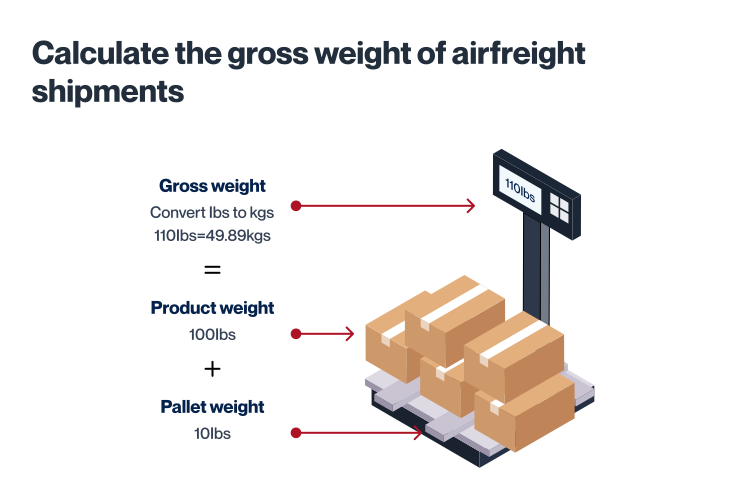
When you book air freight Vietnam to Saudi Arabia, the airline does not only look at what your cargo weighs on a scale. It compares gross weight with volumetric weight and charges you on the higher figure. This is the foundation of any chargeable weight calculation in air transport.

  • Gross weight: The real weight of your cargo including packaging.
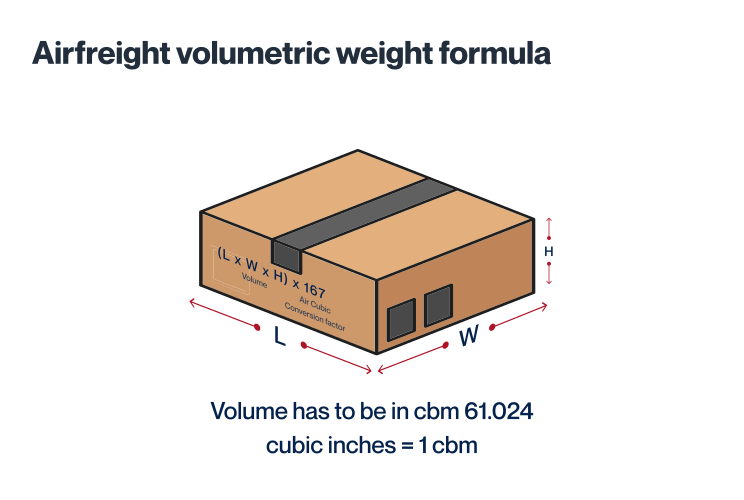
  • Volumetric weight: The weight calculated from dimensions using the IATA volumetric weight formula.
  • Chargeable weight: The higher of gross or volumetric weight.

To calculate volumetric weight for standard air cargo, you multiply length × width × height in cm and divide by 6000. Example: 50 × 40 × 30 cm equals 60,000 divided by 6000, which gives 10 kg. For express, the divisor is usually 5000, so the same box equals 12 kg.

As a rule of thumb: Air cargo uses 1 m³ = 167 kg, express uses 1 m³ = 200 kg. If your shipment is bulky but light, volumetric weight wins. The common mistake is to ignore this and budget only on scale weight, which leads to unexpected freight surcharges. Once you understand this logic, you can design packaging that protects your goods and controls your cost.


Door to door between Vietnam and Saudi Arabia


Consider Door to Door shipping as your personal courier from Vietnam to Saudi Arabia. It removes the logistical headache, handling everything from pickup to delivery, making it a top option for simplicity and efficiency. Trading between Ho Chi Minh and Riyadh just got easier. Now, let’s dive in and unpack the benefits of this all-inclusive service.


Overview – Door to Door


Understanding the hurdles of shipping goods from Vietnam to Saudi Arabia can be a daunting process. Door to Door shipping service proves to be a lifesaver, offering a stress-free solution by managing every step, from pickup to delivery. Although slightly higher in cost, the ease and complete control make it a preferred option for most of FNM Vietnam’s clients. It requires minimum input, mitigating complexities of transport modes and customs clearance. However, be mindful of potential delays due to unforeseen issues. By leveraging this service, you can focus on your core business while your goods traverse borders effortlessly.


Why should I use a Door to Door service between Vietnam and Saudi Arabia?


Why wrangle with the logistics nightmares when a Door to Door service can do it for you? Here are five compelling reasons for choosing this service for shipping goods between Vietnam and Saudi Arabia:


1. Stress-Free Logistics: With Door to Door service, you won’t have to split hairs over paperwork, customs, or transport arrangements. The freight forwarder handles everything for you, from pickup to destination delivery, which massively simplifies your shipping journey.


2. Accelerated Delivery Speed: In business, time is money. If you have an urgent shipment, this service can ensure timely delivery. Your goods won’t be lying around in the warehouse waiting for the next transport; instead, they’ll be on the move as soon as possible.


3. Specialized Care for Niche Cargo: If your cargo is complex – say, delicate machinery or medical equipment – it will receive the TLC it needs throughout the journey. Your provider’s specialized care can make all the difference in maintaining the integrity of these valuable goods.


4. Enhanced Convenience: Think about the convenience of having someone professional handle everything for you, right from your door in Vietnam to your customer’s door in Saudi Arabia. No more trucking aspects to figure out or confusing customs clearance procedures at the destination to understand.


5. Seamless Final Mile Delivery: Once the goods reach Saudi Arabia, the provider’s local expertise ensures a smooth, final leg of delivery. This reduces the risk of delays, additional costs, or potential complications just when the shipment is so close to its endpoint.


In essence, Door to Door service lets you take the backseat in operational hassles, so you can focus on what really matters – growing your business!


FNM Vietnam – Door to Door specialist between Vietnam and Saudi Arabia


Navigate seamlessly through the intricacies of international shipping with FNM Vietnam. Offering complete door-to-door solutions, we handle every aspect from packing to customs clearance, across air, sea, road, and rail. With dedicated Account Executives at your service, we make shipping between Vietnam and Saudi Arabia a stress-free experience. Request a free estimate in less than 24 hours or connect with our experienced consultants. Transform your logistic challenges into business power today.


Customs clearance in Saudi Arabia for goods imported from Vietnam

When you handle customs clearance Saudi Arabia for goods from Vietnam, you are deciding your total landed cost, your release timing, and who acts as the Importer of Record Saudi Arabia. On this route, paperwork quality directly impacts how fast your container leaves the port or airport. We coordinate clearance with licensed partners and manage the full import customs process Saudi Arabia so you do not get surprised at arrival.

You will notice fast that delays usually come from HS code classification Vietnam exports issues, incomplete commercial invoice requirements, or missing certificate of origin Vietnam. The first thing we always tell you is this, Saudi Customs checks consistency between invoice, packing list, and declaration very closely. If you get this wrong, you risk customs inspection escalation and storage fees. Let us break down exactly how you calculate duties and how the step by step customs clearance Vietnam to Saudi Arabia really works.

How to calculate duties & taxes when importing from Vietnam to Saudi Arabia?

If you want to know how to calculate import duty from Vietnam to Saudi Arabia, you need five inputs, the country of origin rules Vietnam to Saudi Arabia, the correct HS code, the customs value calculation method, the applicable customs tariff Saudi Arabia, and any additional import duties and taxes Saudi Arabia. Without these, any quote you receive is just a rough guess.

You should also expect differences between your estimate and the final assessed amount. Saudi Customs validates the CIF value for customs purposes, checks your customs declaration form Saudi Arabia, and may adjust values if documents are inconsistent. Cheap freight offers sometimes exclude duties, VAT, or other import charges and fees. That is where budgets collapse. Here is the logic we use in every import customs process Saudi Arabia to keep your numbers under control.

Step 0 – Quick checks before you calculate

Before you calculate anything, confirm three operational points that affect everything else.

  • Importer of Record: Make sure you know who is legally registered as the Importer of Record Saudi Arabia, because this party is liable for duties, VAT, and compliance.
  • Incoterm: Check whether you ship under FOB, CIF, or DDP, since the Incoterm determines who controls clearance and who pays at destination.
  • Low-value threshold: Verify if your shipment qualifies for any simplified or low-value procedure, otherwise you follow the full electronic customs filing route.

Step 1 – Identify the Country of Origin

Your country of origin is not where you ship from, it is where your product is manufactured under the official country of origin rules Vietnam to Saudi Arabia. This affects your tariff eligibility, your access to any preferential tariff, and the documentary proof you must present, usually a certificate of origin Vietnam.

If you confuse origin with export country, you expose yourself to retroactive duty reassessment or a classification challenge. Saudi Customs may request proof and trigger a deeper review of your customs compliance Vietnam to Saudi Arabia trade. Get this right before you move to HS classification.

Step 2 – Find the HS Code of your product

Your HS code determines your duty rate, whether your goods are considered restricted and prohibited goods Saudi Arabia, and what documents you must submit. It is the backbone of your declaration.

You can start with your supplier, then confirm using an official harmonized system code lookup tool or the Saudi tariff portal. Cross-check product description, composition, and use. If needed, request a written ruling to avoid a product classification dispute customs case later.

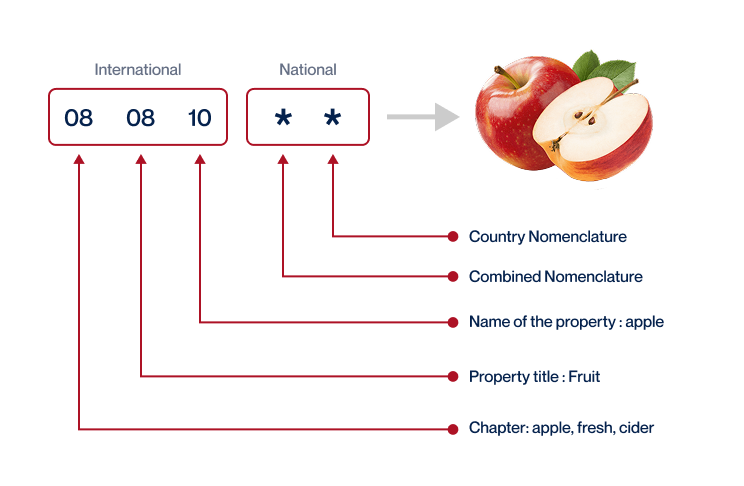
If you declare the wrong code, you risk clearance suspension, fines, or a post-clearance audit. On this route, customs officers compare your packing list for customs clearance and technical specs with the declared code. Here is the key anchor in the HS code classification Vietnam exports process. Here’s an infographic showing you how to read an HS code.

Step 3 – Calculate the Customs Value

Saudi Arabia generally assesses duties on the CIF value for customs purposes, which means product price plus freight and insurance. This is the standard customs value calculation method you should use unless customs determines adjustments.

You also need to check additions such as packing costs, commissions, assists, or royalties if they are linked to the sale. For example, if your goods cost 20,000 USD, freight is 1,500 USD, and insurance is 500 USD, your customs value becomes 22,000 USD. If you ship under FOB, you must add freight and insurance yourself before filing the customs declaration form Saudi Arabia. This number feeds directly into the duty and VAT base, so any error here multiplies your tax exposure.

Step 4 – Figure out the applicable Import Tariff

An import tariff is the customs duty rate applied to your product based on its HS code and origin. In Saudi Arabia, you must consult the official customs tariff Saudi Arabia schedule.

Here is the method we use every time:

  • Open the official portal and access the tariff search tool.
  • Enter your HS code and confirm Vietnam as origin.
  • Read the duty rate and check for additional measures.

When reviewing results, look for:
Standard duty rate
Additional duties such as anti-dumping
• Any reference to licensing or special approvals

If your customs value is 22,000 USD and the duty rate is 5%, then your duty estimate is 1,100 USD. That is the base calculation before VAT. On some Vietnam to KSA shipments, certain categories may trigger extra checks, so always confirm consistency between HS code and description. If you are unsure, a licensed customs broker Saudi Arabia can validate your setup before you ship.

Step 5 – Consider other Import Duties and Taxes

Beyond customs duty, you must account for VAT on imports Saudi Arabia and any other other import charges and fees. VAT is generally calculated on the customs value plus duty.

For example, if your customs value is 22,000 USD and duty is 1,100 USD, VAT is calculated on 23,100 USD. If the VAT rate is 15%, your VAT would be 3,465 USD. You pay this before release unless you apply a specific deferred scheme.

You should also verify whether your goods fall under excise rules, anti-dumping measures, or require special approvals under import license requirements Saudi Arabia. Some products may require additional review during the customs inspection process, which affects your customs clearance timeline Saudi Arabia. If you ignore this, you risk unexpected storage and demurrage.

Before shipment, you should:
• Confirm VAT treatment with your accountant
• Check licensing status
• Validate your customs documentation checklist Vietnam to Saudi Arabia
• Plan for possible inspection time

Step 6 – Calculate the Customs Duties

The formula is straightforward. Duty = customs value × duty rate. VAT = tax base × VAT rate, where the tax base usually includes customs value plus duty.

If your customs value is 22,000 USD and duty rate is 5%, your duty is 1,100 USD. If VAT is 15% on 23,100 USD, VAT equals 3,465 USD. Your total payable at clearance is 4,565 USD, excluding any additional fees.

You should know who actually pays. If you ship under DDP, you as exporter may cover these costs. Under CIF or FOB, the Saudi buyer as Importer of Record usually pays before goods are released. Payment confirmation often conditions release, and delays here can extend your customs clearance timeline Saudi Arabia. Missing documents or mismatched values can trigger post-clearance audit Saudi Arabia exposure later.

Step-by-step: how customs clearance usually works on this route

Once your cargo leaves Vietnam and you complete the export declaration Vietnam customs, the Saudi side prepares for pre-arrival customs clearance. The exact sequence depends on the port of entry, whether you ship by air or sea, and your Incoterm. Here is how we usually coordinate the step by step customs clearance Vietnam to Saudi Arabia flow.

  1. We collect and verify your commercial invoice, packing list, certificate of origin Vietnam, and transport documents before arrival.
  2. We submit the electronic customs filing through the Saudi platform with the correct HS code and declared value.
  3. Customs reviews the declaration and may request clarification or supporting documents.
  4. If flagged, your shipment enters the customs inspection process, which is a key moment where description inconsistencies can increase cost and time.
  5. Once duties and VAT are assessed, the Importer of Record Saudi Arabia settles payment.
  6. After payment confirmation, customs issues the release order.
  7. If needed, goods can move to a customs bonded warehouse Saudi Arabia or proceed directly to final delivery.
  8. In specific cases such as exhibitions or short-term use, you may apply for temporary import procedures or plan a re-export process Saudi Arabia.

The moments of truth are classification, value declaration, and document consistency. This is where most delays happen and where you can avoid problems if you prepare properly. When we manage your file, we focus on accuracy upfront so you avoid unnecessary back and forth with customs.

Does FNM Vietnam charge customs fees?

When we act as your customs broker Saudi Arabia, we charge for the service of handling the import customs process Saudi Arabia, not for the government duties and taxes themselves. Duties, VAT, and official charges are paid directly to Saudi authorities under the name of the Importer of Record.

You should separate service fees from statutory payments. We provide full documentation after clearance so you clearly see what was paid to customs and what covers coordination, electronic customs filing, and compliance checks. This transparency protects you against hidden clearance surcharges and keeps your customs compliance Vietnam to Saudi Arabia trade clean for future shipments.


Contact Details for Customs Authorities


Vietnam Customs

Vietnam customs

Official name: General Department of Vietnam Customs.

Official website: https://www.customs.gov.vn/

Saudi Arabia Customs

Official name: Saudi Customs

Official website: https://zatca.gov.sa/en

Required documents for customs clearance in Saudi Arabia

When you ship from Vietnam to Saudi Arabia, you will notice that customs delays rarely come from the border itself. They come from documents that do not match. Your shipper, consignee, values, HS code and product descriptions must be consistent across every file. The first thing we always tell you is this, think of your paperwork as one single story. If one page says something different, your cargo can be held while customs asks questions.

Commercial Invoice

The Commercial Invoice is the document that states what you are selling, at what value, and under which Incoterm such as FOB or CIF.

Saudi Customs use it to calculate customs duties and VAT, and to verify the declared HS code. If your invoice is vague, you give customs a reason to re-evaluate your shipment. Example, you ship “plastic kitchenware” from Ho Chi Minh City to Jeddah, but your invoice clearly lists material, quantity, unit price, total value and HS code.

Common mistake, declaring a lower value than your sales contract, which can trigger a valuation dispute and serious delays.

Bill of Lading or Air Waybill

The Bill of Lading for sea freight or Air Waybill for air freight is your transport contract and proof that the carrier received your cargo.

Customs and your broker use it to confirm the consignee name, shipment details, and transport mode. In Saudi Arabia, the consignee information must match the registered Importer of Record. Example, a container shipped from Hai Phong to Dammam under an original B/L that names the Saudi company exactly as registered.

Common mistake, mismatched company names between the B/L and the commercial registration, which leads to clearance being blocked until corrected.

Packing List

The Packing List details how your goods are packed, including cartons, pallets, gross weight and net weight.

Saudi inspectors rely on it during physical checks to compare declared quantities with reality. It should clearly break down each SKU and packaging type. Example, 500 cartons, 10 units per carton, total gross weight 8,200 kg loaded in one 40ft container.

Common mistake, using rounded weights that do not match the Bill of Lading, which creates suspicion and can slow inspection.

Certificate of Origin

The Certificate of Origin confirms that your goods were manufactured in Vietnam.

Saudi authorities use it to verify origin and apply the correct duty rate. Even if no preferential tariff applies, the origin must be declared accurately. Example, a Certificate of Origin issued by a Vietnamese Chamber of Commerce for furniture produced in Binh Duong.

Common mistake, stating Vietnam as origin when substantial transformation happened elsewhere, which can expose you to penalties.

SABER Product Certificate of Conformity

For many regulated products, you must register them in the SABER platform and obtain a Product Certificate of Conformity.

This system, managed under the SASO conformity program, applies to categories such as electronics, building materials, and some consumer goods. Without an approved certificate linked to your shipment, customs will not release it. Example, electrical appliances exported from Vietnam require a SABER certificate before loading.

Common mistake, waiting until the cargo arrives in Jeddah or Dammam to start SABER registration, which can result in storage and demurrage.

Import License and Commercial Registration

Your Saudi buyer must hold a valid Commercial Registration and, for certain goods, a specific import license.

Customs check that the importing company is authorized to import that category of goods. This is especially relevant for food, cosmetics, and chemicals. Example, a Saudi distributor importing packaged food must be properly licensed under its registered activity.

Common mistake, shipping goods to a trading company whose license does not cover that product category, leading to clearance refusal.

Prohibited and restricted items when importing into Saudi Arabia

Before you ship anything to Saudi Arabia, you need to separate two ideas. Restricted products are allowed, but only if you meet specific conditions such as certification, labeling or prior approval. Prohibited products should not enter the country at all. If you mix the two, you risk fines, confiscation, or having to re-export the cargo at your expense. This is where many first-time exporters get surprised.

Restricted products

  • Food and beverages, require registration and compliant Arabic labeling.
  • Cosmetics and personal care, subject to ingredient control and product registration.
  • Electronics and electrical appliances, must comply with SABER and safety standards.
  • Medical devices, require prior approval and technical documentation.
  • Chemicals, controlled substances need special permits.
  • Telecommunication equipment, may require local authority clearance.

In practice, the trigger is often missing registration or non-compliant labeling in Arabic. If your shipment falls into one of these categories, treat pre-shipment compliance as part of your logistics plan, not an afterthought.

Prohibited products

  • Alcohol and alcoholic beverages, strictly banned.
  • Pork and pork-derived products, not permitted for import.
  • Drugs and narcotics, except with strict medical authorization.
  • Pornographic materials, including certain media content.
  • Counterfeit goods, infringing intellectual property rights.
  • Used tires, generally prohibited for import.

If you are unsure about a borderline product, do not rely on assumptions. You should verify classification and admissibility before shipment, because once the container lands and customs flags it, seizure or forced re-export becomes a real possibility.

Get Started with FNM Vietnam

Overwhelmed with customs clearance? We understand. At FNM Vietnam, we streamline the process, handling every intricate step for you. Our experts ensure a secure, hassle-free passage of your goods from Vietnam to Saudi Arabia. Why navigate this path of complexity alone? Reach out for a free quote today, and we’ll respond in less than 24 hours. Let’s simplify shipping together.

Trade agreements and preferential duties for imports from Vietnam to Saudi Arabia

When you import from Vietnam into Saudi Arabia, you should not assume there is a special free trade agreement in place. As of 2025, there is no bilateral FTA between the two countries, and Vietnam is not part of the GCC customs union. That means your goods generally face the standard Saudi tariff schedule.

For most products, Saudi Arabia applies a 5% customs duty under its common tariff structure, but certain categories can be higher depending on the HS code. On top of customs duty, you must account for 15% VAT calculated on the CIF value plus duty. You will quickly see that VAT often represents a larger cash flow impact than the duty itself.

There is currently no broad preferential tariff scheme specifically reducing duties for Vietnamese origin goods. So your main lever is correct classification and compliant documentation, not treaty benefits. If your product falls into a sensitive sector such as steel, chemicals or specific consumer goods, you should also check for any temporary protective measures or additional requirements before shipping.

The practical takeaway is simple. You build your landed cost on the assumption of standard duty plus 15% VAT, then confirm your exact HS code with your broker before production. If you guess the classification and customs reclassifies it on arrival, you can face unexpected duty reassessment and delays that disrupt your distribution plan.

Your Next Step with FNM Vietnam

Unsure about the ins-and-outs of overseas shipping between Vietnam and Saudi Arabia? FNM Vietnam makes it simple. We handle all the complexities of freight forwarding for you, from customs clearance to document handling. Leave the complicated logistics to us. Reach out now for effective, stress-free shipping solutions tailored to your needs. Let’s make your global trade effortless.
More than shipping

Additional logistics services

1 Warehousing
1

Warehousing

Discovering trustworthy warehousing in Vietnam or Saudi Arabia can feel like a tall order, especially when your goods demand specific conditions like temperature control. Avoid the stress and uncertainty - we've got your storage needs covered. For every detail on our dedicated solutions, dive into our informative page on Warehousing. Consistent, reliable, and perfectly suited to your products.
img
2 Packing
2

Packing

For your shipment from Vietnam to Saudi Arabia, never underestimate the role of flawless packaging and repackaging. It's more than just stuffing goods in a box, it's about safeguarding them. From delicate ceramics to bulky machinery, employing a reliable agent ensures proper packing to meet international standards, reducing potential damages. For a diverse range of products, this is invaluable. More info on our dedicated page: Freight packaging.

img
3 Transport Insurance
3

Transport Insurance

Ever experienced unexpected incidents during ocean freight transit? Cargo insurance is your safety net! Unlike standard fire insurance, which only covers specific fire-related losses, cargo insurance becomes your one-stop solution to tackle broad spectrum shipping risks - theft, damage, or loss. Imagine safeguarding your precious Vietnamese coffee beans or electronic components against such uncertainties. Tap into worry-free trading with our Cargo Insurance. More info on our dedicated page: Cargo Insurance.
img
4 Household goods shipping
4

Household goods shipping

Relocating between Vietnam and Saudi Arabia? Safeguard your fragile or bulky belongings with our expertise in Personal Effects Shipping. Empathetic and flexible, our credible handlers ensure your objects are dealt with utmost care. Picture your grand piano or delicate china set delivered unscathed. Want to learn more? Visit our dedicated page: Shipping Personal Belongings.
img
5 Procurement in Thailand
5

Procurement in Thailand

Looking to source goods from East Europe, Asia, or elsewhere? FNM Vietnam can be your guide. We'll find quality suppliers, handle the procurement process, and even break down language barriers. If questions like Where do I start? or How do I communicate? are on your mind, you're in the right place. Let's make sourcing less daunting and more rewarding. Learn how on our dedicated page: Sourcing services.

img
6 Quality Control
6

Quality Control

Ensuring the quality of your goods before they journey from Vietnam to Saudi Arabia can save you headaches and unnecessary costs down the line. Imagine you're shipping saffron from Vietnam; a pre-shipment inspection can certify your product's quality, ensuring your Saudi buyers receive the rich, vibrant spice they expect. Don't let subpar goods tarnish your business reputation. Discover more with our Quality Inspection guide.

img
7 Conformité des produits aux normes
7

Conformité des produits aux normes

Compliance with international standards is a non-negotiable requirement for shipping goods across borders. Tailored to your needs, our Product Compliance Services undertake detailed laboratory testing to ensure your cargo meets the strictest regulations. Whether shipping textiles or tech gadgets, gain peace of mind knowing your goods adhere to the destination's norms, avoiding costly misunderstandings or setbacks. Real-world example: A food manufacturer streamlined the export process and prevented potential fines by utilizing our service to verify adherence to importing nation's strict guidelines.
img