In short ⚡
Tips to improve shipping processes start with mapping every step from order capture to proof of delivery, then tightening the handoffs between teams, systems, and documents to cut errors, delays, and rework. Standardize SOPs and documentation, optimize warehouse layout and packaging, enforce clean master data and automation, and audit cost drivers and carrier performance to reduce cost per shipment without hurting service. In this article, you will find workflow mapping methods, documentation and SOP best practices, warehouse and inventory optimization, technology and automation ideas, cost-control tactics, and cross-border logistics workflows tailored for markets like Vietnam.We hope you’ll find this article genuinely useful, but remember, if you ever feel lost at any step, whether it’s finding a supplier, validating quality, managing international shipping or customs, FNM Vietnam can handle it all for you!
Where your shipping workflow breaks down and how to fix it fast
If you’re looking for tips to improve shipping processes, start by accepting an uncomfortable truth, your shipping process improvement rarely fails in “transportation”, it fails in the handoffs between teams, systems, and documents.
From experience in freight forwarding and supply chain management, you’ll notice fast that one missing data point, like a wrong consignee address or an Incoterms mismatch, quietly turns into rework, delays, detention, or even customs clearance holds.
We see this weekly at DocShipper when an e-commerce brand thinks the carrier is the problem, but the real root cause sits upstream in inventory management, documentation, or a half-defined SOP.
Fast workflow to diagnose breakdowns (use this today):
1) List every handoff, order confirmation to proof of delivery.
2) Mark where data gets retyped, copied, or “confirmed later”.
3) Attach the document used at each step, commercial invoice, packing list, bill of lading, return label.
4) Add time stamps, lead time, dwell time, and who owns the step.
5) Fix the top 2 delays first, not the “biggest sounding” issue.
Checklist, where your workflow usually leaks:
- Order data: SKU, HS code, weights, and dimensions don’t match what the shipper declares.
- Warehouse execution: pick-pack errors, poor palletization, weak load planning.
- Carrier booking: wrong service level, no freight contract rules, unclear cutoff times.
- Export and customs brokerage: missing documents, inconsistent consignee details, tariff classification issues.
- Tracking and tracing: no milestone scanning, weak exception management, late proof of delivery.
- Reverse logistics: return labels and inspection steps aren’t defined, refunds become manual.
Quick comparison table, “symptom vs fix” you can apply:
| What you see | What’s usually causing it | Fast fix that sticks |
| Late deliveries despite “good freight rates” | Cutoff times ignored, poor routing, no capacity management | Set dispatch cutoffs inside your WMS and confirm carrier linehaul windows |
| Customs clearance delays and extra fees | Invoice values, HS codes, or Incoterms inconsistent | Lock a document template and review high-risk SKUs with your broker |
| Demurrage and detention charges | Containerization plan doesn’t match receiving capacity | Schedule unloading slots, pre-book drayage, and set escalation rules at port |
| Too many “lost” parcels | Weak scanning discipline, missing exception workflow | Define scan checkpoints and automate customer updates on exceptions |
DocShipper Alert
Audit your workflow with our logistics experts to eliminate rework, delays, and hidden detention costs fast.
Map every step from order to delivery to reveal hidden bottlenecks

We recommend a simple swimlane map across procurement, warehousing, transportation, customs clearance, and last-mile distribution, then you measure each lane with real timestamps, not “estimated” lead time.
A quick real-world scenario:
You ship 300 orders per day, and you’re sure your carrier is underperforming.
We map the flow and find a 45-minute “dead zone” where labels wait for a manual address verification because the checkout form doesn’t validate postal codes, that’s the bottleneck, not the truck.
Step-by-step mapping workflow (text format):
Step 1, Order captured in your store, validate address and serviceability.
Step 2, Inventory reserved in WMS, confirm SKU, batch, and location.
Step 3, Pick and pack, record weights, dimensions, and carton count.
Step 4, Label and manifest, assign carrier, routing, and tracking number.
Step 5, Handover, scan outbound, confirm dispatch cutoff compliance.
Step 6, Linehaul, monitor milestones, exceptions, and re-delivery attempts.
Step 7, Proof of delivery, close shipment, trigger invoice and freight audit.
What to measure so logistics optimization is real:
- Touchpoints per order, how many times a carton gets handled in cargo handling.
- Rework rate, relabeling, repacking, address fixes.
- Dwell time by zone, staging, cross-docking, outbound dock.
- Exception rate by carrier and lane, “failed delivery”, “held at customs”.
For methodology, you can borrow from APICS-style process thinking, define the process, define the owner, then set KPIs that match the handoffs you just mapped.
Turn documentation and SOPs into daily tools, not dusty manuals

Documentation is where streamline shipping operations either happens automatically, or collapses under “tribal knowledge”, especially with bills of lading, commercial invoices, and customs clearance instructions.
A quick scenario we see often:
Your supplier ships FOB, but your team books freight like it’s EXW, then the shipper forgets export paperwork and your cargo misses the vessel.
One clarified Incoterms line inside your SOP would’ve avoided the whole scramble and the surprise storage charges.
Make SOPs operational (not theoretical):
- One-page job aids at the workstation, packing rules, palletization pattern, scan checkpoints.
- Document templates for invoice and packing list, locked fields for consignee and shipper data.
- Exception playbooks for “address invalid”, “HS code mismatch”, “carrier missed pickup”.
- Approval rules for freight rates, shipping quote thresholds, and expedited upgrades.
Mini workflow, document control that prevents customs issues:
1) Create a master product sheet, HS code, value basis, materials, battery status.
2) Auto-fill invoice and packing list from the master sheet, no retyping.
3) Pre-check documents 24 hours before cargo handover, then freeze the file.
4) Share a single “shipping folder” with your customs brokerage and 3PL, version-controlled.
Checklist, your “minimum viable shipping file” for most cross-border moves:
- Commercial invoice aligned with payment terms and declared values.
- Packing list with carton count, net and gross weights, and dimensions.
- Bill of lading instructions, notify party, consignee, Incoterms, freight terms.
- Any required certificates depending on product and market.
When you want this tightened quickly, we can build and manage these shipping SOPs with you as part of our operations support at DocShipper, so your team runs the same process whether you ship parcel, air freight, or multimodal transport.

Looking for a Reliable Shipping & Sourcing Partner?
Concrete ways to streamline shipping operations and cut errors
The most practical tips to improve shipping processes usually live inside your warehouse and your data, not inside a new carrier contract.
Once you improve logistics process execution, picking, packing, scanning, routing, you’ll see fewer exceptions, cleaner tracking and tracing, and faster just-in-time delivery to your end customers.
We typically approach this as logistics optimization across three layers, layout, standard work, and systems integration.
Workflow, how to cut errors in 7 days (no big project):
Day 1, pick a single product family and map its path through warehousing.
Day 2, rewrite pack rules and label placement as a one-page standard.
Day 3, add two scan points, pick confirmation and outbound dock scan.
Day 4, set carton size rules to reduce void fill and damages.
Day 5, measure error rate and rework time, then fix the worst root cause.
Day 6, repeat on the next product family.
Day 7, lock the KPI dashboard and weekly review cadence.
Checklist, fast wins that reduce shipping errors:
- Single source of truth for SKU dimensions and weights.
- Standardized cartonization and palletization rules.
- Outbound staging by carrier and cutoff time.
- Returns triage rules for reverse logistics, resell, refurbish, discard.
- Freight audit rules to catch billing discrepancies early.
DocShipper Info
We benchmark your carriers, costs, and workflows to reduce errors while protecting margins.
Organize inventory, packaging, and warehouse layout for speed
To streamline shipping operations, you’ll get more impact from reforming your warehousing flow than from renegotiating freight rates, because speed starts at the shelf.
Inventory management, slotting, and packaging standardization drive fewer touches, cleaner cross-docking, and faster load planning when volumes spike.
Micro-story from the floor:
A fast-growing store kept its “top sellers” in three different aisles because replenishment was done ad hoc.
After we re-slotted SKUs by velocity and shipping method, the pick path shortened, packing stayed consistent, and missed dispatch cutoffs dropped immediately.
What to change first (practical and measurable):
- ABC slotting: move A-items closer to packing, separate fragile items to reduce damages.
- Packaging playbook: define carton sizes, void fill rules, and label placement.
- Outbound staging lanes: one lane per carrier and service level to avoid misloads.
- Consolidation rules: split vs combine shipments based on promised delivery date and cost.
Table, layout choices that drive shipping process improvement:
| Change | What it improves | Typical mistake |
| Fast-mover zone near packing | Pick speed, fewer touches | Not updating slotting when demand shifts |
| Standard cartonization | Damage rate, carrier acceptance | Weights not updated, wrong DIM charges |
| Dedicated carrier staging | Misship reduction, faster loading | Mixing service levels, missed cutoffs |
If you’re working with a 3PL, the same principles apply, you just need them written into the SLA so the warehouse management system setup and KPIs match your promised delivery times.
DocShipper Advice
Align your 3PL SLA and KPIs with real delivery promises to prevent missed cutoffs and misloads.
Use technology, automation, and better data to improve logistics processes
To improve logistics process performance, your tech stack has to reduce manual decisions, not just create more dashboards.
We’re talking WMS discipline, automation for label generation, and clean master data that ties orders to carrier selection, freight contracts, and tracking and tracing.
A scenario you’ll recognize:
You add a new shipping app, but your team still copies addresses into the carrier portal because the product weights are missing in your catalog.
Automation fails when the data is weak, and then you blame the tool, not the workflow.
High-impact automation ideas for shipping process improvement:
- Rules-based carrier selection: service level by ZIP, promised date, and package profile.
- Auto-manifesting: generate labels, end-of-day manifests, and pickup lists automatically.
- Exception alerts: proactive flags for “no movement”, “failed delivery”, “customs hold”.
- Freight audit automation: match invoices to quotes, contracts, and accessorial rules.
Step-by-step workflow, “data first” logistics optimization:
Step 1, Clean SKU master data, weights, dimensions, materials, battery flags.
Step 2, Connect your store to WMS, then WMS to carrier tools, one flow.
Step 3, Build routing rules, cutoff times, and capacity thresholds.
Step 4, Track milestones and proof of delivery, then log exceptions with reasons.
Step 5, Review weekly, error rate, lead time variance, and cost per shipment.
Checklist, the minimum tech foundation to reform logistics workflow:
- WMS with scan-based picking and packing validation.
- Centralized shipping rules engine for routing and carrier selection.
- Tracking and tracing across all carriers with exception codes.
- Customs document generator for cross-border orders when needed.
If you want help implementing this without breaking daily operations, we can run the setup with you at DocShipper, from carrier onboarding and shipping quote benchmarking to documentation flows and customs brokerage coordination.
“`htmlDocShipper Info
We implement WMS, automation, and customs flows without disrupting daily operations.
DocShipper Platform
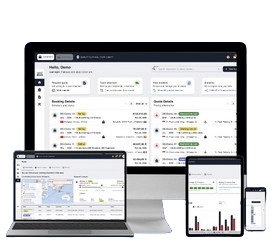
One platform. Your entire supply chain
Sourcing, freight, customs & documents — all centralised, all visible, 24/7.
Cost-focused tips that upgrade your shipping process without hurting margins
You cannot improve shipping performance if you do not control cost drivers at a granular level. Your goal is to optimize cost per shipment without sacrificing delivery speed or reliability.
Start by breaking down every shipping cost component instead of negotiating blindly with carriers. You need visibility before leverage.
| Cost Component | What to Audit | Quick Win |
| Freight rates | Weight breaks, volume tiers, fuel surcharges | Consolidate volumes to negotiate better brackets |
| Packaging | Dimensional weight impact | Right-size cartons to reduce volumetric billing |
| Customs fees | HS code accuracy, declared value | Audit classifications to avoid overpayment |
| Returns | Return rate by SKU | Improve product descriptions to reduce disputes |
You should also compare carrier performance beyond headline rates. The cheapest quote often hides delays and extra fees.
- Track on-time delivery percentage by carrier
- Monitor claims ratio and damage rates
- Measure average clearance time for international orders
- Calculate total landed cost, not just freight cost
If you ship internationally, review your Incoterms strategy carefully. Choosing DDP instead of DAP can increase control but shift tax risk to you.
We help you simulate different Incoterms and freight scenarios at DocShipper so you see margin impact before committing. That is how you protect operational profitability while scaling volumes.
How to reform logistics workflows for cross-border and Vietnam operations
Cross-border shipping multiplies complexity because you add customs, compliance, and local delivery partners. You must standardize workflows before expanding to markets like Vietnam.
Start by building a repeatable export-import process instead of treating each shipment as unique. Consistency reduces clearance delays and penalties.
- Validate HS codes and product compliance before first shipment
- Prepare commercial invoice templates aligned with local regulations
- Define responsibility split between supplier, freight forwarder, and importer
- Pre-check restricted or licensed goods requirements
Vietnam requires careful attention to documentation accuracy and labeling. A small mismatch between invoice and packing list can block your cargo for days.
| Workflow Stage | Common Risk | Preventive Action |
| Supplier dispatch | Incorrect product description | Approve shipping docs before cargo departure |
| Customs clearance | Wrong HS code | Pre-validate with customs broker |
| Last-mile delivery | Unreliable local partner | Select vetted carriers with SLA |
| Returns handling | No reverse logistics plan | Define local return address or consolidation hub |
You should also adapt your carrier mix depending on shipment profile. Express works for small parcels, but sea freight with consolidation reduces cost for bulk orders.
When operating in Southeast Asia, market awareness is critical because regulations evolve fast. We provide end-to-end coordination in Vietnam through our international logistics services so you avoid costly trial-and-error phases.
Your objective is not just delivery, it is building a scalable cross-border model. That requires documented workflows, strong local partners, and proactive compliance management.
DocShipper Alert
Secure compliance, documentation, and vetted local partners before scaling your regional operations.
Conclusion
If you want real improvement, you must treat shipping as a strategic function, not a back-office task. Every optimized step compounds into stronger margins and better customer satisfaction.
- Map and measure every cost component before negotiating rates
- Use data to compare carriers on performance, not only price
- Standardize documentation to prevent customs delays
- Adapt Incoterms and freight mode to your margin strategy
- Build structured cross-border workflows, especially for markets like Vietnam
- Learn from shipping errors and integrate corrections into SOPs immediately
When you apply these tips to improve shipping processes, you move from reactive firefighting to controlled growth. If you need structured support, we at DocShipper can design and manage your logistics flow from sourcing to final delivery.
“`FAQ | 15 practical tips to improve shipping processes and boost logistics performance
Logistics process optimization simply means redesigning how orders move through your operation so there are fewer handoffs, fewer decisions, and fewer surprises. In practice, you’re tightening how data, inventory, and transport interact, so that every shipment follows a predictable, measurable path instead of being handled “case by case”. The result is lower error rates, more reliable lead times, and a cost per shipment you can actually control instead of guess.
Start by limiting the scope. Instead of “fixing logistics”, pick one lane or one product family and improve only that flow for 2–3 weeks. Shorten pick paths, clean up data for those SKUs, add one extra scan, and clarify who approves exceptions. When that works smoothly, clone the same rules to the next lane. You’ll get visible gains without asking an already stretched team to survive a massive transformation project.
The key is to standardize what you control and measure what they control. Define one master data format, one way to receive orders, one set of packing and labeling rules, and one exception code list, then require all 3PLs to align with it. From there, compare them on the same KPIs, like on‑time dispatch, scan compliance, and damage rate, so you can reward the best behavior and push lagging partners to upgrade their processes.
Look for small, recurring frictions that show up before customers complain. Frequent relabeling at the dock, manual address checks, orders “waiting for approval” with no clear owner, or carriers asking the same clarification questions are all signals that your workflow is doing extra work to compensate for missing rules or weak data. Treat these as triggers to revisit your SOPs rather than isolated one-off issues.
The safest approach is to make changes in thin slices and behind feature flags. Introduce new packing rules on a single shift, enable new routing logic for just one country or carrier, or pilot a new scanning step at one dock door. Run old and new methods in parallel for a short period, compare error rates and lead times, and only then roll out at scale. This way, you protect peak capacity while still upgrading how shipments flow.
When data is messy, your first reform is to stop adding new errors. Freeze how data is created by defining who owns SKU attributes, how addresses are validated, and which fields are mandatory before a shipment can be released. Then, clean in waves, starting with the highest-volume products and lanes. Each time you fix a chunk of data, connect it to a rule, like automated carrier selection or cartonization, so the benefits are immediate and visible.
Use impact and frequency as your filter. List your top recurring issues, estimate how often they happen and how much time or money they cost, and then only tackle the two that hit you hardest. For each, design one concrete change, such as a new approval rule or a simplified form, and measure results for a few weeks. This keeps you out of “boil the ocean” mode and ensures your logistics reform is driven by outcomes, not by a long wish list.
Read more
Looking for more? Check out these articles.
Need Help with Logistics
or Sourcing in Vietnam ?
First, we secure the right products from the right suppliers at the right price by managing the sourcing process from start to finish. Then, we simplify your shipping experience - from pickup to final delivery - ensuring any product, anywhere, is delivered at highly competitive prices.
Fill the Form
Prefer email? Send us your inquiry, and we’ll get back to you as soon as possible.
Contact us