Freight Shipping between Vietnam and Finland | Rates – Transit times – Duties and Taxes
If you underestimate the distance and paperwork behind freight Vietnam Finland, you will lose time at origin, pay unexpected storage, or miscalculate your landed cost before your cargo even reaches Northern Europe. You are moving goods across nearly 8,000 km, between major hubs like Ho Chi Minh City and Helsinki, under different customs systems, Incoterms, and inspection standards, and the smallest mismatch in documents or timing can trigger delays you did not plan for. In this Destination Guide, you will get a clear, operational breakdown of rates, transit times, customs clearance steps, duties and taxes, and the decision logic you need to structure your Vietnam to Finland shipments properly from day one.
Which are the different modes of transportation between Vietnam and Finland?
If you prioritize cost and ship large volumes, you will usually choose sea freight from Cat Lai Port or Hai Phong to Port of Helsinki, accepting longer transit for better cost per cubic meter. If you need speed for high-value or urgent cargo, you will move by air freight via Noi Bai or Tan Son Nhat to Helsinki Airport, where time savings justify the higher rate.
If your cargo sits somewhere in between, you can compare LCL vs FCL, check your chargeable weight, and assess how sensitive your supply chain is to a missed weekly departure. We always tell you to decide based on cost per unit, urgency, and cargo profile, and you can contact our team anytime because we monitor capacity, cut-off times, and market shifts in real time, and we will break down each option in detail in the sections below.
Need help with your shipment?
Need assistance with your shipment? Dont hesitate to contact us even for a simple question. Choose the option that suits you
Live chat with an expert Chat on WhatsApp Free Quote 24hHow can FNM Vietnam help?
Sea freight between Vietnam and Finland
If you are planning ocean freight Vietnam to Finland, the first thing you should ask yourself is simple. Do you prioritize cost per container or speed? On the sea freight Vietnam Finland route, you usually choose sea when you ship more than a few cubic meters, when your goods are not urgent, and when you want predictable budgeting through container shipping Vietnam to Finland. You trade time for cost efficiency.
You should not choose sea freight if your product is extremely time-sensitive or if you cannot tolerate a 35 to 50 days transit window. Most services to Finland rely on a transshipment hub Europe with a feeder leg into the Baltic, which means extra handling. If you assume it is a direct service to Helsinki every week, you risk missed cut-off delays and unexpected waiting time.
From experience as a freight forwarder Vietnam to Finland, we see three recurring mistakes. First, choosing the wrong Incoterms FOB CIF EXW DAP DDP without understanding who controls the booking. Second, underestimating port of discharge Finland charges. Third, thinking ocean freight is the total cost, while inland transport and customs can shift your budget fast. Once you understand these levers, international sea cargo Vietnam Finland becomes structured and predictable.
Which Incoterms should you use?
Your choice of Incoterms FOB CIF EXW DAP DDP directly impacts control, cost visibility, and risk. On this corridor, we often recommend FOB Vietnam if you want to control the main freight and select your own freight forwarder Vietnam to Finland. You gain visibility on the bill of lading B/L, routing, and freight terms negotiation Vietnam Finland. That control matters when transshipment is involved.
If you buy under CIF Helsinki, your supplier books the freight. It looks easier, but you may face uncontrolled destination charges at the port of discharge Finland. With EXW, you take responsibility from the factory door, including export formalities in Vietnam. Unless you have strong local support at the port of loading Vietnam, this can slow you down.
If you want maximum simplicity, DAP or DDP gives you door delivery. But you must clarify who acts as Importer of Record in Finland and who handles customs clearance coordination. The risk transfer point is not just theory. It defines who pays when containers are held, documents are wrong, or a telex release or sea waybill is delayed.
Main ports to know in Vietnam and Finland
Choosing the right port of loading Vietnam and port of discharge Finland changes your inland cost and your transit reliability. Here are the main seaports in Vietnam and Finland you should focus on.
- Cai Mep Thi Vai, South Vietnam. Deep sea port with strong connections to Europe. If your factory is near Ho Chi Minh City, this is usually the most efficient export gateway.
- Hai Phong, North Vietnam. Ideal if your production is around Hanoi. Often used with feeder connections before mainline departure.
- Da Nang, Central Vietnam. More regional in scope, better for central suppliers but with fewer long-haul options.
- Helsinki, main container entry point for southern Finland and strong road links inland.
- HaminaKotka, major universal port, often used for container and project cargo.
- Turku, strong Baltic connections, relevant if your final delivery is western Finland or Sweden-linked trade.
If your cargo arrives via a feeder service to Northern Europe, port selection becomes even more important. A wrong choice can mean longer trucking inside Finland or additional handling at a transshipment hub Europe, which increases the risk of rollover at transshipment.
Transit times: how long does it take to ship from Vietnam to Finland?
The typical sea transit time Vietnam to Finland ranges from 35 to 50 days port to port. Your real shipping lead time by sea will depend on whether your container moves via direct mainline plus feeder, or through multiple transshipments in Europe.
| Port of Discharge Finland | Port of Loading Vietnam | Estimated Transit Time (Days) |
|---|---|---|
| Helsinki | Ho Chi Minh | 47 |
| Helsinki | Hai Phong | 38 |
| Kotka | Ho Chi Minh | 49 |
| Kotka | Hai Phong | 38 |
You should read these numbers as operational averages, not guarantees. Congestion at Asian hubs or a missed feeder in the Baltic can quickly add several days. During peak export seasons in Asia, you also face rollover to next vessel, which pushes your container one week later. The key is to plan backward from your required delivery date and build buffer time into your supply chain.
Should I choose FCL or LCL when shipping between Vietnam and Finland?
Are you shipping goods from Vietnam to Finland and debating between Full Container Load (FCL) and Less than Container Load (LCL)? The choice is vital, as it directly impacts your costs, delivery times, and shipping success. This section aims to demystify these two main sea freight options, helping you make a strategic decision customized to your shipping needs. As every business is unique, so is every shipment. Let’s unravel the differences and ensure your freight sails smoothly to its Nordic destination.
Full container load (FCL)
Definition: FCL or Full Container Load refers to a shipping method where you have exclusive use of a 20'ft or 40'ft container for your cargo. The main benefit of FCL shipping revolves around the economy of scale and the security of your goods.
When to Use: FCL is an optimal choice when shipping a high volume of goods, typically more than 13/14/15 cubic meters (CBM). Choosing FCL can provide cost advantages as the fcl shipping quote gets cheaper the more you ship. Additionally, the container remains sealed from origin to destination, increasing the safety of your shipment.
Example: Consider a Finnish furniture manufacturer importing varnishes from Vietnam. If their cargo volume fills more than half a 20'ft container, the fcl container option will not only achieve cost-effectiveness but also provide the safety of having the shipment sealed from origin to destination.
Cost Implications: While the upfront cost of an FCL container might seem high, it becomes cheaper per unit when shipping large volumes. Moreover, you mitigate risks such as damage or loss that can occur with shared containers in LCL shipping, potentially saving costs in the long run.
Less container load (LCL)
Definition: Less than Container Load (LCL) shipping, as the name implies, is a shipment method where your cargo does not fill up an entire container and is consolidated with other shipments.
When to Use: LCL is highly flexible, perfect for low volume shipments, and ideal when your cargo volume is less than 15 CBM. This option allows multiple businesses to share a container, splitting costs and reducing wasted space.
Example: Here's how it works–suppose you're a Finnish company importing Vietnamese silk and your order only occupies 10 CBM of a 40 CBM container. Utilizing LCL shipping, your order is combined with other shipments in the same container, maximizing efficiency.
Cost Implications: Understandably, the LCL shipping quote is calculated based on your cargo's volume. Thus, LCL freight costs may be higher per CBM when compared to Full Container Load (FCL). However, for shipments under 15CBM, you'll likely find LCL to be the more economical choice due to reduced waste and shared costs.
Hassle-free shipping
Shipping from Vietnam to Finland and unsure whether to consolidate or use a full container? Let FNM Vietnam help eliminate the guesswork. As leading freight forwarders, we convert the intricate world of cargo shipping into a hassle-free process. Our ocean freight experts consider factors like cost, time, and cargo type to suggest the best options tailored to you. Interested? Contact us for a free, commitment-free estimate. Your simplified cargo transport experience awaits.
Shipping rates: how much does a sea freight shipment cost from Vietnam to Finland?
If you ask about ocean freight rates Vietnam Finland, you need to separate LCL and FCL. Below are indicative planning ranges for container shipping cost estimate purposes only.
| Mode | Details | Indicative Range (USD) |
|---|---|---|
| LCL | 1 to 5 CBM, per CBM | Request case by case |
| FCL 20ft | Standard dry container | Request case by case |
| FCL 40ft / HC | 40ft container 40ft container HC | Request case by case |
Your final freight rate per container depends on season, carrier capacity, and whether your cargo moves via a feeder service to Northern Europe. Ocean freight is only one component. You must add port handling charges THC, documentation, inland trucking, and customs. If you only compare the sea leg, you risk underestimating total landed cost. We structure every quotation around your real routing, volume, and Incoterm.
How to estimate your sea freight cost before requesting a quote
Before you start the freight quote request process, prepare four elements. Your exact CBM and weight, your chosen Incoterm, your port of loading Vietnam, and your port of discharge Finland. For LCL, carriers charge per cubic meter. For FCL, you pay per 20ft container 40ft container HC, regardless of whether you fill it fully.
For example, if you ship 8 pallets totaling 12 CBM and 4,000 kg, you compare LCL consolidation service versus FCL full container service. If LCL is charged per CBM, you multiply the CBM by the quoted rate, then add origin and destination charges. If FCL costs slightly more but gives you full control and less handling, it may reduce risk of cargo damage in consolidation. Cheap ocean rates often hide higher local charges.
You should always calculate your total landed cost, including duties, VAT, inland delivery, and possible storage. Once you have your shipment profile, we can provide a free, route-specific quotation within 24 hours and advise you on the most cost-efficient structure.
Surcharges and hidden cost drivers to watch for
When you ship on this corridor, destination charges are often the first surprise. These include port handling charges THC, documentation fee ocean freight, and terminal fees in Finland. If you booked under supplier-controlled terms, you may face unexpected destination invoice before release.
Time-related charges come next. Demurrage applies if your container stays too long inside the terminal. Detention applies if you keep the container outside beyond the free time. In Finland, strict terminal rules mean delays in customs or trucking quickly turn into real cost.
Finally, market surcharges fluctuate. You may see shipping surcharges BAF CAF linked to fuel or currency, and sometimes peak season surcharge PSS during high export periods from Asia. These are outside your control, but planning earlier and confirming validity dates reduces exposure.
Step-by-step: how a sea freight shipment usually works on this route
When you look at how to ship commercial goods by sea from Vietnam to Finland, the process is structured but requires patience. You deal with export formalities in Vietnam, long ocean transit, then EU import procedures. Most delays happen at documentation or transshipment stages, not on the vessel itself. If you understand the sequence, you avoid 90 percent of common friction.
- We confirm your volume, Incoterm, and routing, then book space with the carrier.
- Your supplier delivers cargo to the port of loading Vietnam or we arrange pickup for door to port service.
- Export customs is completed and the carrier issues the bill of lading B/L, either original, telex release, or sea waybill.
- The container sails to Europe, often via a transshipment hub Europe, then continues by feeder to Finland.
- Before arrival, we prepare import documents and handle customs clearance coordination.
- Once cleared, we arrange delivery under door to door sea freight or release the container at the terminal.
Should I choose FCL or LCL when shipping between Vietnam and Finland?
If you hesitate between LCL consolidation service and FCL full container service, start with volume. Below roughly 10 to 15 CBM, LCL is often financially logical. Above that, a 20ft container 40ft container HC gives you more control, fewer handling steps, and lower risk of cargo mixing damage.
With LCL, your cargo shares space with others, which means more handling at consolidation warehouses in Vietnam and deconsolidation in Finland. With FCL, you seal the container at origin and open it at destination. On the container shipping Vietnam to Finland corridor, that difference can impact both transit predictability and insurance exposure.
If you ship fragile, high-value, or sensitive goods, we usually recommend FCL even if you do not fill the container completely. If your priority is minimizing upfront freight cost for small volumes, LCL remains efficient. We review your cargo profile, risk tolerance, and delivery timeline before advising you on the best shipping option FCL or LCL Vietnam Finland.
Special sea freight solutions
Out of Gauge (OOG) cargo
If your cargo exceeds standard dimensions, you may need out of gauge OOG cargo on a flat rack or open top. This applies to industrial machinery or oversized equipment that cannot fit into a closed container. You must verify lifting capacity at both origin and port of discharge Finland to avoid loading refusal at terminal.
Breakbulk and project cargo
For heavy units or non-containerized pieces, a breakbulk shipping solution or project cargo by sea may be more suitable. These shipments require detailed planning, lashing calculations, and berth coordination. Transit can be longer, but it allows you to move cargo impossible to containerize.
Reefer and temperature-controlled
If you ship food, chemicals, or pharmaceuticals, reefer container shipping ensures controlled temperature from Vietnam to Finland. You must confirm temperature range, humidity settings, and power availability at transshipment ports. A wrong setting can compromise the entire shipment.
Marine cargo insurance
No matter the mode, we strongly advise marine cargo insurance. On a long corridor with feeder legs and multiple handlings, risk exists. Insurance protects your cargo value against loss or damage during international sea cargo Vietnam Finland operations.
Once we review your cargo specifications, routing, and deadlines, we design the most suitable structure and provide a detailed operational plan. You receive clarity before your container even leaves Vietnam.
Air freight between Vietnam and Finland
If you are looking at air freight Vietnam to Finland, you are usually chasing speed, reliability, or high cargo value. You will get faster delivery than sea freight, but you will also deal with cut-off times, strict screening, and chargeable weight rules that can change your budget overnight. On this route, air works well for electronics, spare parts, fashion drops, and urgent B2B replenishment. It is rarely the right call for low-value, bulky cargo.
You have probably heard that air freight is “always 3 days” or “always too expensive.” In reality, your air freight lead time depends on capacity, routing, and documents, and your final cost depends more on volume than on scale weight. The mistake we see most often is ignoring volumetric weight vs gross weight and discovering a painful reweigh surcharge at departure. The second is weak export packing for air freight, which leads to repacking fees and delays before uplift.
Air Cargo vs Express Air Freight: How should I ship?
When you compare air cargo vs express courier on this lane, you are really choosing between control and simplicity. With standard air freight service, you book space with an airline, move under an air waybill AWB, and you can build airport to airport shipping or full door to door air freight. With express air freight service, the integrator controls pickup, flight, customs, and delivery under one contract.
The first thing we tell you is this, if you ship regularly, need predictable pricing per kilo, or move over 100 to 150 kg, air cargo usually gives you better structure. If you ship samples, small parcels, or an urgent shipment Vietnam to Finland without a logistics team, express can save you time. The wrong choice often leads to unexpected destination charges or loss of control over customs clearance.
Should I choose Air Cargo between Vietnam and Finland?
You should seriously consider air cargo Vietnam Finland when your shipment is above 1 CBM or around 100 to 150 kg. This is where general cargo air freight, perishable goods by air, temperature controlled air cargo, or even dangerous goods air freight like lithium battery shipping by air make sense under proper IATA cargo standards. You get structured pricing, space allocation, and clearer control over routing.
Before you request an air freight quote request, you need exact dimensions, gross weight, Incoterm such as FOB or EXW, departure airport, ready date, and product details. Without that, the cargo booking procedure cannot be secured correctly. Many shippers confuse airport-to-airport with door-to-door and forget origin handling, which triggers last-minute cost increases at both ends.
Should I choose Express Air Freight between Vietnam and Finland?
You should look at express if your cargo is under 1 CBM or below roughly 100 kg, and you want the fastest way to ship goods from Vietnam to Finland with minimal coordination. The integrator handles pickup, flight, customs, and final delivery, which feels simple if you do not have an in-house logistics team.
The trade-off is control. You often accept the carrier’s rules on chargeable weight calculation, remote area surcharges, and billing adjustments. If you underestimate volume, you can face a re-measurement surcharge after departure. Express is good if your priority is speed and simplicity. It becomes risky if you ship dense cargo frequently and need tight cost control under a door to door air freight strategy.
Main airports to know in Vietnam and Finland
When you plan international air shipping Vietnam Finland, the airport choice affects trucking cost, space availability, and real transit time. Here are the main international airports in Vietnam and main international airports in Finland that matter for this lane:
- Tan Son Nhat International Airport, Ho Chi Minh City, the primary southern hub with strong international capacity and frequent long-haul connections. If your factory is in the south, you reduce inland trucking and limit domestic transfer delays.
- Noi Bai International Airport, Hanoi, key for northern industrial zones. You often secure better alignment with suppliers based around Hanoi and nearby provinces.
- Helsinki Airport, the dominant Finnish cargo gateway with the widest intercontinental connectivity. For most shipments, this is the natural entry point before domestic distribution.
- Turku Airport, relevant if you move temperature-sensitive goods and need access to the southwest region, especially for temperature controlled air cargo.
Your routing decision should always balance airline cargo capacity, supplier location, and final delivery address. A cheaper flight from a distant airport can become more expensive once you add pre-carriage and handling.
Transit times: how long does air freight take from Vietnam to Finland?
| Service | Estimated transit time | Scope |
|---|---|---|
| Standard air cargo | Approximately 4 to 8 days | Airport to airport |
| Express air freight | Approximately 3 to 6 days | Door to door |
Your air transit time Vietnam to Finland depends on space availability, routing via major hubs, and how fast your cargo clears export and import formalities. The pure flight time is short, but your real air freight lead time includes pickup, screening, and customs.
You will see delays when cargo misses the airline cut-off, when security checks intensify, or when seasonal peaks reduce capacity. In high season, limited airline cargo capacity can push your shipment to the next flight, creating a 2 to 3 day slip even if the flight itself is punctual.
How long does air freight take between Vietnam and Finland?
Shipping your goods via air freight from Vietnam to Finland typically takes an average of 5-7 days. However, the exact duration could fluctify depending upon factors like the specific airports involved, the weight of your cargo, and the nature of the goods being transported. For the most precise transit times tailored to your specific requirements, confer with an experienced and trusted freight forwarder like FNM Vietnam.
Shipping rates: how much does air freight cost from Vietnam to Finland?
Your air freight rates Vietnam Finland are usually quoted per kilo based on the higher of gross weight or chargeable weight. For general cargo, you will typically see a broad market range per kg depending on season, capacity, and service level. Express pricing is normally higher per kg but includes more services in one contract.
The first cost driver is always chargeable weight calculation. If your cargo is bulky, your price reflects volume, not scale weight. The second driver is packaging and density. The third is urgency and market conditions affecting air freight cost per kg Vietnam Finland. Finally, your chosen airport and inland transport influence your total budget. If you want to know how to reduce air freight cost, start by optimizing carton size and consolidating shipments through an air freight consolidation service instead of sending multiple small lots. Ignoring this often leads to avoidable per-kg premiums.
You can request a tailored quotation through our team and receive a structured breakdown based on your Incoterm, cargo profile, and routing.
What is the difference between volumetric and gross weight?
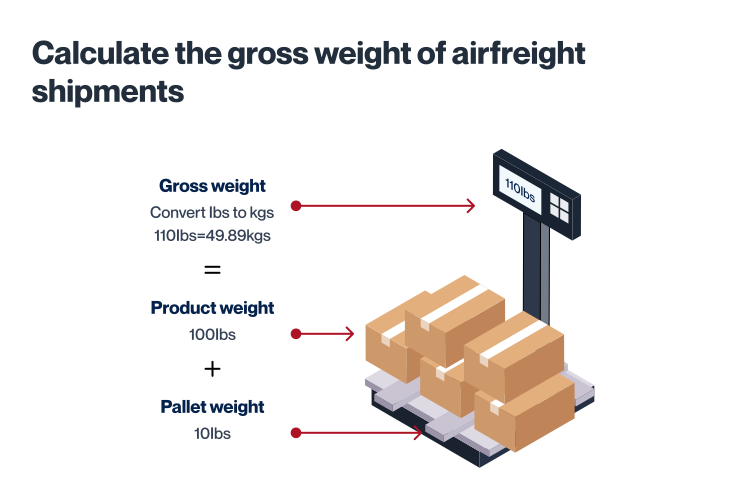
When you ship by air, the airline charges you based on whichever is higher, your gross weight or your volumetric weight. This is central to every chargeable weight calculation under IATA cargo standards. If your cargo is light but bulky, you pay for the space it occupies in the aircraft, not just what it weighs on a scale.
- Gross weight, the total weight of goods plus packaging.
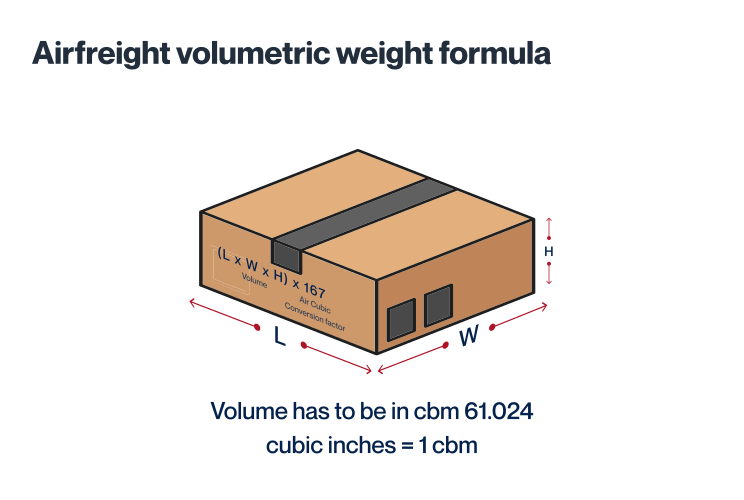
- Volumetric weight, the weight equivalent of the space your cargo occupies.
- Chargeable weight, the higher of gross or volumetric weight.
How to calculate it:
For standard air cargo: Length cm x Width cm x Height cm / 6000.
For express: Length cm x Width cm x Height cm / 5000.
Example, if you ship 50 x 50 x 50 cm at 40 kg, the volumetric weight in air cargo is 50 x 50 x 50 / 6000, about 20.8 kg. In express, it is 50 x 50 x 50 / 5000, or 25 kg. The airline compares that to your 40 kg gross weight and charges the higher value.
The common mistake is underestimating carton size or using oversized packaging. That leads to a higher chargeable weight and a surprise invoice adjustment. If you optimize box dimensions early, you immediately improve your cost control per shipment.
Rail freight between Vietnam and Finland
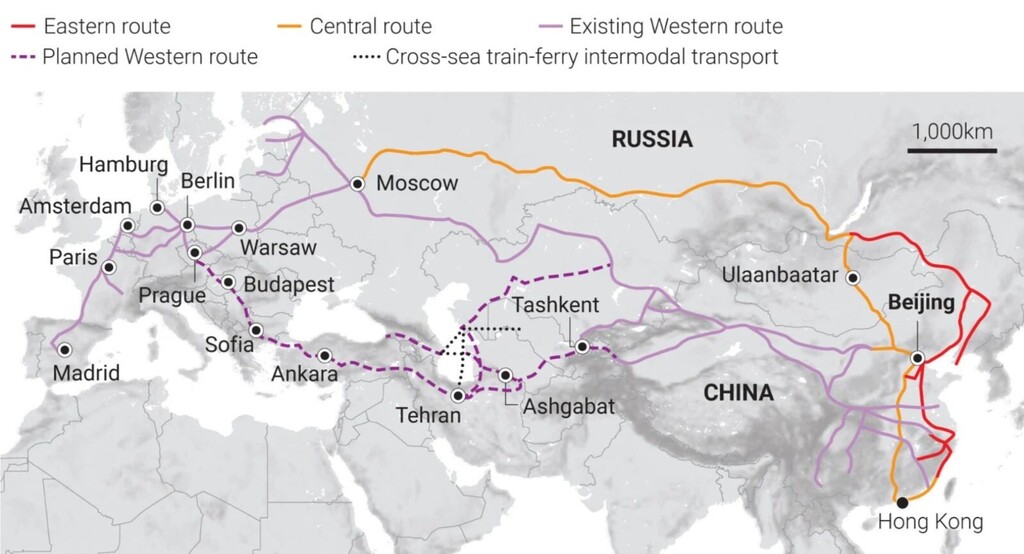
Why did the shipping container go to school? Because it couldn’t figure out the route from Vietnam to Finland! Now, let’s hop onto the historical train ride between these countries. The remarkable rail line, established in the late 20th century, winds its way beyond simply Vietnam and Finland, connecting countries in-between, like Russia.
From electronics to textiles, the rail route has facilitated the transportation of diverse goods, fostering a powerful trade relationship that benefits both Finland’s and Vietnam’s economies. While rail freight offers a more affordable option compared to air freight, it does involve a longer transit time.
Customs procedures along this route are quite standardized. However, language barriers and complex documentation might pose challenges. Hence, it’s time you fathom whether rail freight suits your specific shipping needs, factoring in cost-effectiveness, transit times, and potential hurdles. An exciting journey of possibility awaits!
What are the main train stations between Vietnam and Finland?
Starting your freight journey in Vietnam, you would begin at one of these major train stations:
1. Hanoi Railway Station:
Serving as a crucial connection point for Vietnam’s North-South Railway line, it’s the largest train station in the country. The station can support substantial cargo volumes, making it an excellent hub for businesses wishing to move goods to Finland. Most notably, Hanoi Railway Station is equipped to handle a wide range of goods, like electronics, textiles, and manufactured products.
2. Ho Chi Minh City Station:
Located in Vietnam’s bustling commercial hub, this station serves as a critical endpoint for the North-South Railway line. The diverse range of goods it can handle plus its strategic location makes it conducive for businesses with multiple sourcing locations.
3. Da Nang Railway Station:
This is a crucial station due to its location in the central region of Vietnam, serving both the northern and southern parts. Being one of the busiest train stations in Vietnam, its cargo volume is impressive, making it ideal for your business if you’re targeting larger shipments.
In transit, you might also want to consider:
1. Beijing West Railway Station, China:
This station is a key component of China’s international rail network. With millions of Tons of cargo volume annually, your goods could comfortably fit onto trains dealing with various types of cargo.
2. Chengdu Railway Station, China:
Known for handling goods towards Europe, Chengdu allows easy access for freight from Southeast Asia. Its strategic location makes it a worthwhile consideration for your shipping strategy.
What are the main train stations between Vietnam and Finland?
Starting your freight journey in Vietnam, you would begin at one of these major train stations:
1. Hanoi Railway Station:
Serving as a crucial connection point for Vietnam’s North-South Railway line, it’s the largest train station in the country. The station can support substantial cargo volumes, making it an excellent hub for businesses wishing to move goods to Finland. Most notably, Hanoi Railway Station is equipped to handle a wide range of goods, like electronics, textiles, and manufactured products.
2. Ho Chi Minh City Station:
Located in Vietnam’s bustling commercial hub, this station serves as a critical endpoint for the North-South Railway line. The diverse range of goods it can handle plus its strategic location makes it conducive for businesses with multiple sourcing locations.
3. Da Nang Railway Station:
This is a crucial station due to its location in the central region of Vietnam, serving both the northern and southern parts. Being one of the busiest train stations in Vietnam, its cargo volume is impressive, making it ideal for your business if you’re targeting larger shipments.
In transit, you might also want to consider:
1. Beijing West Railway Station, China:
This station is a key component of China’s international rail network. With millions of Tons of cargo volume annually, your goods could comfortably fit onto trains dealing with various types of cargo.
2. Chengdu Railway Station, China:
Known for handling goods towards Europe, Chengdu allows easy access for freight from Southeast Asia. Its strategic location makes it a worthwhile consideration for your shipping strategy.
How long does rail freight take between Vietnam and Finland?
Moving goods between Vietnam and Finland via rail freight can range significantly in time. Factors affecting transit include the route taken, customs clearance times, and environmental conditions. On average, expect a transit of about 20-30 days. We have compiled a list of rail networks linking Asia and Europe with their approximate transit times and frequency of departures. Bare in mind, these are estimates as transit times can be unpredictable due to multiple variables.
- Zhengzhou to Hamburg (Germany): ~ 15-17 days, Departs Daily
- Zhengzhou to Munich (Germany): ~ 17-18 days, Departs Monday and Friday
- Zhengzhou to Liege (Belgium)/Milan (Italy): ~ 20 days, Departs Monday, Thursday and Friday
- Chongqing to Duisburg (Germany): ~ 16-17 days, Departs Monday/Friday
- Yiwu to Hamburg (Germany): ~ 16-18 days, Departs Monday/Thursday/Friday
- Yiwu to Duisburg (Germany): ~ 16-18 days, Departs Monday/Thursday/Friday
- Yiwu to Madrid (Spain): ~ 20 days, Departs Monday/Thursday/Friday
- Wuhan to Hamburg (Germany): ~ 17-19 days, Departs Saturday/Wednesday/Thursday
- Wuhan to Duisburg (Germany): ~ 17-19 days, Departs Saturday/Wednesday/Thursday
- Chengdu to Tilburg (Netherlands): ~ 18 days, Departs Wednesday/Sundayy
- Suzhou to Hamburg (Germany): ~ 18-20 days, Departs Sunday
- Suzhou to Duisburg (Germany): ~ 18-20 days, Departs Sunday
- Xi’an to Duisburg (Germany): ~ 18-20 days, Departs Wednesday/Thursday/Friday/Saturday
What are the advantages of rail transport between Vietnam and Finland
Rail transport strikes an effective balance between cost and speed when moving goods from Vietnam to Finland. Unlike air freight, rail offers a more economical solution, making it an attractive option if you’re budget conscious. For instance, shipping machinery parts or chunky furniture pieces won’t put a massive dent in your wallet as it might with air freight. It’s also faster than sea freight, ensuring your products arrive in a timely manner, without the lengthy waiting times associated with maritime transport.
Picture this: your new product line, perhaps artisan Vietnamese coffee beans, could be hitting Finnish shelves in weeks, not months, offering a competitive edge. Thus, rail freight bridges the gap offering the perks of both air and sea without the extreme drawbacks. By choosing this path, you’re investing in a solution that values both your time and budget.
How much does shipping goods by train between Vietnam and Finland cost?
Pinning down a general cost for rail freight between Vietnam and Finland? That’s a tricky one. While air and sea freight have their predictable expenses, rail freight involves a mix of variables – from shipment weight to seasonal shifts, transit times to fuel costs. Therefore, providing you with a costume-made quotation is our best approach.
Be assured, our dedicated team is eager to help you achieve premium value for your logistics expenses. We’ll analyze the specifics of your shipment and provide a quote tailored just for you, in less than 24 hours. So, why wait? Contact us to receive your free quote today!
Door to door between Vietnam and Finland
Unraveling the secrets of Door to Door shipping, it’s your ultimate solution for hassle-free transportation from bustling Vietnam to serene Finland. Imagine enjoying streamlined logistics, one provider, and no stress handling transits. Sounds like a sweet deal, right? Well, this is just the tip of the iceberg. Let’s dive in and reveal the full spectrum of benefits it offers.
Overview – Door to Door
Shipping between Vietnam and Finland feeling complex? With door-to-door shipping, escape the hassles as we handle everything from origin to destination.
Enjoy rapid transit times, easy customs clearance, and less paperwork. However, costs might run slightly higher than traditional shipping and you may have to deal with minor delays. Despite these challenges, it remains FNM Vietnam’s top service, ensuring your delivery is convenient and worry-free.
This stress-free logistics solution is your ticket to confident global trading. Ready to make your shipping process smoother?
Why should I use a Door to Door service between Vietnam and Finland?
Banish those logistics nightmares! Here are five compelling reasons why Door-to-Door service is your go-to option for shipping goods from Vietnam to Finland.
1. Eliminates stress: This service is your one-stop solution for all logistics needs. Right from collecting your goods from your doorstep in Vietnam to delivering it at the final destination in Finland, everything is handled by the service provider.
2. Ensures timely delivery: Urgent consignment? No problem! With Door-to-Door service, you won’t have to worry about separate pickup and delivery schedules. The service provider commits to a timeline making it perfect for those time-critical deliveries.
3. Provides specialized care: If your cargo is complex or fragile, the Door-to-Door service takes extra precautions. Your shipment will be handled with extreme care throughout the entire journey.
4. Ease of clearance: No more grappling with complicated customs rules! The service provider will handle all clearance processes at both ends, ensuring compliance and prompt delivery.
5. Ultimate convenience: Your cargo gets trucked all the way to Finland without you having to lift a finger. Trust me, it’s as convenient as it sounds!
In essence, Door-to-Door service between Vietnam and Finland turns the gauntlet of international shipping into a walk in the park. Isn’t that just wonderful? So, go on, give your logistic fears a vacation!
FNM Vietnam – Door to Door specialist between Vietnam and Finland
Shipping from Vietnam to Finland? Leave it to FNM Vietnam. We offer a comprehensive, hassle-free door-to-door service. From packing your goods to managing all necessary transport, customs procedures, and shipping methods – we handle it all. Don’t sweat the logistics. With our skilled team and a dedicated Account Executive, you can focus on your business.
Get a free estimate in less than 24 hours or speak to our consultants for free. Trust us with your shipping needs and rest easy knowing that you’re in capable hands.
Customs clearance in Finland for goods imported from Vietnam
When you handle customs clearance Finland imports from Vietnam, you are deciding your final landed cost, your release timing, and who legally acts as the Importer of Record. The way you structure your invoice, Incoterm and documentation will directly impact duties, import VAT Finland, and how fast your cargo is released. We coordinate freight and customs between Vietnam and Finland so you do not lose control at the border.
You will notice quickly that most delays come from small but expensive mistakes such as a wrong HS code classification, incomplete commercial invoice requirements, or missing certificate of origin Vietnam. These issues trigger document requests, inspections, and sometimes storage and demurrage costs. If you want to avoid customs issues when importing from Vietnam to Finland, you need to understand how the calculation and the process really work. Let us walk you through it step by step.
How to calculate duties & taxes when importing from Vietnam to Finland?
To run a proper duty and tax estimation before shipping, you need five inputs: your HS code, your country of origin, your customs value, the applicable customs duties Finland, and the VAT treatment. This is the base of any serious landed cost calculation Vietnam to Finland. Final amounts sometimes differ from your estimate because customs may adjust the value or question your tariff classification.
The first thing we always tell you is this, cheap freight quotes that ignore customs are misleading. If you do not calculate your total import exposure correctly, you risk a post-clearance reassessment that hits your margin later. Now let us break down the logic in the right order.
Step 1 – Identify the Country of Origin
You should start with the real country of origin, meaning where the product was manufactured or substantially transformed, not where it was shipped from. For imports from Vietnam into Finland, origin determines whether you can claim a preferential tariff under the EU Vietnam framework and what preferential origin documentation you must present.
If you claim preferential treatment, you must support it with a valid certificate of origin Vietnam or equivalent statement. If customs doubts the origin, you can face a retroactive duty claim plus penalties. Many importers confuse shipping country with origin, and that mistake alone can cancel a preferential tariff claim.
Step 2 – Find the HS Code of your product
Your HS code classification drives your duty rate, compliance checks, and whether your goods fall under restricted goods import Finland rules. A wrong code does not just change the percentage, it can trigger additional controls, product standards, or even require an import license.
You can start with your supplier, but you should always verify using an official harmonized system code lookup tool such as the EU database available via TARIC. Search by product description, compare technical characteristics, and read the legal notes attached to the heading. This is where you secure a defensible classification.
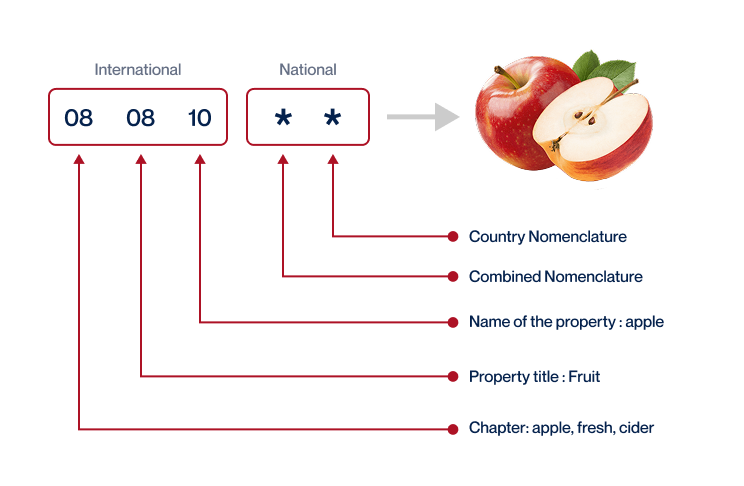
If your HS code is wrong, you risk a customs inspection process, reassessment of duties, and delayed release of goods from customs. When in doubt, you should request tariff classification support before shipping. Here’s an infographic showing you how to read an HS code.
Step 3 – Calculate the Customs Value
Finland applies the standard EU customs value calculation method, generally based on the transaction value. In practical terms, you start from your invoice price and adjust it to reach the CIF value for customs, meaning cost, insurance and freight up to the EU border.
If you buy under FOB terms for 10,000 USD and you pay 1,000 USD freight plus 200 USD insurance, your customs value becomes 11,200 USD. If you buy under CIF, freight and insurance are already included, but you must still check commissions, assists, packing, or royalties that may need to be added. This is where many importers underestimate their tax base and later face a value adjustment by customs.
Step 5 – Consider other Import Duties and Taxes
Beyond customs duties, you must calculate import VAT Finland. VAT is applied to the customs value plus duties and certain additional costs. If your customs value is 11,200 USD and duties are 5 percent, VAT will be calculated on the increased base, not just on the invoice price. This is central to understanding how to calculate import tax from Vietnam to Finland.
Depending on your product, you may also face excise duties or trade defense measures such as anti dumping. For example, certain goods can attract additional charges that significantly change your margin. You should also verify product compliance requirements Finland, including CE marking for imported goods, before shipment.
Before shipping, you should confirm:
- EORI registration Finland is active for your company
- Your customs documentation checklist is complete, including invoice and packing list details
- Whether an import license is required
- If your goods qualify for a temporary import procedure or bonded solution
Step 6 – Calculate the Customs Duties
The basic formula is simple. Duty = customs value × duty rate. Then VAT = (customs value + duty) × VAT rate. This gives you your total border tax exposure before clearance.
If your customs value is 11,200 USD and your duty rate is 5 percent, you pay 560 USD in duty. If VAT applies to the new base of 11,760 USD, you multiply that by the applicable rate to obtain your VAT amount. This is the core of your landed cost calculation Vietnam to Finland.
In practice, your customs broker Finland submits the customs declaration form Finland through the electronic import declaration process. Duties and VAT must be secured before or at release, depending on your deferment setup. Errors in declaration or missing power of attorney customs clearance can delay the release of goods from customs and generate storage costs. This is why freight and customs coordination between Vietnam and Finland must work as one chain.
Does FNM Vietnam charge customs fees?
When you appoint us as your customs broker Finland, we charge a service fee for handling the full import procedures Finland, including document review, declaration filing, and coordination with customs authorities. This is separate from customs duties Finland and VAT, which are paid directly to the government.
You always receive official assessment documents so you clearly see what goes to customs and what covers our service. If you need structured support, from EORI registration Finland to transit or bonded warehouse Finland solutions, we organize the process so you avoid common customs clearance delays and keep your supply chain predictable.
Contact Details for Customs Authorities
Vietnam Customs
Official name: General Department of Vietnam Customs Official website: http://www.customs.gov.vn/

Finland Customs
Official name: Finnish Customs (Tulli) Official website: https://tulli.fi/en
Required documents for customs clearance in Finland
When you import from Vietnam into Finland, customs clearance usually moves fast, but only if your documents tell the exact same story. Your consignee, values, weights, and product descriptions must match across every file. Most delays are not caused by the border itself, they come from inconsistent paperwork or missing proof. The first thing we always tell you is simple, treat your documents as one single file, not six separate ones.
Here is your customs clearance checklist for this route.
Commercial Invoice
The Commercial Invoice is the financial document that shows what you sold, to whom, and under which Incoterm. Finnish Customs uses it to calculate customs duties and import VAT, and your broker uses it to declare the correct HS code.
Example: 1,200 units of Bluetooth headsets, HS code 8518, unit price USD 12, Incoterm FOB Ho Chi Minh City.
Common mistake, undervaluing goods or using vague descriptions like “electronics”, which can trigger a customs value review and slow everything down.
Bill of Lading or Air Waybill
The Bill of Lading for sea freight, or the Air Waybill for air freight, is your transport contract and proof that the carrier received the cargo. Finnish authorities check it to confirm the shipper, consignee, and routing details.
Example: Original B/L showing shipment from Cat Lai Port to Port of Helsinki, consignee registered in Finland with a valid EORI number.
Common mistake, consignee name not matching the Finnish company’s official registration, which can block release until corrected.
Packing List
The Packing List details how your goods are physically packed, carton count, net weight, gross weight, and dimensions. Customs and warehouse operators rely on it to verify the shipment and assess risk.
Example: 24 pallets, 960 cartons, total gross weight 8,450 kg, clearly linked to the invoice number.
Common mistake, weight or quantity differences between the Packing List and the Commercial Invoice, which often leads to physical inspection.
Certificate of Origin
The Certificate of Origin confirms that your goods were manufactured in Vietnam. You need it if you want to claim preferential tariff treatment under the EU–Vietnam Free Trade Agreement.
Example: EUR.1 or origin statement referencing EVFTA, allowing reduced or zero customs duty in Finland.
Common mistake, incorrect origin criteria or missing signature, which can cancel your preferential rate and force you to pay full duty.
Import Declaration and EORI Registration
The import declaration is the electronic filing submitted to Finnish Customs, and it must be done by a company holding a valid EORI number in the EU. Without it, your goods cannot be cleared for free circulation.
Example: Finnish importer of record submits the declaration referencing the MRN and attaches invoice data.
Common mistake, using a supplier as importer without proper EU registration, which can result in clearance refusal at arrival.
CE Conformity Documents
If you ship products like electronics, machinery, toys, or medical devices, you must provide CE conformity documents proving compliance with EU standards. Finnish Customs may request the Declaration of Conformity before release.
Example: Technical file and signed EU Declaration of Conformity for consumer electronics placed on the Finnish market.
Common mistake, assuming the Vietnamese factory’s local certification is enough, while missing EU-required documentation, which can lead to market entry suspension.
Get Started with FNM Vietnam
Prohibited and restricted items when importing into Finland
When you import into Finland, you need to understand the difference between restricted and prohibited goods. Restricted products are allowed, but only if you meet specific EU conditions such as licenses, health certificates, or prior approvals. Prohibited goods should not enter the country at all, and you can face seizure, fines, or forced re-export if you ship them anyway.
On the Vietnam to Finland route, most issues come from products that look harmless but fall under EU control rules. Here is what you should double-check before shipping.
Restricted products
- Food and agricultural products, require health certificates and EU sanitary compliance.
- Animal-origin goods, subject to veterinary border inspection.
- Cosmetics, must comply with EU ingredient and labeling rules.
- Electronics and machinery, require CE marking and technical documentation.
- Textiles and footwear, correct labeling and fiber composition required.
- Chemicals, may fall under EU REACH registration obligations.
Prohibited products
- Counterfeit goods, seized under EU intellectual property enforcement.
- Illicit drugs and narcotics, strictly banned.
- Certain weapons and explosives, prohibited without special authorization.
- Endangered species products, restricted under CITES rules.
If you are unsure about your product classification or compliance, check the HS code in advance and confirm EU requirements before cargo departure. Sending goods first and asking questions later often results in seizure or forced destruction, which is far more expensive than a pre-shipment compliance check.
Trade agreements and preferential duties for imports from Vietnam to Finland
If you import from Vietnam into Finland, you operate under the EU–Vietnam Free Trade Agreement (EVFTA), in force since 2020. Under this agreement, a large share of customs duties on Vietnamese goods entering the EU has been reduced or eliminated, depending on the product category and staging schedule.
In practice, many industrial products now benefit from reduced or zero duty rates, while some sensitive goods follow a phased reduction timetable. Your actual duty rate depends on the correct HS code and whether you can prove preferential origin with a valid origin statement or EUR.1 certificate.
You should also factor in EU import VAT, which applies even if customs duty is zero. In Finland, VAT is generally 24%, with reduced rates for specific categories. The key decision point for you is not only the customs duty, but your cash flow exposure at import.
Finally, always verify whether your product is subject to EU trade defense measures such as anti-dumping duties. These measures are product-specific and can override normal tariff reductions. If you are unsure, check before shipping, because an unexpected trade measure can seriously affect your landed cost and profitability.
Your Next Step with FNM Vietnam
Additional logistics services
Warehousing
Sourcing trustworthy warehousing in the Vietnam-Finland trade lane can send you down a rabbit hole. Whether it's safeguarding your tech goods in climate-controlled spaces or stocking raw materials, the specifics matter. Find peace of mind with our comprehensive solutions designed just for you. More info on our dedicated page: Warehousing
Packing
Choosing the right packaging can be the difference between your goods arriving in Finland safe or damaged. Trust in a reliable agent for your intricate packaging and repackaging needs is vital, especially when transporting fragile items like ceramics or robust ones such as machinery. Examples, customer success stories, and sustainable packaging options are all discussed in depth on our dedicated page: Freight Packaging
Transport Insurance
Cargo insurance can be a lifesaver when transporting goods, especially compared to fire insurance. Unlike fire insurance, it covers a breadth of incidents beyond fire damage. A storm at sea, a truck collision, or a dropped container are all possible risks. It's about prevention and decreasing vulnerability. For instance, if your shipment containing custom-made machinery gets damaged, cargo insurance can cover the repair or replacement costs. More info on our dedicated page: Cargo Insurance
Household goods shipping
Moving valuables between Vietnam and Finland? Rest assured, our personal effects shipping service handles your items such as antique furniture or fragile art pieces with absolute care. Imagine this: your grandparents' crockery, packed and transported with such precision, it arrives in Helsinki just as it left Ho Chi Minh. For the flexibility and certainty you need during your move, let our expert team guide you. Dive into deeper details on our dedicated page: Shipping Personal Belongings
Procurement in Thailand
Looking to manufacture goods in Asia or East Europe? FNM Vietnam's Supplier Management service garners the perfect supplier for your business, sweeping clear language barriers, and guiding you throughout the entire procurement process. Say goodbye to sourcing headaches, and hello to a streamlined global supply chain. More info on our dedicated page: Sourcing services

Quality Control
Quick and effective quality checks are crucial when shipping goods from Vietnam to Finland. Our Quality Control service helps avoid unseen dilemmas (like transit damage or failed compliance) by thoroughly inspecting the goods during manufacturing. Take, for instance, a global toy brand, ensuring its products abide by Finland's strict safety standards prior to shipping. More info on our dedicated page: Quality Inspection
Conformité des produits aux normes
Ensuring your goods meet the destination’s regulatory guidelines is vital, and missteps can be costly. That’s where our Product Compliance Services come in handy. Through intensive laboratory testing, we certify your products' compliance, saving you from undesired hassles and potential legal issues. Just imagine shipping toys, only to find they don't meet safety standards at the destination – frustrating and expensive! Our service alleviates this stress.