In short ⚡
EU-Vietnam Free Trade Agreement (EVFTA): How Importers Benefit from Zero Tariffs depends on proving Vietnamese preferential origin, confirming the correct HS code and claiming the applicable reduced or zero EU duty. The EU phase-out is scheduled to end in 2027, but eligibility and valid documentation remain essential. To secure the preference, importers should:- Confirm the EU customs classification and check the MFN rate, EVFTA rate and origin rule in Access2Markets.
- Verify that the goods are wholly obtained in Vietnam or sufficiently processed according to the product-specific rule.
- Request the supplier’s bill of materials, input origins, production details and supporting origin calculations.
- Obtain an EUR.1 for consignments containing more than EUR 6,000 of originating products, or a compliant statement on origin up to EUR 6,000.
- Check that the invoice, packing list, proof of origin, HS code and product details match before shipment.
- Give the complete file to the customs broker and retain supporting evidence for at least three years.
The guide covers EVFTA tariff schedules, product-specific savings, textile origin and cumulation rules, documentary requirements, common compliance mistakes, and the separate rules applying to UK importers and EU exporters.

Looking for a Reliable Shipping & Sourcing Partner?


What is the EVFTA and what does it change for EU importers?
The EU-Vietnam Free Trade Agreement (EVFTA) has applied since 1 August 2020 and removes 99% of customs duties between the EU and Vietnam. The EU removed 71% of its duties on Vietnamese goods on day one and phases out the rest over seven years, so the EU tariff phase-out is due to end in 2027. As an EU importer, you pay the reduced or zero rate only when your goods qualify as Vietnamese-origin and you hold valid proof of origin.
Preferential origin means that a product meets the EVFTA’s rules for being considered Vietnamese, rather than merely being shipped from Vietnam. The importer of record normally claims the preference at EU customs, so the duty saving belongs to your import transaction, even when your supplier prepares the origin documents.
DocShipper Info
Confirm the product qualifies and secure valid origin evidence before shipment to protect your EVFTA duty savings.
In force since 1 August 2020: the tariff timeline
At entry into force, 71% of EU duty lines on Vietnamese goods were removed. The remaining lines follow product-specific schedules, with the EU phase-out ending in 2027. Vietnam started by removing 65% of its duties on EU goods and will phase out the rest over periods of up to 10 years, reaching the end of its schedule in 2030.
| Year | What changes | Practical meaning |
| 2020 | EVFTA enters into force; 71% of EU duties on Vietnamese goods are removed. | Many eligible products can immediately access a lower or zero rate. |
| 2027 | The EU phase-out is scheduled to be complete. | Products still on a staged EU schedule should have reached their final preferential rate. |
| 2030 | Vietnam’s phase-out for EU goods is scheduled to be complete. | This mainly matters to EU exporters selling into Vietnam. |
The agreement has supported substantial trade: EuroCham Vietnam reported USD 298 billion in two-way trade between August 2020 and May 2025, while Vietnam’s exports to the EU reached USD 51.7 billion in 2024. Vietnam also issued 1.8 million preferential certificates of origin in 2024, showing the scale of the documentation system.
As Julien Guerrier, EU Ambassador to Vietnam, wrote, “Five years in, the EVFTA is proof that real partnership works. It has strengthened trust and encouraged trade.” The statement is quoted by EuroCham Vietnam.
Who benefits: importers, not just exporters
The commercial benefit is easy to miss when comparing supplier quotations. A Vietnamese quotation may look more expensive than a Chinese one until you add the applicable EU import duty to both options. However, the EVFTA does not automatically reduce duty simply because the container leaves a Vietnamese port. You must verify the tariff line, origin rule and proof of origin before shipment.
Use the European Commission’s Access2Markets tool to check the product’s HS code, the standard MFN rate, the EVFTA rate and the product-specific origin rule. MFN means the normal customs duty applied when no preferential trade agreement is claimed.
Which products get zero tariffs, and how much can you save?
The potential saving equals the normal EU MFN duty that you no longer pay on the customs value of qualifying goods. It is often commercially significant for apparel, footwear, seafood and some processed foods, while many furniture lines already enter the EU at 0% MFN duty, meaning the EVFTA may change little for those products.
Do not rely on a product family alone. The exact HS code determines both the duty and the origin rule, and similar products can fall under different tariff lines. Check the rate in Access2Markets or TARIC on the day you prepare the import, and record the date of your tariff check in the shipment file.
DocShipper Tips
Compare Vietnam with alternative sourcing markets only after applying the correct MFN and EVFTA rates to your customs value.
Where the EVFTA really pays
Apparel and footwear often have a meaningful duty gap between the MFN and EVFTA rates. Seafood and certain agricultural or processed-food products can also benefit, provided the goods satisfy their specific origin conditions. Textiles require particular caution because the tariff benefit may depend on where the yarn and fabric were produced, not only where the garment was sewn.
Furniture and homeware need a separate check. Many furniture lines already have a 0% MFN duty, so claiming EVFTA preference may produce no duty saving even if the product qualifies. You still need the correct HS classification because the treatment varies by material, construction and product description.
| Product family | Typical duty position | EVFTA treatment | Origin difficulty |
| Apparel and textiles | Often a material MFN duty; verify the HS code. | Reduced or zero rate according to the staged schedule and origin rule. | High, especially for fabric origin. |
| Footwear | Can carry a material MFN duty; verify the HS code. | Potentially substantial saving if the product qualifies. | Medium to high. |
| Seafood and agri-food | Rates vary significantly by product and processing. | Preferential treatment may apply if the product-specific rule is met. | Medium to high. |
| Furniture and wood products | Many lines may already be 0% MFN. | Often limited additional saving where MFN is already zero. | Low to medium, depending on materials. |
| Electronics | Classification and components determine the rate. | Check the exact tariff line and processing rule. | Medium. |
Looking for a Reliable Shipping & Sourcing Partner?
Calculate your saving on one container
Customs duty is calculated on the customs value, generally the value used for import valuation and not simply the product price viewed in isolation. Import VAT is separate: the EVFTA does not remove it, and VAT may still be calculated on the customs value plus relevant transport, duty and other taxable elements under the rules of the importing member state.
Use this calculation before comparing Vietnam with another sourcing country:
Customs value: EUR 60,000
MFN duty assumption: 8%
EVFTA duty assumption: 0%
Duty without preference: EUR 60,000 × 8% = EUR 4,800
Duty with valid EVFTA preference: EUR 60,000 × 0% = EUR 0
Illustrative duty saving: EUR 4,800
This is an illustrative calculation using the rates supplied in the brief, not a current tariff quotation. For cotton T-shirts under HS 6109, the brief uses a 12% MFN rate as an example to verify. On the same EUR 60,000 customs value, the calculation would be EUR 60,000 × 12% = EUR 7,200, assuming the current EVFTA rate is 0% and the goods qualify.
Comparing two supplier prices without this duty line can produce the wrong sourcing decision. Check the HS code, duty rate, origin eligibility and VAT treatment before deciding that Vietnam is more or less competitive than China.
EVFTA rules of origin: when is a product “Made in Vietnam”?
A product qualifies when it is wholly obtained in Vietnam or sufficiently processed there according to its product-specific rule. Packing, labelling, sorting or basic assembly alone does not normally confer Vietnamese origin. The decisive question is what happened to the materials and whether that processing meets the relevant EVFTA rule.
The rules are set out in Protocol 1 and vary by product. A rule may require a change in tariff heading, a maximum percentage of non-originating materials or a defined manufacturing process. The percentages and tests must be checked for the exact HS code in Access2Markets and the EVFTA origin documentation.
DocShipper Alert
Review processing steps, material origins and the exact HS rule before claiming preferential treatment.
Wholly obtained versus sufficiently processed
Wholly obtained goods are products obtained entirely in Vietnam, such as qualifying agricultural or fishery products under the applicable conditions. Manufactured goods usually rely on sufficient processing, meaning that production in Vietnam changes the non-originating inputs enough to satisfy the product-specific rule.
Ask the supplier for more than a simple “Made in Vietnam” statement. Request the bill of materials, the origin of major inputs, production steps and any calculations used to demonstrate compliance. This file is especially important where the product contains imported fabric, leather, components or raw materials.
Textiles: the double-transformation rule and cumulation
For many garments, the practical rule is a form of double transformation: yarn becomes fabric, and fabric becomes the finished garment. A jacket sewn in Ho Chi Minh City from fabric imported from China may therefore fail the EVFTA origin rule, even though the cutting and sewing took place in Vietnam.
Cumulation can provide exceptions in defined circumstances. EU fabric may be used under bilateral cumulation, while Korean fabric may qualify under the extended cumulation arrangements when all applicable EVFTA conditions are met. Your supplier should confirm the fabric origin and provide supporting records rather than assuming that production in Vietnam is enough.
Jean-Jacques Bouflet, Vice-Chair of EuroCham Vietnam and a former EU negotiator of the EVFTA, said: “When we negotiated the EVFTA, every clause was designed to ensure both productivity and integrity.” The full statement is available through EuroCham Vietnam.
Operations that never confer origin
| Operation | Normally confers EVFTA origin? | Why it matters |
| Repacking or relabelling | No | Changing the presentation does not create Vietnamese origin. |
| Basic sorting or inspection | No | Administrative handling is not sufficient processing. |
| Simple assembly | Generally no | The product-specific rule may require more substantial manufacturing. |
| Manufacturing that meets the HS rule | Potentially yes | Check the applicable processing, value or tariff-heading test. |
| Garment production using qualifying fabric | Potentially yes | Verify the double-transformation and cumulation conditions. |
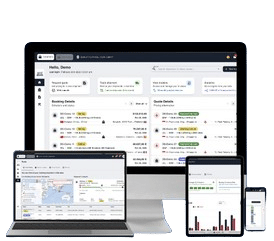
DocShipper Platform
One platform. Your entire supply chain
Sourcing, freight, customs & documents — all centralised, all visible, 24/7.
How to claim EVFTA zero tariffs step by step
Check the EVFTA rate and origin rule, obtain the correct proof from the Vietnamese supplier, and give the complete file to your customs broker before the declaration is lodged. For imports into the EU, an EUR.1 is required for consignments containing more than EUR 6,000 of originating products, while a statement on origin can be used when the value of originating products does not exceed EUR 6,000.
- Confirm the HS code. Match the product description, materials, function and manufacturing process to the correct classification. Do not let the supplier’s commercial code replace the EU customs classification.
- Check the two rates. In Access2Markets, select Vietnam as the origin and your EU country as the destination. Record the MFN rate, EVFTA rate and the date checked.
- Read the origin rule. Open the product-specific rule and identify the required processing, tariff change, value limit or material restriction.
- Request the supplier’s origin file. Ask for the bill of materials, material origins, production description and any calculations supporting Vietnamese origin.
- Obtain the correct proof. Ask the supplier to arrange an EUR.1 through the Vietnamese Ministry of Industry and Trade system for shipments above EUR 6,000 of originating products. For shipments at or below that threshold, request a compliant statement on origin.
- Check the documents before departure. Compare the invoice description, packing list, quantities, product references, HS code and origin wording. Resolve inconsistencies before the container leaves Vietnam.
- Give the file to the broker. The broker claims the preference in the EU import declaration. French customs references document code N954 for an EUR.1 and U162 for an origin declaration, although declaration coding should be confirmed for the importing member state.
- Keep the evidence. A statement on origin is valid for 12 months from the date it is made out. Supporting documents must be retained for at least three years under the Access2Markets guidance.
DocShipper Tips
Give your broker the HS classification, supplier evidence and correct proof of origin before the customs declaration is lodged.
Supplier email template
You can send the following request before placing the order:
Subject: EVFTA origin documents required before shipment
Please confirm whether the goods under purchase order [number] qualify as Vietnamese originating products under the EVFTA rule for HS code [code]. Please provide the bill of materials, the country of origin of the main materials, a short description of the manufacturing process and any supporting origin calculation.
As the value of originating products is [above or below] EUR 6,000, please arrange the applicable proof of origin: an EUR.1 certificate issued through the competent Vietnamese authority, or a compliant statement on origin where permitted. Please send a draft or scanned copy for review before shipment and ensure that the product description and quantities match the commercial invoice and packing list.
| Document | Action before shipment |
| Commercial invoice | Confirm seller, buyer, description, value and references. |
| Packing list | Match quantities, packages and product references. |
| Bill of lading | Check shipper, consignee, routing and transport details. |
| HS code confirmation | Match the classification used for the EVFTA check. |
| EUR.1 or statement on origin | Check the threshold, wording, dates and product description. |
| Origin evidence | Retain material origins, production records and supplier declarations. |
Common mistakes that cost importers their zero tariff
Most lost savings come from four errors: a wrong HS code, missing or late proof, a statement on origin used above EUR 6,000, or goods that do not meet the product-specific origin rule. Customs can recover unpaid duty after clearance if an origin document is invalid or the supplier cannot support its declaration.
| Mistake | Consequence | How to avoid it |
| Wrong HS code | The claimed rate or origin rule is incorrect. | Confirm classification before ordering and compare the product description with Access2Markets. |
| Invoice and EUR.1 do not match | Customs may question or reject the preference. | Check descriptions, quantities, references and values before departure. |
| Statement on origin used above EUR 6,000 | The proof may not be accepted for the EU import. | Request an EUR.1 for consignments exceeding the applicable value threshold. |
| Chinese fabric used in an apparel product | The garment may fail the textile origin rule. | Verify fabric origin and double-transformation evidence. |
| Non-direct transport or unexplained transshipment | Customs may request evidence that the goods were not altered. | Keep transport records and confirm the applicable non-alteration conditions. |
| No supporting supplier records | Post-clearance recovery risk increases. | Keep the bill of materials, declarations and production evidence for the required period. |
One illustrative recovery calculation shows the exposure. If customs rejects EVFTA origin on three containers, each with a customs value of EUR 60,000, and the applicable MFN rate is 12%, the additional duty would be: EUR 60,000 × 12% × 3 = EUR 21,600. This is an illustrative calculation, not a tariff determination for a specific product.
Utilisation is also a practical issue. Viet Nam News reported an estimated EVFTA utilisation rate of 30% to 50% in 2026, meaning that a significant share of eligible trade may still not use the preference. The lesson is straightforward: the saving is secured in Vietnam, when the supplier’s origin file is prepared, not when the container reaches the EU.
DocShipper Alert
Check invoice details, origin proof and supplier records before departure to reduce post-clearance duty recovery risks.
UK importers and EU exporters: what applies to you
Since Brexit, a UK importer does not claim the EVFTA for goods entering the United Kingdom. UK businesses use the UK-Vietnam Free Trade Agreement, which reproduces many EVFTA provisions but has its own tariff schedules and proof-of-origin rules. Check the current guidance from the UK Department for Business and Trade before shipment.
For the opposite flow, EU exporters selling to Vietnam face Vietnam’s tariff phase-out, not the EU import schedule. The briefed operating rule is that Vietnam removed 65% of its duties at entry into force and phases out the remainder over up to 10 years. EU exporters use a statement on origin, with REX registration required above EUR 6,000 under the applicable rules.
Do not combine the documents or tariff assumptions for the two directions. The agreement, importing customs authority and proof-of-origin procedure depend on where the goods are entering. For freight planning on the opposite flow, use the relevant Vietnam to Europe and Europe route information separately from the duty analysis.
Conclusion: what to remember about the EVFTA
The EVFTA can reduce your EU import duty to zero, but only when the product qualifies and the proof of origin is valid. Before you compare supplier prices or book a container, complete the classification, tariff and origin checks together.
- The EVFTA has applied since 1 August 2020 and removes 99% of EU-Vietnam tariffs; the EU phase-out ends in 2027.
- Your saving equals the MFN duty you no longer pay, so it is most valuable for qualifying apparel, footwear, seafood and selected agri-food products.
- Products already entering at 0% MFN, including many furniture lines, may receive little additional benefit.
- Origin is the condition: textiles may require Vietnamese fabric, or qualifying EU or Korean fabric under the relevant cumulation rules.
- Ask for an EUR.1 when the value of originating goods exceeds EUR 6,000. A statement on origin can be used up to EUR 6,000 and is valid for 12 months.
- Keep the supplier’s origin evidence because customs can recover duty after clearance.
- UK importers use the UK-Vietnam FTA instead of the EVFTA.
Importing from Vietnam? We check your HS code, your supplier’s origin documents and the EVFTA rate before the container leaves, then handle shipping and EU customs clearance in one file.
FAQ | EU-Vietnam Free Trade Agreement (EVFTA): how EU importers can secure 0% duty
Possibly. If the preference was omitted from the import declaration, you may be able to request repayment of excess duty from the customs authority in the EU Member State concerned. You will normally need the valid proof of origin, the import declaration details and evidence that the goods satisfied the applicable origin rule. Check the national procedure and deadline before filing, as these can affect whether a post-clearance claim is accepted.
It generally concerns the value of originating products in the relevant consignment, not the total value of your annual purchasing contract. A supplier may therefore use a statement on origin for one shipment below the threshold but need an EUR.1 for another shipment that exceeds it. Ask the supplier and customs broker to assess the threshold shipment by shipment, especially when one purchase order is split across several containers.
A single proof of origin may cover multiple product lines, but each line must be correctly classified and meet its own EVFTA origin rule. The invoice, packing list and proof should clearly identify the products, quantities and references. Do not assume that qualifying footwear, garments or accessories automatically share the same origin treatment simply because they are shipped together.
Transit through a non-EU country does not automatically remove the preference, provided the goods remain under customs control and are not processed or altered there. Keep the through bill of lading, transit records and any customs documents showing the routing and status of the goods. If the shipment is split, repacked or handled in the transit country, ask your broker to confirm whether the non-alteration conditions are still satisfied before claiming the preference.
A simple assurance that the goods are “Made in Vietnam” is not enough if customs later questions the origin. You can ask the supplier for a limited origin declaration, an independent verification or a redacted bill of materials showing the origin of the materials relevant to the applicable rule. If the supplier cannot provide reliable supporting evidence, treat the EVFTA saving as unconfirmed and price the shipment using the normal MFN duty.
The Incoterm does not determine whether the goods qualify for preferential origin, but it can affect the customs value used to calculate the duty. Depending on the term, transport, insurance, assists, royalties or other costs may need to be included or excluded under EU customs valuation rules. Compare suppliers using the same customs-value assumptions; otherwise, a lower quoted price may appear more competitive even though it produces a smaller real saving after import costs.
Need Help with Logistics
or Sourcing in Vietnam ?
First, we secure the right products from the right suppliers at the right price by managing the sourcing process from start to finish. Then, we simplify your shipping experience - from pickup to final delivery - ensuring any product, anywhere, is delivered at highly competitive prices.


Fill the Form
Prefer email? Send us your inquiry, and we’ll get back to you as soon as possible.
Contact us