
Freight Shipping between Vietnam and Iraq | Rates – Transit times – Duties and Taxes

Shipping on the freight vietnam iraq route is rarely about distance, it is about aligning transit times, port capacity, and customs requirements between two very different logistics environments. You will quickly realize that a small mistake on Incoterms, documentation, or routing can quietly inflate your landed cost or delay your cargo at arrival in Iraq. Here’s the thing, if you want predictability you need clarity on sea versus air options, realistic schedules, and how duties and taxes are actually applied in practice. In this destination guide, we will cover transport modes, transit logic, customs clearance steps, and the key cost drivers you should factor in before you book your shipment.

Which are the different modes of transportation between Vietnam and Iraq?

If your priority is cost and you are moving larger volumes, you will usually choose sea freight from Cat Lai Port to Umm Qasr Port, accepting longer transit times for better unit economics. If your cargo is urgent, high value, or time sensitive, air freight from Tan Son Nhat Airport gives you speed but at a higher cost per kilo.

You should base your decision on volume, cargo type, delivery deadline, and your agreed Incoterm, because each one shifts risk and cost differently. We always tell you the same thing, check current capacity and rate levels before you decide, and if you want, you can contact our team since we monitor real-time availability and pricing to help you choose the right option for your shipment, then we go deeper into each mode below.

How can FNM Vietnam help?

Looking to ship goods between Vietnam and Iraq? FNM Vietnam smooths the process for you, handling every detail from transport organization to customs clearance. With our in-depth expertise in sea, air, road and rail freight, we ensure a seamless journey for your cargo. Don’t wait, reach out today for a free estimate within 24 hours or call our consultants for free advice. Your global trade, simplified!

Sea freight between Vietnam and Iraq

If you are planning sea freight Vietnam to Iraq, you are usually doing it for one reason, cost efficiency on volume. For shipments above 10 to 15 CBM or full containers, container shipping Vietnam to Iraq is almost always more economical than air freight. You trade speed for price. On this ocean freight Vietnam Iraq route, you should expect longer transit times, possible transshipment in Asia or the Middle East, and tighter document control.

Here is the reality. This route is not a high frequency direct lane. Most services connect via hubs like Singapore or Port Klang before reaching Umm Qasr or other Iraqi ports. That means your sea transit time Vietnam to Iraq depends heavily on the carrier’s sailing schedule Vietnam Iraq and how smooth the transshipment is. If you assume a direct vessel every week, you risk a planning mistake that can delay your launch or inventory.

You should choose sea freight when your cargo is heavy, non urgent, or shipped in full container load FCL or less than container load LCL. If your goods are high value and time sensitive, air freight may protect your cash flow better. The first thing we tell clients is simple, define your timeline first, then select the mode. With the right preparation and correct Incoterms FOB CIF CFR DAP DDP, sea freight becomes predictable and cost controlled.

Which Incoterms should you use?

On this lane, your choice of Incoterms FOB CIF CFR DAP DDP directly affects your risk. Many exporters propose FOB Ho Chi Minh to Iraq. With FOB, your supplier handles export customs and delivers the cargo to the port of loading POL, but you control the ocean freight and choose the carrier. If you want transparency on freight rates Vietnam to Iraq and tighter control over the bill of lading B/L, FOB is often safer.

When you accept a CIF shipment to Iraqi port, your supplier books the vessel and includes freight and insurance. It looks convenient, but you lose visibility on routing and real costs. We often see importers surprised by high local charges at destination because the freight looked cheap but destination fees were not explained clearly. On the Vietnam Iraq route, transparency matters more than headline price.

If you are new to international shipping Vietnam Iraq, you might consider DAP or DDP. With DDP, your supplier even covers customs clearance fees at port and duties in Iraq. However, you must verify who acts as Importer of Record and how taxes are calculated. A wrong setup can trigger a customs blockage. We usually recommend FOB for experienced importers who want control, and DAP for those who want simplified delivery but still manage import clearance locally.

Main shipping ports in Vietnam and Iraq

You do not need every port. You need the ones that actually move containers on this trade.

  • Ho Chi Minh City, Cat Lai and Cai Mep, This is the primary gateway in the south and the most common main ports in Vietnam for export to the Middle East. You get the widest carrier choice and more stable schedules.
  • Hai Phong, Best option if your factory is in northern Vietnam. You may face transshipment more often, which can add days to your estimated time of arrival ETA.
  • Umm Qasr, The main gateway and clearly one of the main seaports in Iraq for import. Almost all containerized cargo enters here before inland trucking to Basra or Baghdad.
  • Khor Al Zubair, Used for specific industrial and project cargo, sometimes linked to oil and heavy industry supply chains.

Your choice of port of discharge POD affects inland cost inside Iraq. A cheaper ocean freight to Umm Qasr does not always mean cheaper total cost if your final delivery point is far inland and trucking capacity is tight.

Transit times: how long does it take to ship from Vietnam to Iraq?

For standard container services, the average sea transit time Vietnam to Iraq ranges between 35 and 45 days, depending on the origin port and transshipment pattern. Below is an indicative overview for the most common port pairs.

Port of Loading POLPort of Discharge PODEstimated Transit Time
Ho Chi Minh CityUmm Qasr35 to 42 days
Hai PhongUmm Qasr38 to 45 days
Da NangKhor Al Zubair35 to 43 days
Quy NhonUmm Qasr40 to 45 days

You should read these numbers as port to port only. They do not include factory pickup, export clearance, or inland delivery in Iraq. On the ocean freight Vietnam Iraq route, most services are indirect. That means your cargo is transshipped in a regional hub. If the connecting vessel is delayed, your estimated time of arrival ETA shifts accordingly.

You also need to watch peak periods. During high demand months, carriers may adjust their sailing schedule Vietnam Iraq, which can extend waiting time before departure. If you ignore cargo cut off and documentation cut off deadlines, you risk missing the vessel and adding a full week or more. That is one of the most common avoidable delays we see.


Should I choose FCL or LCL when shipping between Vietnam and Iraq?


When shipping goods from Vietnam to Iraq, your choice between Full Container Load (FCL) and Less than Container Load (LCL), also known as consolidation, could make or break your deliverables. This decision is pivotal, resonating through cost, timing, and ultimate delivery success. This detailed comparison will dispel ambiguities, divulge which option reigns supreme in specific circumstances, and guide you towards an educated selection that hits a bullseye on your shipping requirements. Brace yourselves for a deep dive into the complexities and nuances of sea freight options, ensuring you ride the tide of savvy logistics planning.


Full container load (FCL)

FCL, which stands for 'Full Container Load,' means you're shipping an entire, unshared container, either a 20'ft or 40'ft container. With FCL shipping, your goods are safer as the container is sealed at origin and only opened at the destination.
Use FCL when your cargo exceeds 13, 14, or 15 CBM. For example, consider a business that produces large quantities of coffee beans in Vietnam. The volume of shipments often fills up an entire 20'ft container, so FCL is the most cost-effective as it maximizes storage space.
In terms of cost, FCL shipping allows a 'flat-rate' irrespective of the volume, making it cheaper for high volume shipments. Requesting an FCL shipping quote is the best way to estimate the costs. It's important to remember, though, that along with the freight charges, extra costs such as the terminal handling and customs-related expenses are all part of the total shipping cost.

Less container load (LCL)

Definition: Less than Container Load (LCL) shipping refers to a shipment that doesn't occupy an entire container.
When to Use: While there are multiple factors to consider, businesses usually opt for LCL when their cargo is less than 13, 14, or 15 cubic meters. This is because LCL is flexible in terms of volume and provides a cost-effective solution for smaller shipments.
Example: Suppose you're a Vietnamese company exporting handicraft goods to Iraq and your current order only takes up 10 cubic meters. In this case, LCL shipping would be an advantageous option, allowing your shipment to share container space with other consignments, reducing cost.
Cost Implications: With LCL, you're only paying for the volume your cargo occupies within the container which significantly shrinks your expenses. Be cautious, though, as LCL freight may include additional handling fees at the deconsolidation warehouse which might affect the overall shipping cost. Always request a detailed LCL shipping quote from your forwarder to understand all potential cost.

Hassle-free shipping

Deciding between consolidation or full container for your freight? Let FNM Vietnam streamline this process. As a freight forwarder, our aim is to make this task hassle-free for your business. Leverage our ocean freight experts who analyze factors such as cargo type, volume, time, and cost. They'll help determine the optimal shipping method for your Vietnam-to-Iraq route. Don't stay in doubt; reach out for your free shipping estimation today and power your business forward. Experience simplicity in shipping with FNM Vietnam.

Shipping rates: how much does a sea freight shipment cost from Vietnam to Iraq?

Your freight rates Vietnam to Iraq depend on container size, season, and carrier capacity. Below are indicative market ranges for planning purposes.

ModeTypeEstimated Rate
LCL1 to 5 CBMUSD 120 to 180 per CBM
FCL20ft containerUSD 2,000 to 3,200 per container
FCL40ft containerUSD 3,000 to 4,800 per container

These figures reflect basic ocean freight only. Your final freight cost per container Vietnam Iraq also includes local charges at origin and destination, documentation, and inland transport. On this route, capacity fluctuations and fuel prices directly impact the container freight rate per CBM. That is why you should treat any online number as a reference and request a tailored ocean freight quote Vietnam Iraq before confirming your purchase.

How to estimate your sea freight cost before requesting a quote

If you want to understand how to estimate sea freight cost Vietnam to Iraq, start with four elements, total CBM, total weight, chosen Incoterm, and exact port of loading POL and port of discharge POD. For less than container load LCL, carriers charge per cubic meter, usually based on the higher between volume and weight converted into chargeable weight.

For example, if you ship 8 CBM weighing 4,000 kg, and the rate is USD 150 per CBM, you estimate ocean freight at 8 x 150 = USD 1,200. Then you add origin fees, destination fees in Iraq, and customs clearance. Many importers focus only on the ocean line and ignore destination charges, which creates unpleasant surprises on arrival. Always calculate your total landed cost, not just the sea leg.

Once you have these figures, we can provide a precise, route specific quote within 24 hours and break down each cost item so you see exactly what you are paying for.

Surcharges and hidden cost drivers to watch for

The first shock usually comes from local charges at origin and destination. Even if your ocean freight looks competitive, you will still face terminal handling, documentation, and customs clearance fees at port in Iraq. These are standard but often underestimated.

Then come time related costs. If you do not clear your container quickly after arrival at Umm Qasr, demurrage and detention start running daily. In Iraq, port procedures and document checks can take time, so poor preparation can trigger storage penalties within days.

Finally, you may see operational surcharges such as bunker adjustment factor BAF, peak season surcharge PSS, or a temporary congestion surcharge. These depend on market conditions and port pressure. On the Vietnam Iraq sea lane, they can change quickly, so you should always confirm validity dates before you book.

Step-by-step: how a sea freight shipment usually works on this route

When you book sea freight Vietnam to Iraq, you are starting a multi stage process that involves your supplier, the carrier, terminals, and Iraqi customs. It is not complicated once you see the logic, but timing and documents are everything. Most delays on this route come from missing paperwork or misunderstood responsibilities under the chosen Incoterms. Here is what actually happens in real life.

  1. We confirm your booking based on cargo details, selected service, and agreed port of loading POL and port of discharge POD.
  2. Your supplier prepares the cargo and we coordinate trucking to the port before the cargo cut off and documentation cut off.
  3. The exporter submits export documentation for sea freight and sends us the shipping instructions SI to draft the bill of lading B/L.
  4. The container is loaded on board and the vessel departs according to the agreed sailing schedule Vietnam Iraq.
  5. During transit, we monitor transshipment and update you on the revised estimated time of arrival ETA if anything changes.
  6. Before arrival, you prepare Iraqi import documents and arrange customs clearance to avoid demurrage risk.
  7. After clearance, the container is released, either with an original B/L or via telex release, and delivered to your final address.

At each step, small errors in names, HS codes, or document timing can slow everything down. That is why we control the flow end to end and keep you informed before issues become expensive problems.

Special sea freight solutions

FCL vs LCL Vietnam to Iraq

If you ship more than 12 to 15 CBM, full container load FCL often becomes more cost effective and safer because you avoid sharing space. For smaller volumes, less than container load LCL or a consolidated shipment Vietnam Iraq reduces upfront cost, but you should expect slightly longer handling time due to consolidation and deconsolidation.

Reefer container Vietnam to Iraq

If you move food or pharmaceuticals, a reefer container Vietnam to Iraq maintains controlled temperature during the full transit. On a 35 to 45 day sea journey, temperature stability is critical. Poor planning here can lead to cargo deterioration, so you must confirm power availability at transshipment hubs.

Out of gauge OOG and project cargo

For oversized machinery, out of gauge OOG cargo or project cargo by sea may require flat racks or open top containers. Port handling in Iraq can be more restrictive for abnormal loads, so pre approval and technical drawings are often necessary.

Hazardous and breakbulk shipping

If you ship chemicals or regulated materials, a hazardous cargo IMO shipment requires proper classification and documentation. Some carriers limit acceptance on the Vietnam Iraq route, so booking space early is essential. For very large industrial pieces, breakbulk shipping Vietnam to Iraq remains an option when containers are not suitable.

Whatever your cargo profile, we assess dimensions, weight, and final delivery point to recommend the safest and most cost efficient sea freight solution.

Air freight from Vietnam to Iraq

If you are working with tight deadlines, high-value goods, or urgent spare parts, air freight Vietnam to Iraq gives you speed that sea freight simply cannot match. You can move cargo from Ho Chi Minh City or Hanoi to Baghdad or Erbil in days, not weeks. But here is what most shippers discover late, air is fast in the sky, yet strict on the ground. You deal with cut-off times, cargo screening procedures, and precise chargeable weight calculation.

You have probably heard that air freight always takes 3 days, that it is always too expensive, or that you only pay based on real weight. None of that is universally true. Your direct flight vs transshipment air cargo choice, your packaging, and your paperwork change everything. We regularly see costly mistakes such as ignoring volumetric weight vs gross weight, underestimating airport handling charges, or preparing incomplete export customs for air freight files, which can trigger unexpected storage fees at origin or destination.

Air cargo vs express: how should you ship on this route?

When you compare air cargo Vietnam Iraq with express air freight Vietnam to Iraq, you are really choosing between control and simplicity. Classic air cargo moves under an air waybill AWB, often with a house AWB and master AWB structure, and can be booked as consolidated air freight Vietnam Iraq or direct capacity. Express services bundle transport, customs, and delivery into one contract, usually under their own network.

The first thing we always tell clients is this, start from your shipment profile. If you need door to door air freight Vietnam Iraq with minimal coordination and small parcels, express can make sense. If you ship regularly, above 100 to 150 kg, or you need flexibility on Incoterms and routing, standard air cargo often gives you better cost visibility. The wrong choice can lead to reweigh and remeasure charges or unexpected destination invoices.

Should you choose air cargo from Vietnam to Iraq?

You should seriously consider standard air cargo once you exceed 1 CBM or around 100 to 150 kg. At that point, airlines and consolidators usually offer better economics than parcel networks. This is especially true if you ship B2B pallets, machinery parts, or temperature-sensitive goods under temperature controlled air cargo conditions.

Before asking for an air freight quote Vietnam to Iraq, you need your exact dimensions, total weight, preferred airport, Incoterm such as FOB or DDP, commodity details, and your ready date. Without that, your quote is just an estimate. Many shippers confuse airport to airport air shipment with full door delivery, forget about cargo screening procedures, or ignore minimum charges. That is how you end up with surprise handling costs at destination.

Extracted Image

Should you choose express air freight from Vietnam to Iraq?

Express air freight Vietnam to Iraq works well if you ship small cartons, samples, or urgent documents and you do not have a logistics team managing bookings. If your shipment is below 1 CBM or under 100 kg, and you want a single invoice with customs included, express is often the simplest route. You also benefit from built-in tracking and a priority air freight service model.

The trade-off is control. You have less visibility on how fuel surcharge air cargo, security surcharge air freight, or remote area fees are structured. Many importers underestimate dimensions and weight limits air cargo rules, or forget that volumetric weight applies here too. The most common issue we see is underdeclared dimensions, which leads to re-billing after inspection. Express is good if you value speed and simplicity. It becomes risky if you need detailed cost breakdowns or complex customs setups.

Extracted Image

Main airports to know in Vietnam and Iraq

When you plan an air shipment Vietnam to Iraq, your airport choice directly affects inland trucking cost, capacity, and real transit time. Here are the main international airports in Vietnam and main cargo airports in Iraq you should focus on.

  • Tan Son Nhat International Airport (SGN), Ho Chi Minh City: Southern Vietnam’s primary hub, close to major industrial zones. You get frequent international connections, but during peak seasons you may face capacity congestion.
  • Noi Bai International Airport (HAN), Hanoi: Key gateway for northern manufacturers, strong cargo infrastructure and good connectivity for transshipment routes.
  • Da Nang International Airport (DAD): Useful for central Vietnam suppliers, but with fewer long-haul options, so you often rely on connections.
  • Baghdad International Airport (BGW): Main entry point for central Iraq, suitable for large commercial consignments and regular B2B flows.
  • Erbil International Airport (EBL): Strategic for northern Iraq and Kurdistan region, often preferred for projects and oil-related equipment.
  • Basra International Airport (BSR): Relevant for southern Iraq and Gulf-linked projects, especially when you combine sea and air strategies.

Your final decision should consider direct flight vs transshipment air cargo, trucking distance to your supplier, and the customs efficiency at destination. A cheaper airport on paper can become more expensive once inland transport and delays are included.

Transit times: how long does air freight take from Vietnam to Iraq?

If you are asking how fast is air freight from Vietnam to Iraq, the honest answer is, it depends on routing and service level. On most standard routes with one transshipment, you should expect an air transit time Vietnam to Iraq of roughly 3 to 7 days. Express services can sometimes reduce that window, depending on the flight schedule cargo Vietnam Iraq.

Service typeTypical transit timeNotes
Standard air cargo (transshipment)3 to 7 daysDepends on connection hub and cut-off
Express air freight2 to 5 daysDoor to door, subject to customs clearance

Transit time is driven by three main factors. First, origin cut-off and ground handling before departure. Second, cargo screening procedures and document validation, especially for regulated goods. Third, capacity and seasonality, which can create last-minute rollovers to the next flight. If your shipment includes dangerous goods by air IATA or special cargo, you should always confirm availability before committing to a delivery date.

Shipping rates: how much does air freight cost from Vietnam to Iraq?

When you review air freight rates per kg Vietnam Iraq, you will usually see a broad range, often between 2.5 and 10 USD per kg for general cargo. That range depends on your chargeable weight, routing, and whether you book standard or express service.

Service typeIndicative range (per kg)Cost drivers
Standard air cargoLower to mid rangeVolume, consolidation, airport choice
Express air freightMid to higher rangeSpeed, door delivery, network fees

Your final cost is built in layers. First, the chargeable weight calculation, which compares gross and volumetric weight. Second, packaging and density, which can inflate your billed weight quickly. Third, urgency and available capacity, especially in peak seasons. Finally, origin and destination extras such as airport handling charges, fuel surcharge air cargo, and security surcharge air freight. If you ignore those elements, you risk a budget gap at arrival that was never visible in the base rate.

Step-by-step: how an air shipment usually works on this route

If you have never handled an air freight process step by step between Vietnam and Iraq, it is simpler than it looks once you see the logic. The key is timing and document accuracy. Small mistakes at origin often create the biggest delays later.

  1. You confirm dimensions, weight, Incoterm, and commodity details so we can secure space and issue a booking.
  2. Your supplier prepares goods according to packaging requirements for air shipment and respects dimensions and weight limits air cargo rules.
  3. We organize pickup and manage export customs for air freight, including checking all air cargo documentation requirements.
  4. Cargo is delivered to the airport before the cut-off, weighed, screened, and loaded under the relevant air waybill AWB.
  5. After departure, we monitor the flight and prepare destination customs clearance in Iraq.
  6. Upon arrival, customs clearance is completed and cargo is released for delivery or airport pickup. Delays often happen here if documents are inconsistent, which can lead to storage and demurrage risk.

What is the difference between volumetric and gross weight?

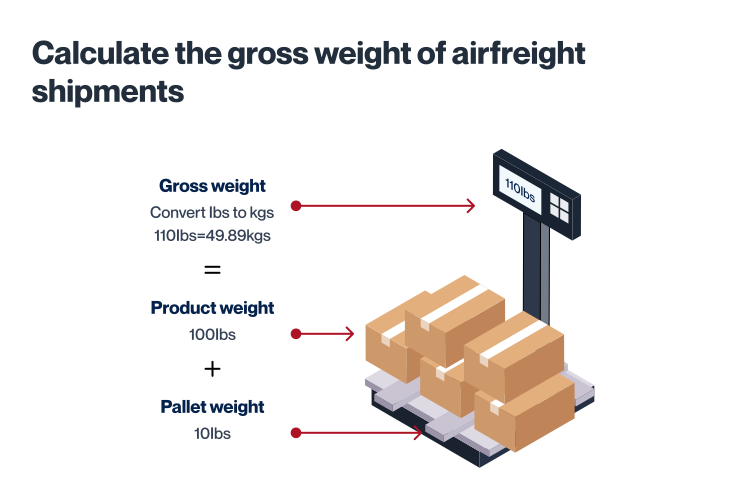
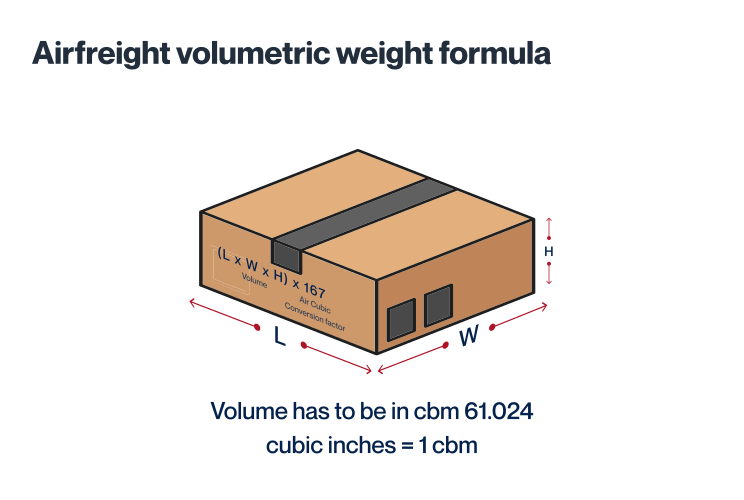
When you ship by air, the airline charges you based on the higher of gross weight or volumetric weight. Gross weight is what your cargo physically weighs on the scale. Volumetric weight reflects the space it occupies in the aircraft. Understanding volumetric weight vs gross weight is essential if you want accurate budgeting and no billing surprises.

  • Gross weight: Total weight including goods, packaging, and pallets.
  • Volumetric weight: Theoretical weight based on volume.
  • Chargeable weight: The higher value between gross and volumetric weight.

How to calculate:
Air cargo formula = (Length × Width × Height in cm) ÷ 6000
Express formula = (Length × Width × Height in cm) ÷ 5000

Example, if your shipment measures 100 cm × 80 cm × 60 cm, the volume is 480,000 cubic cm. For standard air cargo, 480,000 ÷ 6000 = 80 kg. For express, 480,000 ÷ 5000 = 96 kg. If your real gross weight is 75 kg, you will be billed on 80 kg or 96 kg depending on the service.

The most common mistake we see is underestimating box size or compressing cartons after measurement. That can trigger post-shipment reweigh charges. Always confirm your chargeable weight calculation before you validate your booking.


Door to door between Vietnam and Iraq


Navigating the intricate world of international shipping? Door to door services may be your answer – a seamless way of transporting goods from Vietnam to Iraq, entrusting the entire process to one provider. From its convenience to streamlined logistics management, the benefits are undeniable. Ready for a deep dive into door to door shipping and why it could be your best bet? Let’s dive in!


Overview – Door to Door


Shipping from Vietnam to Iraq can be a maze-like endeavor, wrought with tangled cross-border regulations and logistical hurdles. And that’s where our door-to-door shipping offering steps in – a stress-free, comprehensive service that your peers have made the most sought-after solution by FNM Vietnam. Leverage this package to bypass administrative headaches, secure timely customs clearance, and ensure safe delivery. However, it’s key to understand that your control over transit times might diminish and prices could be higher than port-to-port options. But, for swift, hands-off shipping, door-to-door service is worth every penny. Let us take on the complexities and you focus on what you do best – growing your business.


Why should I use a Door to Door service between Vietnam and Iraq?


Ever wondered if there was a shipping version of an all-inclusive resort vacation? Meet door-to-door service when shipping from Vietnam to Iraq! Here are five reasons why it’s the way to go.


1. Say Goodbye to Stress: Door-to-door service takes the worry out of the equation. Your goods are picked up and delivered directly to the specified locations, meaning you can strike ‘transport logistics’ off your to-do list.


2. Timeliness is Key: Urgent shipment? No problem! A committed schedule ensures your cargo reaches Iraq right on time, avoiding potential snags that can slow down transactions.


3. Wide-eyed Care for Complex Cargo: Special cargo requires special care. Door-to-door service providers are equipped with the knowledge and facilities to manage complex freight. Whether it’s oversized equipment or perishable goods, rest assured they’ve got a handle on it.


4. Convenience is King: Simplifying logistics by combining all steps into one provider, door-to-door service saves time and effort. No more juggling between different carriers or worrying about miscommunication mishaps!


5. Trucking all the Way: The service doesn’t stop at the port – it ensures your shipment is trucked safely to its final destination. It’s the complete package, from origin to recipient!


Everything about door-to-door shipping spells out a smooth and simplified logistics experience. After all, who doesn’t love a good upgrade to VIP treatment?


FNM Vietnam – Door to Door specialist between Vietnam and Iraq


Experience a stress-free shipping journey like never before! FNM Vietnam efficiently handles every aspect of your Door to Door shipment from Vietnam to Iraq. From packing to transport, customs to delivery, and all shipping methods, we’ve got it covered! Our expertise ensures a smooth experience, leaving you worry-free. Plus, with a dedicated Account Executive at your service, you’re always in the know. Interested? Get a free estimate in less than 24 hours, or directly consult with our experts anytime – all on us. Dive into the world of hassle-free international shipping with FNM Vietnam today!


Customs clearance in Iraq for goods imported from Vietnam

When you handle customs clearance in Iraq for Vietnamese goods, you are not just ticking a formality. You are deciding your total landed cost, your cargo release timing, and who carries legal responsibility as the Importer of Record. On this Vietnam–Iraq lane, paperwork accuracy directly impacts whether your container moves out of the port or starts generating demurrage. We coordinate the full customs declaration process Iraq side, including broker liaison and document validation, so you are not guessing at the last minute.

You will quickly notice that most delays do not come from transport, but from mismatched HS code classification Vietnam Iraq, incomplete import customs documentation Vietnam Iraq, or wrong valuation under the CIF value for customs. These are the typical common customs issues when importing to Iraq that create inspections and storage costs. Let us walk you through the logic so you can calculate properly and avoid predictable mistakes.

How to calculate duties & taxes when importing from Vietnam to Iraq?

To understand how to calculate import duty Vietnam to Iraq, you need five core inputs, the country of origin determination, the correct HS code, the customs value calculation method, the applicable import tariff Iraq, and any additional duties and taxes on imports to Iraq. If one of these is wrong, your estimate will be wrong. It is that simple.

You should also know that the amount you estimate before shipment can differ from what customs finally assess. Small differences in freight allocation, insurance, or invoice structure can change the taxable base. This is where cheap quotes become misleading, they ignore valuation details and leave you exposed at clearance. The first thing we always tell importers is to structure the calculation before the cargo sails.

Step 0 – Quick checks before you calculate

Before you even open a tariff table, confirm three things:

  • Importer of Record, who is legally responsible in Iraq and whose name appears on the declaration.
  • Incoterm, whether you ship under FOB, CIF, or DDP, because this decides who controls clearance and who pays local charges.
  • Low-value threshold, whether your shipment qualifies for a simplified or expedited path instead of a full formal entry.

These three checkpoints define your risk exposure before you calculate a single dollar.

Step 1 – Identify the Country of Origin

Your country of origin determination directly affects your import tariff Iraq outcome and whether you can claim any preferential tariff treatment. Iraqi customs will expect consistent proof, often through a valid certificate of origin CO aligned with your commercial invoice.

If origin is unclear or poorly documented, you increase your customs audit risk Iraq and inspection probability. You must not confuse origin with shipping country. Goods shipped from Vietnam are not automatically Vietnamese in origin if they were manufactured elsewhere.

Step 2 – Find the HS Code of your product

Your HS code drives the duty rate, inspection profile, and whether your goods fall under restricted and prohibited goods Iraq categories. It is the backbone of HS code classification Vietnam Iraq and one of the first fields Iraqi customs review.

You can start with a structured harmonized system code lookup by product description, materials, and function. Then compare with your supplier’s classification and past export documents. From experience, you should always document why you selected a specific heading, not just copy a code blindly.

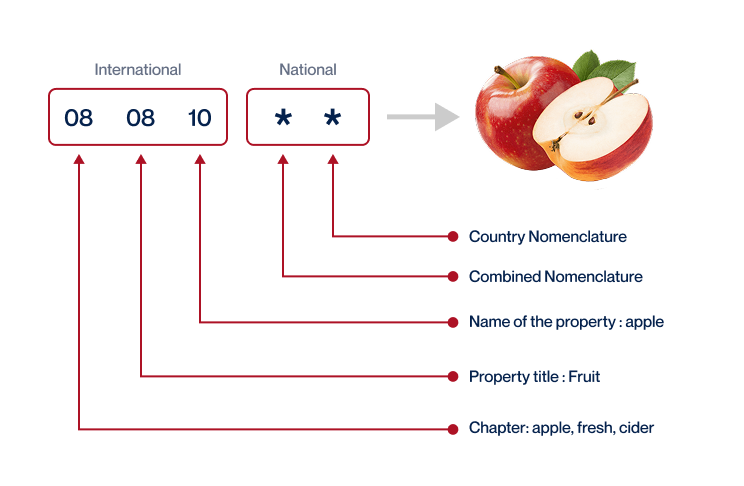
If your HS code is wrong, you risk reassessment, fines, or a customs inspection process that slows your release. Here is the key concept, classification defines taxation. Here’s an infographic showing you how to read an HS code.

Step 3 – Calculate the Customs Value

In most cases, Iraq applies a transaction value approach based on the CIF value for customs. That means Cost + Insurance + Freight form your starting taxable base. This is the standard customs value calculation method you will use unless customs reject the declared transaction value.

For example, if your goods cost 20,000 USD, freight is 2,000 USD, and insurance is 500 USD, your customs value becomes 22,500 USD. If you ship under FOB, you must add main freight and insurance yourself. If you ship under CIF, they are usually already embedded in the invoice.

You also need to check assists, special packing, commissions, or royalties. If they relate to the imported goods, they may be added to the customs value. This is where many importers underestimate the base and face corrections during the customs declaration process Iraq.

Step 4 – Figure out the applicable Import Tariff

An import tariff Iraq is the duty rate applied to your goods based on their HS code and origin. It is calculated as a percentage of your customs value.

You can follow a simple method:

  1. Open the official Iraqi customs reference or confirm with your customs broker in Iraq.
  2. Enter or provide the correct HS code and origin, Vietnam in this case.
  3. Read the applicable duty rate and verify if additional measures apply.

When reviewing the result, check:
Standard duty rate
Additional surcharges
• Any note linked to restricted goods
• Whether special approval or import license requirements Iraq apply

If your customs value is 22,500 USD and the duty rate is 10%, then your duty would be 2,250 USD. This is a basic example, actual rates depend on classification and current regulations. On this route, documentation alignment between Vietnam export papers and Iraqi declaration is critical. We usually validate the tariff position before cargo departure to avoid surprises.

Step 5 – Consider other Import Duties and Taxes

Beyond customs duty, you must assess VAT or equivalent consumption taxes applied on imports. These are part of the broader duties and taxes on imports to Iraq and are calculated on a base that often includes customs value + duty.

For example, if your customs value is 22,500 USD and duty is 2,250 USD, and VAT applies at a given rate, the VAT base would generally be 24,750 USD. Even a small rate difference changes your final landed cost significantly.

You should also check anti-dumping measures, excise taxes on specific goods, and any sector-based restrictions. If your goods fall under restricted and prohibited goods Iraq, clearance can stop completely until additional approvals are presented.

Before shipment, you should:
• Confirm full commercial invoice requirements
• Prepare a compliant packing list for customs clearance
• Ensure correct bill of lading for customs or air waybill for customs purposes
• Validate if special permits are needed

Step 6 – Calculate the Customs Duties

The core formulas are straightforward:
Duty = Customs Value × Duty Rate
VAT = Tax Base × VAT Rate

If your customs value is 22,500 USD and duty rate is 10%, your duty equals 2,250 USD. If VAT applies on 24,750 USD at a given rate, you multiply that base accordingly to get the VAT amount.

What happens next depends on your structure. The Importer of Record pays duties either before or at the time of cargo release, depending on the local procedure and your broker setup. If payment is delayed or documents are inconsistent, the cargo release process after customs stops, and storage charges start accumulating.

Step-by-step: how customs clearance usually works on this route

On the Vietnam to Iraq corridor, customs clearance is document-driven and timing-sensitive. The operational flow changes depending on port of entry, whether you ship by sea or air, and your chosen Incoterm. Here is how the process usually unfolds when we coordinate it.

  1. You confirm shipment details and send us draft commercial invoice, packing list, and transport document.
  2. We validate HS code, origin, and valuation logic before arrival.
  3. Your cargo arrives at the Iraqi port or airport and is registered in the customs system.
  4. The broker files the customs declaration process Iraq with all supporting documents.
  5. Customs review the file and decide on green channel release or physical inspection.
  6. If inspection is triggered, officers compare goods against declared HS code and value, this is a moment where mistakes multiply costs.
  7. Duties and taxes are assessed and paid by the Importer of Record.
  8. After payment confirmation, customs authorize the cargo release process after customs.
  9. The container or air cargo is collected and moved to final delivery.

You will notice that most delays occur during document review or inspection allocation, not transport. That is why we treat customs compliance Vietnam Iraq trade as a preparation exercise before departure, not a reaction after arrival.

Does FNM Vietnam charge customs fees?

We act as your coordination partner and work with a licensed customs broker in Iraq to handle the clearance. Our service fee covers document review, declaration follow-up, and communication with authorities. We do not collect government duties and taxes on imports to Iraq as revenue, those are official payments made on behalf of the Importer of Record.

You should clearly separate brokerage or handling fees from statutory charges. Mixing the two creates confusion in your cost structure. When we prepare your estimate, we break down service fees and projected duties so you understand exactly what goes to customs and what covers operational support.


Contact Details for Customs Authorities


Vietnam Customs

Vietnam customs

Official name: General Department of Vietnam Customs Official website: http://www.customs.gov.vn/

Iraq Customs

Required documents for customs clearance in Iraq

When you ship from Vietnam to Iraq, customs clearance usually depends less on the border itself and more on whether your documents tell the exact same story. The shipper, consignee, cargo description, values, and quantities must match across every paper. Most holds come from inconsistencies or missing proof, not from random inspections. Think of this section as your customs document checklist, built to help you avoid the classic document mismatch delay that can freeze your cargo at port.

Bill of Lading or Air Waybill

The Bill of Lading for sea freight or Air Waybill for air freight is the transport contract issued by your carrier. Iraqi customs and your local broker use it to confirm ownership, routing, and who acts as the consignee and Importer of Record. Example: your B/L shows a container loaded in Ho Chi Minh City and discharged in Umm Qasr, with your Iraqi company listed exactly as on the Commercial Invoice. A common mistake is spelling differences between the B/L and invoice, which can trigger a clearance hold for identity verification.

Packing List

The Packing List details what is physically inside each package, including number of cartons, gross weight, and net weight. Iraqi customs officers use it to compare declared data with the physical inspection and to validate duty calculations based on quantity and weight. Example: you ship ceramic tiles from Hanoi and clearly break down cartons per pallet with matching weights. A frequent issue is rounding weights differently from the Bill of Lading, which raises suspicion and can lead to additional inspection.

Commercial Invoice

The Commercial Invoice is your official proof of sale showing unit price, total value, currency, Incoterm, and HS code. Iraqi customs rely on it to assess duties and taxes and to verify whether the declared value reflects the real transaction. Example: if you sell industrial pumps under CIF Umm Qasr, your invoice must clearly state freight and insurance inclusion. The most common mistake is vague product descriptions like “machinery parts,” which can trigger reclassification and a value reassessment risk.

Certificate of Origin

The Certificate of Origin confirms that your goods were manufactured in Vietnam. Iraqi authorities request it to verify origin and apply the correct customs duty rate. Example: you export wooden furniture produced in Binh Duong, and the certificate clearly states Vietnam as the country of origin with matching invoice references. A typical mistake is submitting a certificate that references a different invoice number, which can delay endorsement and clearance.

Get Started with FNM Vietnam

Customs clearance can be a challenging task, but you’re not alone. At FNM Vietnam, we handle every step, ensuring your goods move smoothly from Vietnam to Iraq. Frustrated with procedures and paperwork? Don’t be. Give us a call. Within 24 hours, you’ll receive a no-obligation, free quote, taking you one step closer to hassle-free shipping. Let’s start your shipping journey today!

Prohibited and restricted items when importing into Iraq

Before you load anything in Vietnam, you need to understand one key distinction. Restricted products can enter Iraq, but only if you meet specific licensing, testing, or certification conditions. Prohibited products should not enter at all, and if you try, you risk seizure or forced re-export. This is where most first-time importers get caught off guard. Knowing the Iraqi import control scope in advance helps you avoid a costly re-export order.

Restricted products

  • Food and beverages, require health certificates and shelf-life compliance.
  • Pharmaceuticals and medical devices, subject to prior registration and approval.
  • Electrical equipment, may require conformity assessment and labeling checks.
  • Cosmetics and personal care products, ingredient review and product registration often required.
  • Telecommunication devices, type approval for certain wireless functions.
  • Chemicals and industrial inputs, safety data sheets and hazard classification review.

Prohibited products

  • Narcotics and illegal drugs, strictly banned with criminal penalties.
  • Counterfeit goods, intellectual property enforcement applies.
  • Pornographic materials, prohibited under local regulations.
  • Certain weapons and military equipment, restricted to authorized entities only.

If you are unsure whether your product falls into a gray area, you should confirm classification and admissibility with your Iraqi broker before shipment. From experience, once a container is on the water, your leverage disappears quickly.

Trade agreements and preferential duties for imports from Vietnam to Iraq

When you import from Vietnam into Iraq, you currently operate under standard Most Favored Nation tariffs rather than a dedicated bilateral free trade agreement. In practical terms, you should not assume automatic preferential tariff treatment simply because the goods are Vietnamese. Your duty rate depends primarily on the HS code classification and Iraqi customs valuation rules.

This means your first strategic move is correct tariff classification before you sign your purchase contract. A small HS code difference can materially change your landed cost, especially for industrial equipment or consumer goods. You should also check whether your product category is subject to additional import controls or temporary measures, because ignoring this can expose you to a retroactive duty claim. In this corridor, your real advantage comes from preparation, not from a trade agreement shortcut.

Your Next Step with FNM Vietnam

Overwhelmed by the complexities of the Vietnam-Iraq shipping route? With rules ever-changing, the cargo process can be daunting. Let FNM Vietnam shoulder your burden! Our seasoned team skillfully oversee transport, customs, and administrative procedures, ensuring smooth and efficient delivery. Your shipping experience should not be complicated. Reach out now – let’s help simplify your global business.
More than shipping

Additional logistics services

1 Warehousing
1

Warehousing

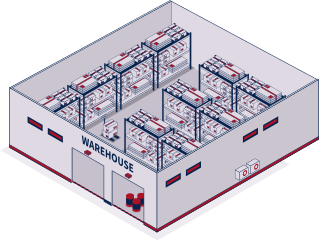
Spotting the right warehousing solution in Vietnam and Iraq can be like finding a needle in a haystack. Throw in factors like temperature control for your perishable items, and it can feel impossible. But don't worry, we've mastered this logistics maze. Curious? Head over to our dedicated page: Warehousing for more insights and solutions.
img
2 Packing
2

Packing

Proper packaging plays a critical role in shipping goods from Vietnam to Iraq, ensuring your products arrive intact and secure. Whether it's fragile ceramics or robust car parts, a reliable agent can offer tailored packaging and repackaging support - think bubble wrap for your delicate artwork or wooden crates for your heavy machinery. Ready for hassle-free transport? More info on our dedicated page: Freight Packaging.

img
3 Transport Insurance
3

Transport Insurance

When shipping goods, don’t confuse Cargo Insurance with Fire Insurance - the scope varies. Cargo insurance covers many transportation risks, not just fire, ensuring your freight’s safety, even on the Vietnam to Iraq route. Picture it as a seatbelt for your cargo; whether it's typhoon havoc at sea or an unexpected warehouse accident, it's got you covered. Craving more control over your precious shipment? More info on our dedicated page: Cargo Insurance.
img
4 Household goods shipping
4

Household goods shipping

Shipping your personal belongings from Vietnam to Iraq? Leave bulky, fragile items to us! Tricky vintage mirror or oversized sculpture, we handle it all with professional care and flexibility. Picture this: Your grandmother's antique clock securely transported, no hitches. Sounds good? More info on our dedicated page: Shipping Personal Belongings.
img
5 Procurement in Thailand
5

Procurement in Thailand

Struggling to find reliable suppliers in Asia or East Europe? Leave the heavy lifting to FNM Vietnam. We bridge language gaps, scope out the best manufacturers, and manage every step of your procurement process. Imagine the convenience of having your sourcing needs handled by pros! More info on our dedicated page: Sourcing services

img
6 Quality Control
6

Quality Control

In shipping goods from Vietnam to Iraq, thorough quality inspections help avoid customs hang-ups. They ensure your goods - whether Vietnamese ceramics or custom-made textiles - adhere to Iraq's import regulations. Picture this: A tiny mismatch in your batch of time-sensitive deliveries could cost you! Skirting these risks is simple: By opting for our Quality Control service, your consignments always meet the required standards. Check it out for yourself on our dedicated page: Quality Inspection.

img
7 Conformité des produits aux normes
7

Conformité des produits aux normes


Sending your goods from one country to another? There's more than just transportation to think about! Compliance with local regulations is a must to avoid fines or legal hiccups. Our Product Compliance Services step in here, managing all requisite tests in our laboratory for that much-needed certification. Rest assured, your product will sail smoothly through destination regulations.
img