In short ⚡
Optimize shipping documents by standardizing data, aligning all key forms, and digitizing your workflow to avoid mismatches that trigger customs delays and extra costs. Focus on consistency between commercial invoice, packing list, bill of lading, and compliance certificates, use clear Incoterms and HS codes, and validate everything with your freight forwarder and customs broker before departure.In this article, you will find detailed guidance on core import/export documents, commercial invoices and packing lists, Vietnam-specific requirements, SLI best practices, and how digitization, templates, and checklists reduce errors and speed up international delivery.
We hope you’ll find this article genuinely useful, but remember, if you ever feel lost at any step, whether it’s finding a supplier, validating quality, managing international shipping or customs, FNM Vietnam can handle it all for you!
Why optimized shipping documents save you time, money, and stress
If you want to optimize shipping documents, you’re really buying three things, speed, accuracy, control.
You’ve probably dealt with a shipment that “looked fine” until customs asked one question, then everything froze, storage charges started ticking, and your buyer stopped replying fast.
From our side in freight forwarding operations, most delays don’t come from the ocean freight or air freight leg itself, they come from shipping documentation that doesn’t match across files.
Here’s a real scenario we’ve seen: a buyer in Ho Chi Minh City needed urgent components, the trucking was booked, the containerization plan was solid, but one line on the invoice didn’t match the packing list quantity.
Customs flagged it, the cargo handling team held the pallet, and the lead time went from 2 days to 9.
This is why optimized international shipping documents hit your P&L directly.
To make the impact tangible, here are the common “hidden costs” that show up when shipping paperwork isn’t tight.
- Demurrage and detention when port handling can’t release the container
- Extra inspections triggered by inconsistent descriptions or HS code ambiguity
- Rework fees from customs brokerage for amendments and re-submissions
- Lost priority in warehouse slotting or cross docking when documents arrive late
- Customer penalties when delivery windows or distribution center appointments are missed
One operational detail you’ll notice fast: the more you use freight consolidation or multimodal transport, the less tolerance you get for document errors.
Every handoff multiplies the chance of mismatch between your cargo manifest, freight invoice, and export documents.
To keep your process predictable, use this quick checklist before documents go out to your forwarder and broker.
- One “master data” source for shipper/consignee names and addresses, copied consistently
- Same product naming logic on invoice, packing list, and bill of lading
- HS code and tariff classification validated before booking, not after arrival
- Incoterms stated clearly with named place (not just “FOB” or “CIF” alone)
- Weights and packages aligned with what the warehouse actually loaded
DocShipper Alert
Let our experts audit your shipping documents before departure and eliminate costly delays, inspections, and penalties.
Key international shipping documents you must get right
To optimize shipping documents, you don’t need more paperwork, you need the right import documents and export documents to agree with each other.
In trade compliance terms, customs doesn’t “read” your shipment the way you do, they verify consistency across fields and compare them to risk rules.
That’s exactly why the World Customs Organization (WCO) keeps pushing data quality and standardization as a core enabler of faster clearance.
We’ve seen importers do everything right on transport planning, then lose days because one document used “pieces” while another used “cartons”.
Same goods, same shipment tracking number, totally different story on paper.
Before we go into the details, here’s a simple comparison table you can use to prioritize what matters most in shipping paperwork.
| Document | What it proves | Where errors hurt most | Typical red flag |
| Commercial invoice | Value, parties, Incoterms, item details | Duty and taxes, customs valuation, clearance speed | Vague description or inconsistent currency |
| Packing list | What’s physically in the shipment | Inspections, cargo handling, warehousing, last mile delivery | Gross/net weights don’t add up |
| Bill of lading / Air waybill | Contract of carriage, title or receipt | Release, port handling, claims, freight insurance | Consignee or notify party mismatch |
| Certificate of origin / permits | Origin and eligibility for tariffs | Preferential duty rates, regulatory holds | Wrong origin statement or missing stamp |
Core export and import documents (invoice, packing list, bills of lading)
Last month we handled a shipment where the supplier issued a clean invoice and packing list, but the bill of lading showed an old consignee name from a previous order.
Everything else was perfect, yet the carrier refused release until a correction was approved, and the container sat at the terminal.
If you want to optimize shipping documents, start with the “core three” because they drive 80% of clearance and delivery outcomes in freight forwarding.
Use this workflow to keep your core shipping documentation consistent from booking to delivery.
Step-by-step workflow:
- Step 1: Lock your master data, shipper, consignee, notify party, tax IDs, addresses
- Step 2: Confirm product lines, HS code, unit price, currency, Incoterms, and total value
- Step 3: Build the packing list from the warehouse pick and pack data, not from memory
- Step 4: Send a single “shipping instructions” file to your freight forwarder to create the BL/AWB draft
- Step 5: Cross-check BL/AWB draft against invoice and packing list, then approve once
You’ll also want to decide early whether you’re shipping ocean freight (sea freight), air freight, or road transport, because the carrier document format changes.
But your data standards shouldn’t change at all.
Compliance documents for customs and origin
Here’s a direct tip: treat compliance files like a “yes/no gate”, if one is missing or inconsistent, your cargo doesn’t move, no matter how good the trucking and warehousing plan looks.
To optimize shipping documents for customs clearance, focus on the documents that prove trade compliance and preferential treatment.
In practice, these are the usual suspects in international shipping.
- Certificate of Origin for tariff benefits and origin verification
- Import permits or product registrations for controlled goods
- Inspection certificates when required by the destination authority
- Insurance certificate when your Incoterms or buyer contract demands it
We’ve seen a painful case: a buyer negotiated “better margins” by pushing the supplier to declare a different product name to “help taxes”.
Customs didn’t see it as clever negotiation, they saw it as a classification risk, and the shipment went straight to inspection.
To keep your import export file audit-proof, run this short checklist before cargo departure.
- Origin claim matches reality, factory location, transformation, and supplier declarations
- HS code supports the origin rule under the trade agreement you’re using
- Names and addresses match across certificates and the commercial invoice
- Permit validity dates cover the ETA, not just the ETD
Vietnam-specific shipping and export paperwork
What changes when your lane involves Vietnam, and why do vietnam shipping documents trip people up so often?
Because you’re usually balancing strict customs data requirements with fast-moving supplier operations, especially in electronics, textiles, and consumer goods.
To optimize shipping documents for Vietnam lanes, you’ll want your vietnam export documents prepared early, then validated against what actually ships.
We’ve handled shipments where the factory updated carton counts after final QC, but nobody updated the packing list.
Vietnam customs noticed the weight variance, the file got questioned, and the clearance clock slowed down immediately.
Here’s a practical list of Vietnam-specific items you should verify with your broker and forwarder before cargo reaches the port or airport.
- Consignee tax code and importer details exactly as registered
- HS code and product description aligned with local tariff practice and past entries
- Correct invoice and packing list formats including units of measure used locally
- Supporting certificates if your product falls under specialized management
If you’re coordinating clearance locally, a customs clearance service can validate your data before arrival so you avoid last-minute amendments.
And if you’re building a repeat lane, standardize everything with your freight forwarding partner so each new booking starts from a proven template.
Optimize your commercial invoice for smooth customs clearance
If there’s one document to get obsessively right when you optimize shipping documents, it’s the commercial invoice.
Customs uses it to assess customs valuation, duty and taxes, tariff classification consistency, and even risk scoring.
This is the moment most importers get stuck, because the invoice often comes from sales, while customs clearance depends on compliance-level detail.
We’ve seen a supplier send a “proforma-style” invoice as the final invoice, missing Incoterms and the named place.
The goods arrived, the broker couldn’t confirm who pays what, and the release stalled while emails bounced across time zones.
DocShipper Advice
Standardize it with our compliance-focused template to avoid valuation disputes and release delays.
Essential data to include for international and Vietnam shipments
Bold truth: if your invoice lacks key fields, customs will fill the gaps with questions, and questions always cost time.
To optimize shipping documents, you need an invoice that reads like a clear customs declaration support file, not like a basic sales receipt.
Use this checklist as your minimum commercial invoice standard for international shipping and Vietnam lanes.
- Seller and buyer details, legal names, full addresses, tax IDs where applicable
- Invoice number and date, plus purchase order reference
- Incoterms with named place, for example CIF Hai Phong, FCA Shenzhen, DAP Hanoi
- Currency and payment terms that match the contract
- Item-level data, product name, model, material, intended use if relevant
- HS code per line item when possible, consistent with your customs brokerage approach
- Quantity and unit aligned with the packing list
- Unit price and line total, with discounts shown transparently
- Total invoice value and any freight or insurance charges if they’re part of the transaction value
- Country of origin per item where applicable
One insider detail from cargo operations: if your invoice says “sets” but your packing list says “pcs”, expect a physical check.
Customs officers and warehouses both hate unit ambiguity, because it breaks reconciliation.
How to describe goods, values, and Incoterms clearly
Ever seen an invoice line that says “spare parts” or “samples” and nothing else?
That’s exactly how you invite a hold, because it blocks tariff classification and makes valuation look suspicious.
To optimize shipping documents, your descriptions must be specific enough for HS code logic, but simple enough that nobody misreads them during cargo handling.
Use this structure to write item descriptions that survive customs review.
- What it is, for example “Aluminum heatsink”
- Key spec, dimensions, wattage, grade, composition
- Use case, “for LED lighting assembly”
- Model or SKU, consistent with your procurement records
- Origin, where it was manufactured
For values, keep it boring and defensible.
If you add assists, tooling charges, or bundled services, show them clearly so customs valuation doesn’t look like a guessing game.
Incoterms is where misunderstandings explode, especially when you mix sea freight plus local trucking.
State the rule and the named place, then align it with your freight quote and who pays port handling, insurance, and last mile delivery.
Common invoice mistakes that delay export and import
We’ve watched a shipment miss a vessel cut-off because the supplier wrote one total value on the invoice, then the bank transfer showed another amount due to “fees included”.
The broker flagged the mismatch, and suddenly everyone was rewriting documents under pressure.
To optimize shipping documents, you’ll want to eliminate these repeat offenders before they reach customs.
Here are the invoice issues that most often trigger delays in export and import clearance.
- Unclear Incoterms or missing named place
- Generic product descriptions that don’t support HS code assignment
- Inconsistent quantities versus packing list or bill of lading
- Wrong consignee details, especially legal entity names and addresses
- Currency confusion, mixed currencies across lines or totals
- Missing origin info when preferences or controls apply
If you’re tempted to “quick-fix” wording with a tool like a word changer, be careful.
Changing phrasing can accidentally change meaning, and meaning is what customs enforces.
Improve your packing list for accurate and visible shipments
To optimize shipping documents, your packing list needs to mirror what’s on the pallet, not what was planned last week.
This document drives inspections, warehouse receiving, shipment tracking milestones, and even how your carrier allocates space in freight consolidation.
We’ve seen importers lose two days because the packing list didn’t show carton dimensions.
The warehouse couldn’t plan storage, the cross docking slot was missed, and last mile delivery got pushed.
DocShipper Advice
Let us verify your quantities, weights, and dimensions before cargo departure to avoid costly surprises.
Structuring quantities, weights, and package details
Quick tip: build your packing list from the physical packing output, then lock it, instead of rebuilding it from the invoice.
To optimize shipping documents, you want packaging details that help both customs and logistics teams reconcile fast.
Use this simple structure to make your packing list instantly usable at origin and destination.
- Package count, cartons, pallets, crates
- Marks and numbers that match labels on the cargo
- Net weight and gross weight per package and totals
- Dimensions per package for space planning
- Item mapping, which SKUs are in which cartons or pallets
If you’re shipping by air freight, accurate weights protect you from re-weigh charges.
For ocean freight, the same discipline reduces disputes at port handling and during container stuffing checks.
Matching packing list and invoice to avoid inspection issues
Why do customs officers open cartons even when you “know” everything is correct?
Because mismatches between invoice and packing list are one of the fastest signals for inspection selection.
To optimize shipping documents, you need a controlled reconciliation step before documents go to your broker.
We’ve handled a case where the invoice showed 1,000 units, but the packing list showed 100 cartons of 12 units.
That math should’ve worked, but two cartons were short-packed, and customs caught it faster than the buyer did.
Use this mini workflow to reconcile before departure and reduce inspections.
- Step 1: Confirm each invoice line maps to a carton range or pallet ID
- Step 2: Verify totals, quantities, net, gross, and CBM all reconcile
- Step 3: Align units of measure, pcs, sets, kg, meters
- Step 4: Ensure the bill of lading package count equals the packing list total packages
Practical tips for multi-parcel and consolidated shipments
Here’s the thing: multi-parcel shipments fail on visibility, not on transport.
Once cartons split across flights, trucks, or consolidated containers, your shipping paperwork must make it impossible to misplace a piece.
To optimize shipping documents in freight consolidation, you should design your packing list for scanning and exception handling.
We’ve seen consolidated shipments where one carton arrived without clear marks, and the destination warehouse parked it in “unknown” inventory.
The goods were technically delivered, but your team spent days chasing a box that was sitting 20 meters away.
To prevent that, apply these operational tips on every multi-parcel move.
- Use carton IDs like 1/48, 2/48, and repeat them on labels and packing list
- Add a summary block with total cartons, total net/gross, total CBM
- List carton ranges per SKU, so receivers can spot missing pieces instantly
- Flag special handling, fragile, keep dry, do not stack, as short notes
Looking for a Reliable Shipping & Sourcing Partner?


DocShipper Platform
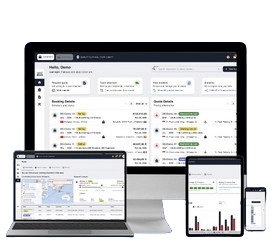
One platform. Your entire supply chain
Sourcing, freight, customs & documents — all centralised, all visible, 24/7.
Make your shipper’s letter of instruction (SLI) easy to follow
Your shipper’s letter of instruction is one of the most underestimated tools when you want to optimize shipping documents. Yet this is the document that tells your freight forwarder exactly how to handle your cargo, who pays what, and how customs formalities should be managed.
If you’ve ever felt that your shipment “didn’t move as instructed,” this is often where things went wrong. The SLI is not a formality, it’s your operational playbook.
At DocShipper, we’ve seen containers delayed simply because the SLI contradicted the commercial invoice regarding Incoterms. One line difference. Three days of back-and-forth. You can avoid that.
DocShipper Info
Align it with your invoice and Incoterms so your forwarder executes exactly as planned, without delays.
What your freight forwarder needs to see in the SLI
We once handled a shipment from Vietnam to Germany where the exporter forgot to specify who was responsible for export customs clearance in the SLI. The goods sat at the port because the forwarder could not legally file the declaration.
When you optimize shipping documents, your SLI must clearly provide operational instructions, not assumptions.
Here’s what your forwarder expects to see immediately:
- Full shipper and consignee details, matching invoice and bill of lading
- Incoterm and named place, strictly aligned with ICC Incoterms rules
- Mode of transport, sea, air, rail, or multimodal
- Customs declaration responsibility, export and import
- Insurance instructions, if applicable
- Original documents requirements, number of B/L originals, courier instructions
Before sending your SLI, use this quick internal checklist.
- Are all company names identical across documents?
- Does the Incoterm include a specific city or port?
- Is the HS code consistent with the commercial invoice?
- Have you clarified freight collect or prepaid?
- Are contact persons clearly identified?
If even one of these is unclear, your shipment may stall. This is where most exporters get stuck.
Writing clear, simple handling and packaging instructions
Be direct. Your SLI is not a legal essay, it’s an operational instruction sheet.
When you optimize shipping documents, clarity reduces interpretation risk. Vague phrases like “handle with care” don’t mean much at a busy terminal.
Instead, specify measurable and verifiable requirements:
- Temperature range, for example 2 to 8°C
- Stacking limitations, do not stack more than 2 pallets high
- Humidity protection, use desiccant bags inside each carton
- Shock sensitivity, fragile equipment, no tilt
According to IATA cargo handling standards, precise written instructions significantly reduce mishandling risks in air freight.
Here’s a simple structure you can follow in your SLI:
Step 1: Identify product sensitivity. Step 2: Translate it into operational constraints. Step 3: Confirm feasibility with your forwarder before shipping. Step 4: Align packaging marks with written instructions.
From experience, when written instructions match visible carton markings, customs inspections go faster because officers immediately understand the cargo profile.
Using templates and digital tools to standardize SLIs
Why do similar shipments often generate different SLIs in your company?
Inconsistent formatting creates confusion. If you truly want to optimize shipping documents, standardization is your best ally.
We recommend structuring your SLI template around fixed sections:
| Section | Purpose |
| Shipment Identification | PO number, invoice reference, shipment date |
| Commercial Terms | Incoterm, payment of freight, insurance |
| Customs Instructions | Exporter of record, broker details |
| Transport Instructions | Mode, routing preferences |
| Special Handling | Temperature, fragile, hazardous notes |
You can integrate this into your ERP or use controlled PDF templates to avoid manual rewriting.
At DocShipper, we often help clients align their SLI template with their commercial invoice structure so data flows automatically. That’s when paperwork stops being a burden and becomes a system.
Digitize and standardize shipping paperwork to reduce errors
If you want to sustainably optimize shipping documents, digitization is not optional anymore. Manual processes are where typos, mismatches, and outdated versions creep in.
You’ve probably dealt with situations where customs rejected a document because the scanned version was unreadable. It happens more often than you think.
According to the World Customs Organization, digital documentation significantly improves clearance predictability and reduces administrative errors.
DocShipper Info
Digitize and standardize your shipping documents with structured templates and validation workflows for predictable, faster clearance.
Best practices for scanning, emailing, and storing documents
We once saw a shipment delayed in Ho Chi Minh City because the invoice scan cut off the signature. Customs required a new version, and the original signer was traveling.
When you optimize shipping documents, document quality matters as much as content.
Apply these operational rules:
- Scan at minimum 300 dpi resolution
- Save files in searchable PDF format
- Use standardized file naming, Invoice_PO123_2026.pdf
- Store in centralized cloud folders with version control
Keep file names short but structured. You’ll thank yourself during audits.
Using checklists and templates for repeat international shipments
Are you recreating documents from scratch for every shipment?
Repetition is where errors multiply. To truly optimize shipping documents, you need structured repetition, not improvisation.
Introduce a shipment validation checklist before each export.
- Invoice matches packing list quantities
- HS codes verified
- SLI aligned with Incoterms
- Consignee details confirmed
- Digital copies archived
This simple ritual reduces last-minute stress dramatically.
We’ve worked with importers shipping weekly from Vietnam who reduced customs queries by over 30 percent after implementing standardized templates and checklists.
Working efficiently with freight forwarders and customs brokers
Your forwarder is your operational partner, not just a transporter.
When you aim to optimize shipping documents, proactive communication makes all the difference.
Instead of sending documents at the last minute, share drafts early and ask for validation. Brokers often spot inconsistencies you may overlook, especially in regulated markets.
We recommend this collaboration workflow:
Step 1: Share draft invoice and SLI before cargo pickup. Step 2: Confirm HS code classification. Step 3: Validate Incoterm responsibility split. Step 4: Finalize documents before departure.
When this process becomes systematic, inspections feel routine rather than stressful.
Conclusion
If you want smoother international delivery, you must optimize shipping documents with discipline and structure. The SLI, digital processes, and standardized templates are not administrative extras, they are control tools.
You now have a practical framework to reduce delays, miscommunication, and unnecessary costs.
Let’s summarize the key takeaways.
- Make your SLI precise and consistent with invoice and Incoterms
- Write measurable handling instructions, avoid vague wording
- Standardize templates to eliminate inconsistencies
- Digitize and centralize documents with proper version control
- Collaborate early with forwarders and brokers to prevent customs issues
When you treat documentation as a strategic asset instead of paperwork, you gain speed, predictability, and peace of mind. And that’s exactly what international trade should feel like.
FAQ | How to optimize shipping documents for faster, error-free international delivery
Start by reducing the number of times you retype the same data. Build one master template in your ERP or a shared spreadsheet that holds shipper/consignee details, Incoterms, HS codes, and standard product descriptions. Then feed that into your invoice, packing list, and SLI instead of creating each document from scratch. This way you simplify your process, but still keep one single source of truth that all documents pull from, which dramatically cuts both workload and error risk.
Treat supplier paperwork as a draft, not a final version. Ask suppliers to send invoice and packing list samples before the first shipment, then give them a clear “house standard” you expect them to follow (mandatory fields, units of measure, HS code format, Incoterms wording). Before each export, your team should reconcile their draft with your standard, correct inconsistencies, and only then send it to your forwarder. Over a few shipments, this “feedback loop” trains suppliers and gives you consistent export files even when their internal systems differ.
Focus on what you can control: the data you provide and the checks you run before cargo moves. Share a short import “playbook” with your suppliers explaining exactly how consignee name, tax ID, HS codes, and origin must appear, and ask for draft documents before they book freight. On your side, have your broker validate HS codes and descriptions in advance, then push back on any invoice or packing list that doesn’t match. You can’t redesign the exporter’s forms, but you can ensure the content matches your customs strategy.
In real operations, shipping documentation is every file that can stop your cargo if it’s wrong or missing. That includes the core trio (invoice, packing list, BL/AWB), but also certificates of origin, permits, inspection reports, insurance certificates, and the SLI. Think of it as a single “story” told in different formats: who is involved, what is moving, from where to where, under which terms, and with which regulatory conditions. If any piece tells a different story, customs or the carrier will block the shipment, even if all the “main documents” exist.
With air freight, gaps and mismatches are punished much faster because transit times are short. To avoid delays, you should prepare documents at least one day before cargo handover, share drafts with your forwarder for pre‑validation, and make sure weights, dimensions, and package counts exactly match what will be tendered at the airport. For critical lanes, agree with your forwarder on a pre‑alert routine where they receive the full file before freight departs the shipper, so any issue is solved while the goods are still on the ground and before cut‑off time at the terminal.
The key is to correct once, cleanly, and through the right channel. As soon as you spot the error, inform your forwarder and customs broker with a short written summary of what’s wrong and what needs to change, then issue revised documents marked “amended” with the same reference numbers. Avoid sending multiple partial versions by email to different people; instead, have one updated set stored in a single shared folder or platform that everyone uses. This controlled approach reduces the risk that customs or the carrier act on conflicting versions and helps you justify the amendment trail if the file is audited.
Read more
Looking for more? Check out these articles.
Need Help with Logistics
or Sourcing in Vietnam ?
First, we secure the right products from the right suppliers at the right price by managing the sourcing process from start to finish. Then, we simplify your shipping experience - from pickup to final delivery - ensuring any product, anywhere, is delivered at highly competitive prices.


Fill the Form
Prefer email? Send us your inquiry, and we’ll get back to you as soon as possible.
Contact us