In short ⚡
Sourcing from Vietnam involves selecting suitable product categories, verifying factories, calculating total landed costs, and managing compliance, quality control, and logistics from supplier qualification through delivery. Treat Vietnam as a strategic supply-chain partner rather than simply a lower-cost manufacturing alternative. Key steps include:- Define product specifications, target volume, quality requirements, destination-market regulations, and target landed cost.
- Identify at least three qualified factories and verify their legal identity, production capacity, export experience, certifications, and subcontractors.
- Compare complete costs, including tooling, packaging, inland transport, inspections, duties, freight, and destination charges.
- Approve production-representative samples and use written specifications covering materials, tolerances, packaging, labelling, and acceptable defects.
- Confirm origin rules, product testing, documentation, Incoterms, and import requirements before production begins.
- Control production through factory audits, inspections, shipment-document checks, and backup suppliers or production routes.
Key topics include Vietnam’s sourcing advantages, suitable product categories, Vietnam-versus-China considerations, factory verification, compliance, quality control, landed costs, and export logistics.
We hope you’ll find this article genuinely useful, but remember, if you ever feel lost at any step, whether it’s finding a supplier, validating quality, managing international shipping or customs, FNM Vietnam can handle it all for you!
Why should you consider sourcing from Vietnam for global growth?
Sourcing from Vietnam gives you access to competitive production, expanding industrial capacity, and a practical way to reduce overdependence on one manufacturing country.
From experience, you’ll gain the best results when you treat Vietnam as a strategic supply-chain partner, not simply as a cheaper replacement for another origin.
Vietnam has built strong export capabilities across garments, footwear, furniture, electronics assembly, bags, household goods, and selected industrial components. You’ll notice fast that factory capability varies widely by region, production scale, and product complexity.
The World Trade Organization recognizes Vietnam as an increasingly important participant in global merchandise trade, which supports your search for export-ready suppliers and more diversified sourcing routes.
- Lower production costs: You may reduce labor-intensive manufacturing costs, particularly for apparel, footwear, furniture, and consumer goods.
- Trade access: You can benefit from Vietnam’s network of free trade agreements, provided your products meet the relevant origin and compliance rules.
- Supply-chain diversification: You can spread production across Vietnam, China, and other Asian hubs instead of relying on one country.
- Export experience: You’ll find many Vietnamese factories already familiar with international packaging, documentation, and buyer audits.
- Flexible production niches: You may find capable mid-sized factories for product categories that large suppliers in other markets no longer prioritize.
DocShipper Info
Explore your best-fit sourcing route with DocShipper
Lower production costs, trade access, and supply chain diversification
Sourcing products from Vietnam can lower your landed cost, but you need to compare the complete commercial picture rather than the factory quotation alone.
Your calculation should include tooling, packaging, inland transport, inspection, export documentation, ocean freight, duties, and destination charges. A low unit price can quickly lose its advantage when a supplier ships from a remote industrial area or requires expensive minimum order quantities.
You should also examine how a trade agreement affects your specific product. Preferential duty treatment often depends on the product’s tariff classification, regional value content, and proof of origin, not merely on the fact that the goods were assembled in Vietnam.
Here’s the thing: diversification only works when you qualify a second source before a disruption occurs. Waiting until your existing supplier misses a shipment puts you in a weak negotiating position.
| Factor | What you should check | Why it matters |
| Factory price | Unit price, tooling, molds, and payment terms | It shows your initial purchasing cost, not your final landed cost |
| Trade access | Applicable agreement, tariff code, and origin documents | You may reduce import duty if your shipment qualifies correctly |
| Supplier location | Industrial zone, port distance, and domestic transport route | Long inland routes can increase cost and delay risk |
| Production scale | Monthly capacity, peak-season output, and backup equipment | You need reliable delivery when your order volume grows |
| Quality control | Inspection process, testing records, and corrective-action history | You avoid paying for defective goods, rework, or customer returns |
A buyer once approached us after choosing a supplier with the lowest quotation. The factory later added packaging, export handling, and mold charges, so our landed-cost review showed that a slightly more expensive supplier would have saved money overall.
You can use this workflow before committing to a Vietnamese supplier:
- Step 1: Define your target cost using the complete landed-cost model.
- Step 2: Classify your product and verify the applicable tariff and origin requirements.
- Step 3: Request comparable quotations from at least three qualified factories.
- Step 4: Compare capacity, lead time, payment terms, quality systems, and logistics access.
- Step 5: Approve a sample, conduct an audit, and arrange pre-shipment inspection before scaling.
Checklist for this sourcing decision:
- Have you calculated the full landed cost?
- Have you confirmed the correct HS classification?
- Have you checked whether your goods qualify for preferential duty?
- Have you assessed port distance and inland transport?
- Have you identified a backup supplier or production country?
Vietnam versus China: where each manufacturing hub fits best
Vietnam versus China is not a simple price comparison, because each hub fits different production strategies, volumes, and technical requirements.
Vietnam often suits labor-intensive goods, furniture, footwear, bags, apparel, and selected electronics assembly. China generally offers deeper component ecosystems, broader machinery access, faster tooling support, and more supplier choices for complex products.
For manufacture outsourcing Vietnam, you should examine whether local factories can source your required materials domestically or whether they still depend heavily on imported components from China.
That distinction affects lead time, customs exposure, minimum order quantities, and your ability to react to design changes. If your product needs ten specialized components from nearby suppliers, China may still provide the more integrated solution.
| Decision area | Vietnam may fit better when you need | China may fit better when you need |
| Labor-intensive production | Apparel, footwear, furniture, bags, and simple consumer goods | Very broad labor and supplier coverage across product categories |
| Component ecosystem | Assembly using a defined bill of materials | Dense local sourcing for electronics, machinery, and industrial parts |
| Order volume | Medium or growing volumes with a qualified factory | Very high volume and rapid multi-supplier scaling |
| Product customization | Controlled variations and repeatable specifications | Frequent engineering changes, tooling, and complex prototypes |
| Risk diversification | A second Asian production base outside China | Existing supplier networks and mature industrial clusters |
We once reviewed a furniture program that looked ideal for Vietnam until the buyer revealed that its hardware, coating equipment, and packaging inserts all came from China. The Vietnamese factory remained viable, but the sourcing plan needed dual-country coordination rather than a complete relocation.
You’ll make a stronger decision by comparing factories against your product requirements, not against country stereotypes. A capable Vietnamese supplier can outperform a poorly managed Chinese supplier, while a highly integrated Chinese cluster can outperform a fragmented Vietnamese supply chain.
Use this practical comparison workflow:
- Step 1: Separate your bill of materials into local, imported, and critical components.
- Step 2: Identify which factory processes require specialized equipment or technical engineering.
- Step 3: Request production capacity and supplier maps from factories in both countries.
- Step 4: Compare total cost, quality performance, lead time, and disruption exposure.
- Step 5: Select one primary route and keep a qualified alternative for continuity.
Looking for a Reliable Shipping & Sourcing Partner?


Which Vietnam manufacturing products offer the strongest sourcing opportunities?
Vietnam manufacturing products cover several categories with strong export potential, but you’ll need to match your product specifications with the factory’s actual capabilities.
Vietnam performs particularly well where production depends on skilled labor, repeatable processes, responsible material management, and export discipline. You shouldn’t assume that every factory advertising a product category can meet your quality, certification, or volume requirements.
Vietnam Customs requirements, export documentation, and product-specific regulations can affect your shipment well before the goods reach the port. We recommend checking classification, labeling, origin, and inspection requirements during supplier qualification, not after production.
DocShipper Advice
Get expert support comparing Vietnam and China
Apparel, footwear, furniture, electronics, and consumer goods
Vietnam product sourcing works especially well for apparel, footwear, furniture, electronics assembly, bags, home accessories, and selected consumer goods.
Apparel and footwear benefit from Vietnam’s experienced workforce, established export infrastructure, and broad network of material suppliers. You’ll still need to verify fabric composition, colorfastness, dimensional stability, stitching strength, and social-compliance expectations.
Furniture offers attractive opportunities in wood, bamboo, rattan, upholstery, and outdoor products. Your evaluation should cover timber legality, moisture control, kiln-drying records, surface finishing, packaging strength, and container utilization.
Electronics production often involves assembly rather than complete component manufacturing. Ask whether the factory controls the bill of materials, testing process, firmware version, and component traceability, especially if you’re importing products with batteries or wireless functions.
Consumer goods can include kitchenware, storage products, personal accessories, toys, and household items. You’ll need clear drawings, approved samples, packaging specifications, and an agreed defect classification before placing a production order.
- Apparel and footwear: Validate materials, grading, stitching, testing, and seasonal capacity.
- Furniture: Review wood origin, moisture content, finish consistency, packaging, and container loading.
- Electronics: Confirm component sourcing, electrical testing, battery handling, and software control.
- Consumer goods: Check food-contact, chemical, safety, labeling, and packaging obligations where relevant.
- Bags and accessories: Test hardware, seams, coatings, color transfer, and abrasion resistance.
A furniture buyer once approved a beautiful sample before checking its moisture content. The first production batch later developed joint movement during a humid sea voyage, showing why material testing matters as much as visual approval.
You can structure your Vietnam product sourcing process around five operational controls:
- Step 1: Create a technical specification with drawings, tolerances, materials, packaging, and acceptance criteria.
- Step 2: Request a factory profile, equipment list, monthly capacity, and recent export references.
- Step 3: Approve a pre-production sample and record every required modification.
- Step 4: Inspect production during manufacturing, then perform a final random inspection before shipment.
- Step 5: Review defects, delivery performance, and customer feedback before increasing order volume.
Category checklist for your sourcing plan:
- Does the supplier manufacture the product in-house?
- Can the factory meet your material and testing specifications?
- Does the product require special labeling or certification?
- Have you approved a production-representative sample?
- Will the packaging protect the goods during ocean transport?
When manufactured in Vietnam may not suit complex or highly regulated products
Manufactured in Vietnam doesn’t automatically mean the product will meet your technical, regulatory, or commercial requirements.
You may face limitations with advanced semiconductors, highly specialized machinery, pharmaceutical production, medical devices, aerospace components, and products requiring tightly controlled local inputs.
Some factories can assemble a finished item while importing the critical components, tooling, or subassemblies from another country. That arrangement may still work, but you’ll need to understand the origin rules, supply risks, testing responsibilities, and customs documentation.
Highly regulated goods also require more than a factory audit. You may need technical files, laboratory reports, quality-management certifications, product registrations, traceability records, and authorized testing from recognized facilities.
We worked with an importer whose Vietnamese supplier could assemble a connected device efficiently, but the factory couldn’t control the radio module or provide the required conformity documentation. The project succeeded only after the buyer separated assembly from component certification and assigned each party clear responsibilities.
Watch for these warning signs before you approve production:
- The supplier cannot identify the original manufacturer of critical components.
- The factory relies on generic certificates that do not match your product or destination market.
- The production site has no documented change-control process.
- The supplier refuses independent inspection or laboratory testing.
- The factory cannot explain traceability from raw material to finished unit.
- The product requires specialized tooling that the supplier plans to subcontract without disclosure.
Your safest route may involve a hybrid model, with design and critical components sourced elsewhere while Vietnam handles assembly, packaging, or labor-intensive production. That approach can preserve cost advantages without forcing one factory to manage capabilities it doesn’t possess.
Follow this suitability workflow before signing a long-term agreement:
- Step 1: List every regulatory, technical, and safety requirement in your destination market.
- Step 2: Mark the components and processes that create the greatest compliance or failure risk.
- Step 3: Ask the supplier for evidence, including test reports, certifications, process controls, and traceability records.
- Step 4: Arrange an independent factory audit and product testing where appropriate.
- Step 5: Decide whether Vietnam should handle full production, partial assembly, or a dual-country model.
Compliance suitability checklist:
- Have you identified every mandatory product requirement?
- Can the supplier provide valid, product-specific evidence?
- Have you verified critical component origins?
- Does the factory control engineering changes and subcontractors?
- Have you tested a production-equivalent sample before scaling?
DocShipper Platform
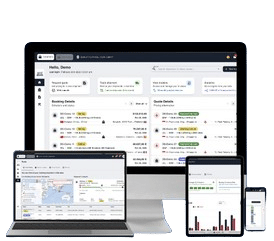
One platform. Your entire supply chain
Sourcing, freight, customs & documents — all centralised, all visible, 24/7.
How can you find and verify reliable Vietnamese factories?
You should treat supplier discovery as a qualification process, not as a search for the lowest quotation. A reliable sourcing from Vietnam strategy combines factory mapping, document checks, production audits, sample validation, and controlled order execution.
Vietnamese suppliers may operate as direct manufacturers, subcontractors, trading companies, or export agents. You need to identify the real production entity before you compare prices or sign a purchase agreement.
- Define your product specifications, target cost, annual volume, packaging requirements, and destination market.
- Build a longlist through industrial clusters, trade fairs, export databases, industry associations, and specialist sourcing partners.
- Confirm whether each candidate owns production equipment or outsources all or part of the manufacturing process.
- Request the company registration, factory address, export history, certifications, product catalogue, and customer references.
- Compare at least three qualified factories using the same technical brief and commercial assumptions.
Do not rely only on a polished website or a marketplace profile. You need evidence that the supplier can manufacture your product consistently, meet your required volume, and manage export documentation correctly.
| Verification area | What you should request | Warning signs |
| Legal identity | Business registration, tax details, registered address, bank account information | Different names on invoices, certificates, and bank details |
| Production capacity | Equipment list, monthly capacity, workforce, production flow, current utilization | Unclear capacity or unusually fast promises for complex products |
| Quality management | Quality manual, inspection records, defect rate, corrective action process | No documented inspection process or refusal to share sample reports |
| Export capability | Shipping records, export markets, customs experience, Incoterms familiarity | Dependence on an unknown third party for every export operation |
| Financial reliability | Payment terms, banking consistency, commercial references, ownership information | Pressure for urgent full payment or payment to a personal account |
When you conduct a factory audit, you should inspect raw material storage, production lines, maintenance records, finished goods, packaging areas, and worker safety conditions. You should also verify whether the factory has enough space and planning discipline to handle your peak season.
- Factory existence: confirm that the address, signage, production equipment, and workforce match the supplier’s claims.
- Process control: review incoming material checks, in-process controls, final inspection, and traceability procedures.
- Capacity: compare declared output with machinery, shifts, staffing, and current customer commitments.
- Subcontracting: identify outsourced processes such as dyeing, plating, injection molding, printing, or assembly.
- Social compliance: check working hours, safety equipment, emergency exits, wages, and worker documentation.
- Environmental practices: review waste treatment, chemical management, wastewater controls, and relevant permits.
At DocShipper, we can coordinate supplier identification, factory communication, audits, sample development, and commercial negotiation in one controlled workflow. You gain a clearer view of the supplier’s actual capabilities before you commit substantial capital.
Your first sample should not be treated as a final approval. You need a written specification sheet that defines dimensions, materials, tolerances, colours, finishing, labelling, packaging, function, and acceptable defect limits.
- Approve a reference sample, sometimes called a golden sample, before mass production.
- Record every change in a dated specification document.
- Test the sample under realistic use, transport, temperature, humidity, and handling conditions.
- Request a pre-production sample when tooling, fabrics, colours, or packaging are critical.
- Keep an approved sample at the factory and retain a controlled reference for your own inspection.
A factory that accepts technical feedback professionally is often more valuable than a factory offering the lowest initial price. You should measure responsiveness, reporting quality, transparency, and corrective action speed throughout the qualification stage.
DocShipper Alert
Arrange a professional factory verification with DocShipper
What steps make sourcing products from Vietnam safer and more profitable?
You should manage Vietnamese sourcing as an end-to-end supply chain project, from product definition to delivery at your warehouse. A competitive factory price can quickly lose its advantage if you overlook tooling, inspections, duties, inland transport, port charges, compliance testing, or inventory financing.
- Step 1, define the commercial brief: specify the product, target market, volume, quality level, packaging, delivery date, and target landed cost.
- Step 2, qualify suppliers: assess legal status, factory ownership, capacity, subcontractors, certifications, and export experience.
- Step 3, develop and test samples: approve materials, functionality, appearance, packaging, and technical documentation.
- Step 4, negotiate the purchase contract: define price, currency, payment milestones, tolerances, delivery terms, warranty, and remedies.
- Step 5, verify compliance: confirm destination-market standards, labelling, product testing, chemical restrictions, and required certificates.
- Step 6, control production: monitor the production schedule, inspect materials, and approve any changes before implementation.
- Step 7, inspect before shipment: perform a pre-shipment inspection based on an agreed sampling plan and defect classification.
- Step 8, manage export logistics: verify documents, booking, cargo readiness, container loading, and customs requirements.
- Step 9, review performance: measure quality, delivery reliability, communication, claims, and total landed cost after each shipment.
Your purchase contract should clearly state who bears responsibility when goods fail inspection, arrive late, use unauthorised materials, or do not match the approved sample. You should avoid vague terms such as “good quality” and replace them with measurable specifications.
| Contract point | What you should define | Why it protects you |
| Product specifications | Materials, measurements, tolerances, colours, performance, packaging | Creates an objective quality standard |
| Payment structure | Deposit, balance, inspection condition, payment currency, bank charges | Limits your exposure before approval |
| Delivery commitment | Production deadline, ready date, shipping window, delay procedure | Helps you protect inventory planning |
| Quality remedies | Rework, replacement, credit note, refund, claim deadline | Provides a practical response to non-conformity |
| Tooling ownership | Ownership, storage, maintenance, access, transfer rights | Protects your investment in moulds and dies |
| Confidentiality | Design protection, restricted disclosure, unauthorised production | Reduces intellectual property leakage |
You should choose the Incoterm only after calculating the complete logistics chain. FOB can provide better control over international freight, while EXW may transfer too much responsibility to you at origin, including factory collection, export formalities, and local charges.
- Confirm the exact named place in the Incoterm, such as the factory, port terminal, or destination warehouse.
- Separate the product price from local transport, export customs, handling, freight, insurance, duties, and taxes.
- Check whether the supplier’s quotation includes export packaging and documentation.
- Compare ocean freight, air freight, rail options where available, and multimodal solutions according to urgency and cargo value.
- Build a realistic buffer for Tet, port congestion, factory shutdowns, raw material shortages, and customs inspections.
For most commercial shipments, you should verify the commercial invoice, packing list, bill of lading or air waybill, certificate of origin where relevant, export declaration, insurance certificate, and product-specific certificates. The required documents depend on your product and destination market, so you should confirm them before production starts.
Compliance must cover both the product and the supply chain. Depending on your market, you may need tests for electrical safety, radio equipment, chemicals, flammability, food contact, children’s products, textiles, timber, cosmetics, or packaging materials.
- Confirm the applicable regulations in your import country before approving the product design.
- Identify the importer of record and assign responsibility for technical files and declarations.
- Check labels, language requirements, country of origin marking, warnings, care instructions, and traceability codes.
- Use an independent laboratory when the product presents safety, chemical, electrical, or performance risks.
- Retain test reports, declarations, production records, inspection reports, and shipment documents for the required retention period.
Quality control should take place at several points, not only when the container is ready. A practical inspection plan may include an initial production check, an in-line inspection, a final random inspection, and a container loading check.
| Inspection stage | Recommended focus | Decision |
| Pre-production | Materials, approved sample, packaging, production plan, component availability | Authorise or correct before manufacturing |
| Initial production | First units, workmanship, dimensions, colour, assembly, machine settings | Stop and correct early deviations |
| During production | Defect trends, output rate, rework, process consistency, order completion | Escalate recurring problems |
| Pre-shipment | Quantity, appearance, function, packaging, labelling, carton marks | Release, rework, or reject shipment |
| Container loading | Carton count, loading condition, seal number, photos, document match | Confirm shipment integrity |
You should classify defects as critical, major, or minor and agree the acceptable quality limit before inspection. Without an agreed sampling method, you may receive an inspection report that is difficult to enforce commercially.
Cost control also requires a landed-cost model that includes every meaningful expense. You should review this model after each shipment because freight rates, exchange rates, duty classifications, packaging specifications, and port charges can change.
- Factory product cost and tooling amortisation
- Local transport from the factory to the export gateway
- Export customs, terminal handling, documentation, and origin charges
- International freight, cargo insurance, and destination port costs
- Import duty, value-added tax, broker fees, inspection fees, and inland delivery
- Quality inspection, laboratory testing, warehousing, financing, and inventory carrying costs
You should also create a supplier risk register covering late delivery, quality failure, single-source dependency, raw material volatility, regulatory changes, currency exposure, and logistics disruption. Mitigation may include dual sourcing, safety stock, approved alternative materials, staggered orders, or a backup production plan.
At DocShipper, we help you connect sourcing decisions with logistics execution. Our teams can coordinate supplier communication, quality inspections, export documentation, freight planning, and shipment follow-up so that you have one operational view from factory to destination.
DocShipper Advice
Let DocShipper coordinate sourcing and logistics
Conclusion
Sourcing from Vietnam can give you competitive production, access to experienced export manufacturers, and a valuable diversification option. You achieve better results when you qualify the factory carefully and manage compliance, quality, and logistics before placing a large order.
- Choose Vietnam according to your product category, required volumes, technical complexity, and target market.
- Verify the legal identity, real factory location, capacity, subcontractors, certifications, and export experience of each supplier.
- Use detailed specifications, approved samples, measurable tolerances, and written quality standards.
- Protect your cash flow with structured payment milestones linked to production and inspection results.
- Confirm product compliance, labelling, testing, documentation, and importer responsibilities before production.
- Calculate the complete landed cost instead of comparing factory quotations alone.
- Select Incoterms and transport modes according to your control requirements, cargo value, urgency, and logistics expertise.
- Inspect production and finished goods before shipment, then verify container loading and export documents.
- Reduce dependency risks through supplier development, backup factories, safety stock, and regular performance reviews.
- Work with DocShipper when you need coordinated support across sourcing, supplier verification, quality control, and international logistics.
FAQ | Sourcing from Vietnam: build a reliable, cost-effective supply chain
Direct sourcing usually gives you better visibility over production, pricing, and quality control. However, a reputable trading company can be useful when your order involves several product categories, small volumes, or factories that do not manage exports themselves.
Before signing, ask the intermediary to identify the actual production site, disclose its commission structure, and confirm who is responsible for defects, delays, and export documents. Never assume that the company issuing the quotation is the manufacturer.
Protect your intellectual property before sharing complete technical files. Register relevant trademarks, designs, or patents in your key markets and use a confidentiality and non-use agreement that identifies the Vietnamese supplier and its subcontractors.
Share information progressively: begin with enough detail for quotation, then release production drawings, tooling files, and source documents only after the supplier passes qualification. Your manufacturing agreement should also prohibit unauthorised production, resale, tooling transfer, and disclosure to other factories.
Tet can affect factory schedules, worker availability, trucking, banking, and port operations for several weeks. Do not plan only around the official holiday dates; factories often reduce output before Tet and need time to return to normal production afterward.
Ask the supplier for a production calendar showing the last order date, final inspection date, factory closure, reopening date, and first reliable shipping window. For seasonal products, place orders earlier and keep safety stock rather than relying on a last-minute booking.
Subcontracting is common for processes such as dyeing, printing, plating, injection molding, embroidery, and packaging. It becomes risky when the supplier cannot identify these partners or control their quality and compliance.
Request a written subcontractor list and specify which operations require your approval. You should also define audit rights, material traceability, testing responsibilities, and notification requirements if the supplier changes a subcontractor. Inspect critical outsourced processes separately when they can affect product safety or appearance.
Avoid paying the full balance simply because production is complete. Link each payment milestone to a verifiable event, such as material purchasing, an approved production sample, completion of an inspection, or release of compliant shipping documents.
For a first order, you can reduce exposure by starting with a smaller pilot quantity, using a company bank account matching the legal supplier name, and withholding the final payment until the goods pass the agreed inspection. If the supplier demands payment to a personal account or changes bank details unexpectedly, pause the transaction and verify the request independently.
Do not claim preferential tariff treatment solely because the goods were assembled or packed in Vietnam. If important materials or components come from another country, the product may fail the relevant regional value-content or substantial-transformation rule.
Before shipment, ask the supplier for a traceability breakdown showing the origin of major inputs, the manufacturing operations performed in Vietnam, and the documents supporting the origin declaration. Have your customs broker review the evidence against the product’s HS code and the applicable trade agreement. If the origin cannot be demonstrated, budget for the standard duty rate rather than risking a customs dispute.
Need Help with Logistics
or Sourcing in Vietnam ?
First, we secure the right products from the right suppliers at the right price by managing the sourcing process from start to finish. Then, we simplify your shipping experience - from pickup to final delivery - ensuring any product, anywhere, is delivered at highly competitive prices.


Fill the Form
Prefer email? Send us your inquiry, and we’ll get back to you as soon as possible.
Contact us